Start with the plans you know
“Casual lunch” is a useful starting point, but it rarely tells you everything. You might be meeting at a neighborhood café, sitting down somewhere more polished or walking around before and after the meal. Instead of trying to guess the exact dress code, dress for what you do know: who you are meeting, how you are getting there and what else is on your schedule.
A practical aim is to look at ease rather than either dressed for an occasion that may not exist or ready only for errands. Choose one familiar, comfortable base and make it feel intentional through fit, clean shoes and a layer you would be happy to keep on at the table. If you need to leave straight from a morning activity, prioritize pieces that will still feel good after a few hours of wear.
Build an outfit with room to adjust
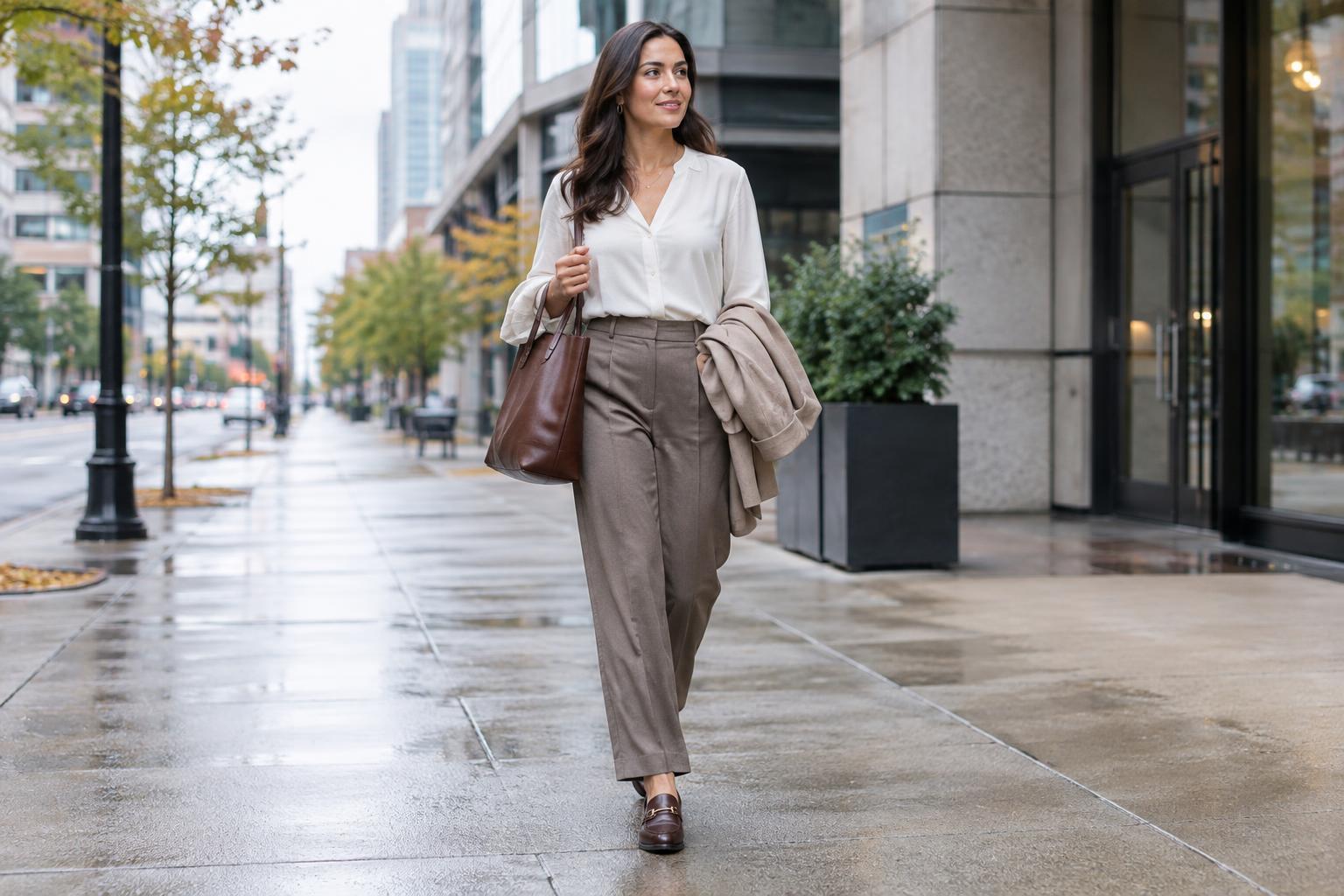
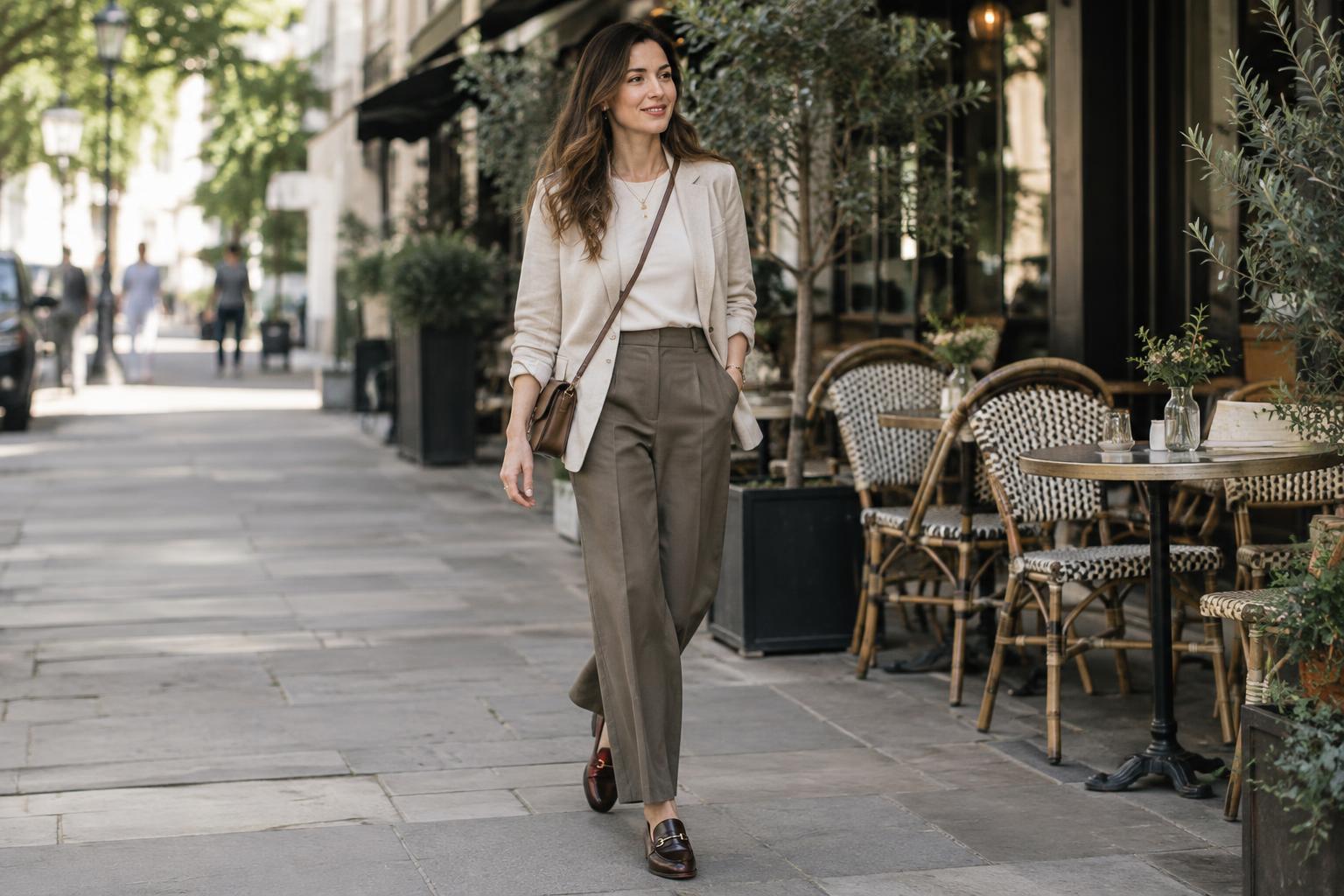
A reliable formula is well-fitting jeans or relaxed trousers, a simple top and a light outer layer. Straight-leg denim with a fine knit and a blazer can feel neat without looking formal. Wide-leg trousers with a tucked-in T-shirt and an overshirt offer a softer version of the same idea. If you prefer a skirt or dress, try an easy midi length with a cardigan or casual jacket. These combinations give you the option to remove a layer if the setting feels laid-back.
You do not need every piece to be elevated. One more structured item, such as tailored trousers or a crisp shirt, can balance casual trainers or a roomy jacket. Likewise, polished flats can make a simple denim outfit feel more deliberate. Keeping the outfit somewhere between your most relaxed and most dressed-up weekend looks leaves room for either interpretation of “casual.”
Pay attention to how the clothes behave when you sit down. A waistband that feels fine while standing may become distracting over lunch, and a top that needs constant adjusting can take the ease out of the day. If an outfit looks good but requires you to manage it, try a different fit or fabric.
Choose shoes and layers for the whole outing
In the city, the journey can shape the outfit as much as the restaurant. If you will walk, take public transport or stop elsewhere afterward, choose shoes you already know you can wear comfortably. Clean, understated trainers, loafers, ankle boots and supportive flats can all work, depending on your clothes and the weather. There is little benefit in choosing a dressier shoe if it makes the rest of the day difficult.
A layer also helps when the temperature outside and the temperature inside differ. A trench-style coat, denim jacket, lightweight blazer or practical rain layer can complete an outfit without forcing it into a particular dress code. If the forecast is changeable, choose a bag that can carry a compact umbrella or an extra layer. Practicality can look considered when the pieces work together.
Before leaving, try the outfit with the coat and bag you actually plan to use. A carefully chosen top may disappear under a bulky jacket, while a small bag may not suit a day with several stops. Seeing the complete outfit makes it easier to spot those mismatches.
Use small details to set the tone
Accessories are an easy way to adjust the level of polish. A belt, simple earrings or a scarf can make familiar basics feel ready for a meal out. A compact crossbody bag keeps your hands free if you are moving around the city; a larger tote makes sense when lunch is one part of a longer day. Choose what serves your plans rather than adding pieces simply because the dress code is unclear.
If you still feel unsure, picture the two most likely settings. Would you feel comfortable in your outfit at a relaxed café and at a slightly smarter lunch spot? If the answer is yes, you are probably close. If not, change one element: swap a worn T-shirt for a neat knit, or replace a formal jacket with a casual layer. The goal is not to anticipate every possibility. It is to put together clothes that let you enjoy the lunch wherever it happens.