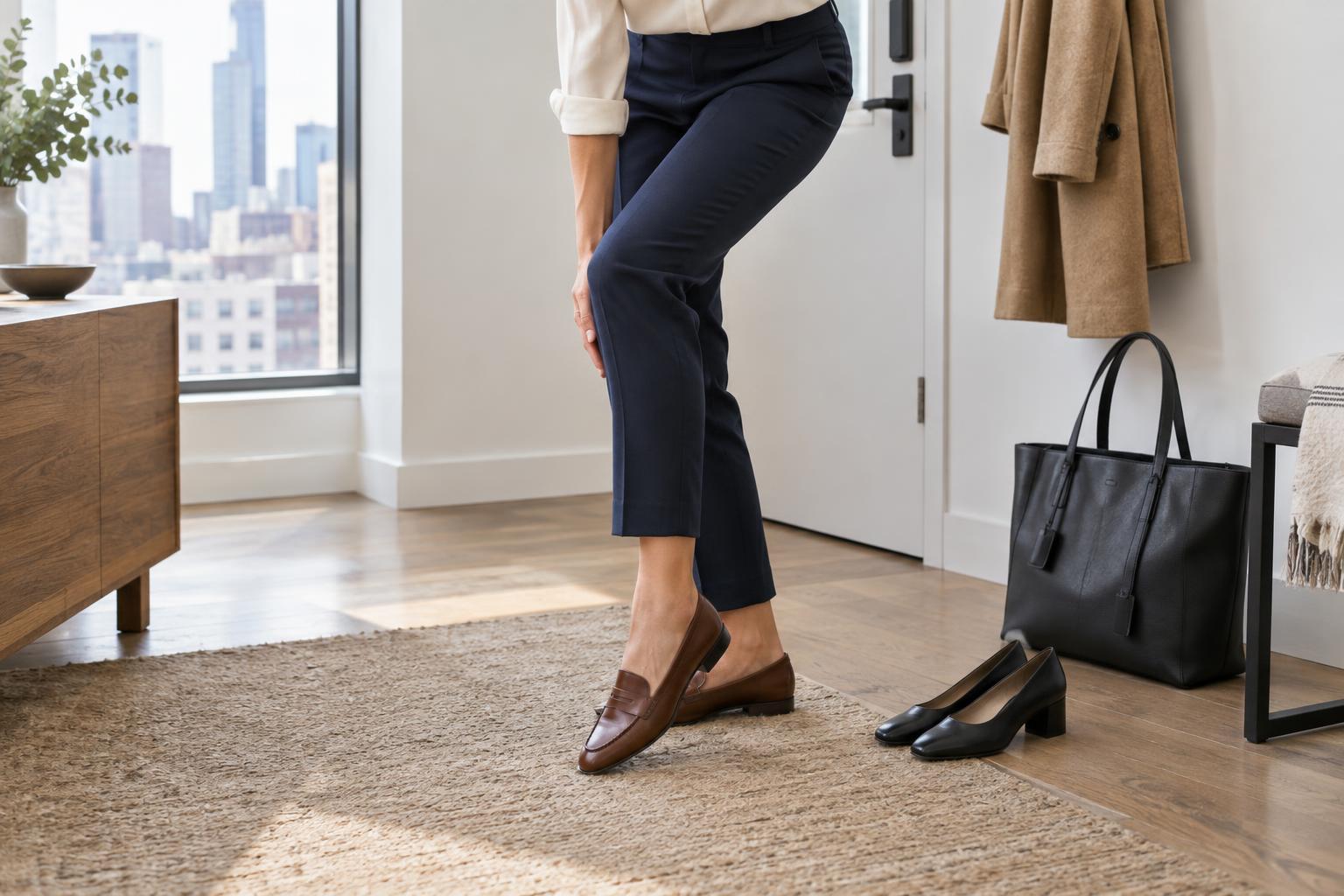
Start with the day, not the shoe
Before choosing shoes, think through the places your feet need to take you. A day spent mainly at a desk may call for something different from one with a long walk, stairs or time on your feet. Your workplace dress code matters too, but it does not have to be the only consideration. A shoe that looks right with an outfit is less useful if you want to take it off halfway through the morning.
Check the route from home to work as well as the hours in between. Smooth soles can feel uncertain on wet pavement, while shoes that fit indoors may rub during a longer walk. If you prefer different shoes for the journey, make the change easy: choose a work pair that fits in your bag or has a reliable place to stay, and check that your trouser length works with both pairs.
Match shoes to the shape of your clothes
With trousers, pay attention to where the hem falls. A wide leg may sit neatly over a loafer, low boot or simple flat, but its length can change noticeably with heel height. Try the trousers and shoes together while standing and walking. If the hem drags or bunches under the shoe, a different pairing may be easier than adjusting it throughout the day.
Cropped trousers leave more of the shoe visible, so their pairing can have a stronger effect on the outfit. A streamlined shoe can keep the line simple; a chunkier one can add contrast if that feels appropriate for your workplace. Neither is a rule. The useful question is whether the visible gap between hem and shoe looks intentional to you.
Skirts and dresses offer similar choices. A flat, loafer or boot can change the mood of the same outfit without changing the clothes. If a skirt moves or rises when you sit, check the complete look seated as well as standing. This helps you judge both the proportions and whether you will feel comfortable wearing it through the day.
Check fit in the conditions you will wear them
Try on work shoes with the socks or tights you plan to wear. Even a thin change in fabric can affect how a shoe fits. Walk around, turn and use stairs if possible. Notice whether your heel slips, your toes press against the front or an edge rubs as your foot bends. Shoes should feel secure without requiring you to grip them with your toes.
Think about care before making a pair part of a regular rotation. Pale materials may need more attention on a wet commute; delicate finishes may be less convenient if shoes spend the day under a desk or in a crowded bag. A shoe does not need to be maintenance-free, but knowing what it needs makes it easier to decide when to wear it.
Build a useful rotation, not a collection of duplicates
You do not need a separate pair for every outfit. Start by identifying the shoes that work with the greatest number of clothes you already wear to work. One pair might suit most trousers, while another works better with skirts or more formal days. If both pairs serve the same purpose, consider whether a different style would fill a more useful gap.
Colour can help a small rotation feel flexible. Shoes need not match a bag exactly; they can relate to another element of an outfit or simply sit comfortably alongside its colours. When deciding between two options, try each with several complete outfits rather than judging it on its own.
The most dependable work shoe is one you can choose without second-guessing your schedule, your clothes or your walk home. Keep the pairs that earn that confidence, and use what you learn from wearing them to guide your next choice.