Start with the day you actually have planned
A museum visit sounds like a single occasion, but the outfit may need to handle more than time indoors. You might walk from a station, stand while looking at displays, sit for a break and carry on to another part of the city. Before choosing clothes, think about how far you expect to walk, whether you will spend time outside and what you need to carry. That gives you a better starting point than trying to dress for the setting alone.
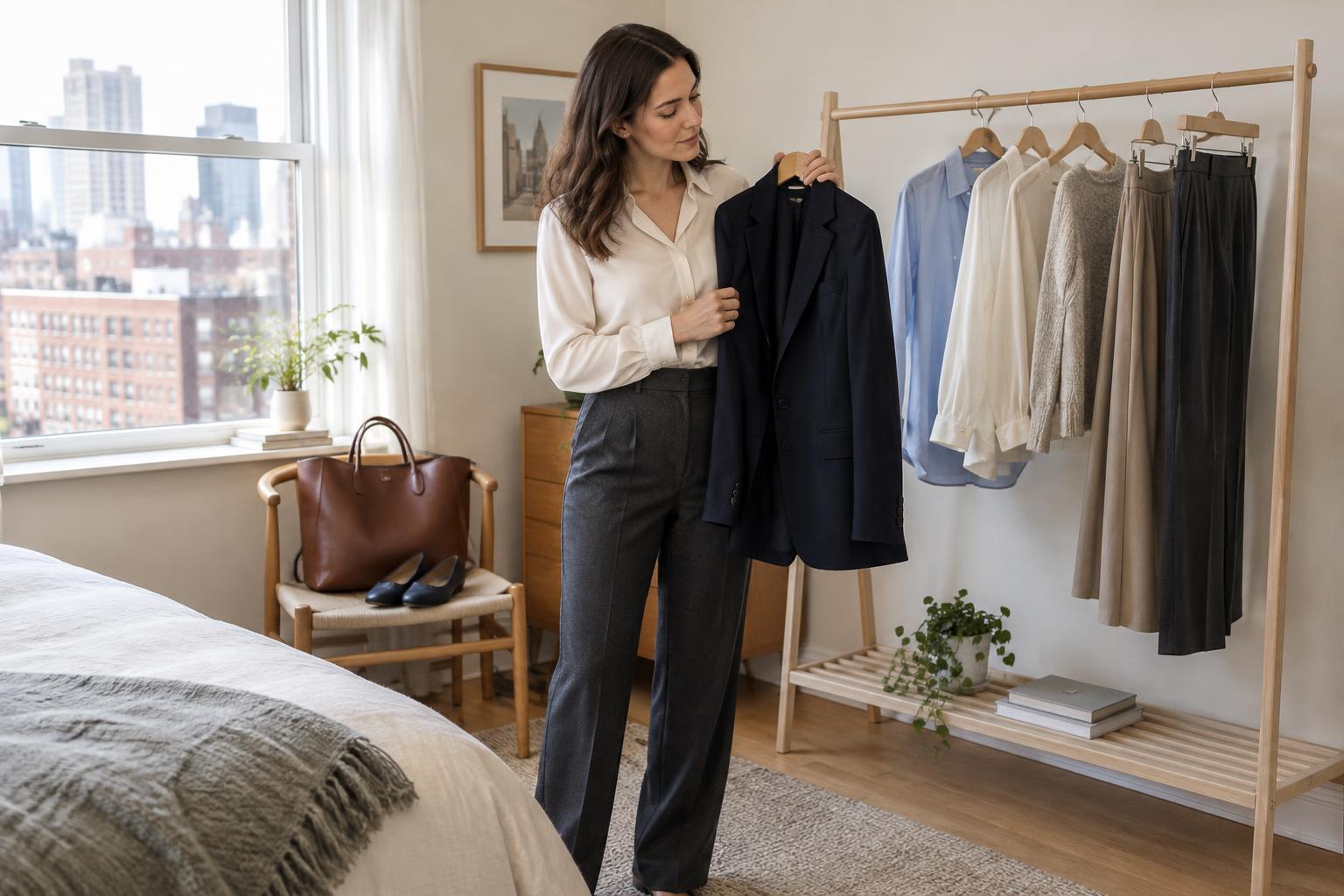
There is no need for a special museum outfit. A comfortable base, shoes you trust and a layer you can manage indoors will usually do more for the day than a piece chosen only because it looks polished. If you have plans afterwards, aim for clothes that feel appropriate in several casual settings rather than changing the whole outfit between stops.
Choose a base that works for standing and sitting
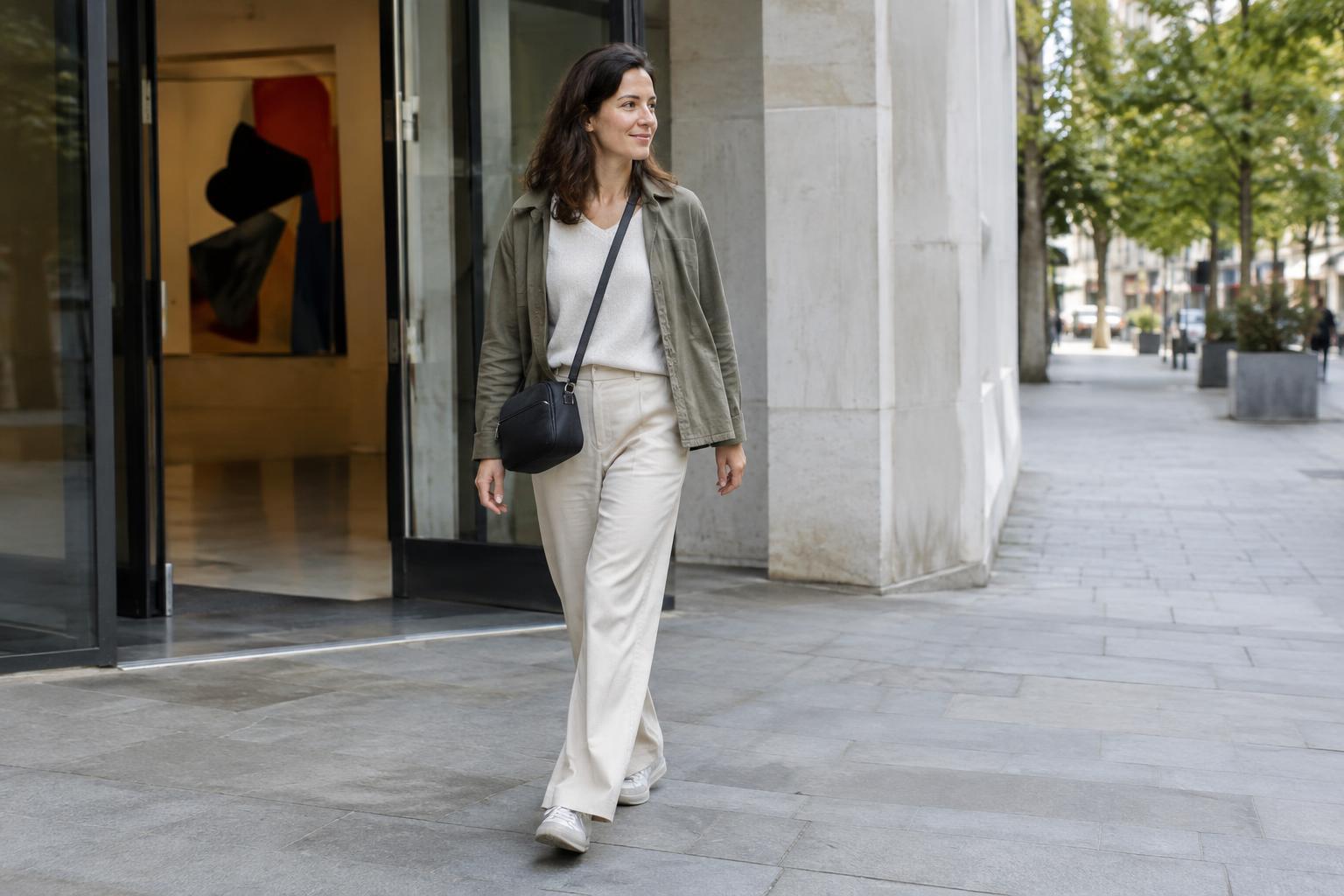
Start with a top and bottom you can move in without adjusting them throughout the day. Straight or relaxed trousers, a soft midi skirt, or jeans with a fit you already find comfortable can all work. Pay attention to the waistband when seated and to how the fabric feels after a longer walk. If a skirt or dress is your preference, consider its length and movement when taking stairs or sitting down.
For the top, a simple T-shirt, fine knit or casual shirt makes an easy foundation. A close-fitting top can balance wider trousers, while a looser shirt may feel good with a more streamlined bottom. These are options, not rules: the useful test is whether the outfit stays comfortable when you move, sit and reach for your bag. Try it on as a complete outfit before leaving if any piece is unfamiliar.
Let shoes support the whole route
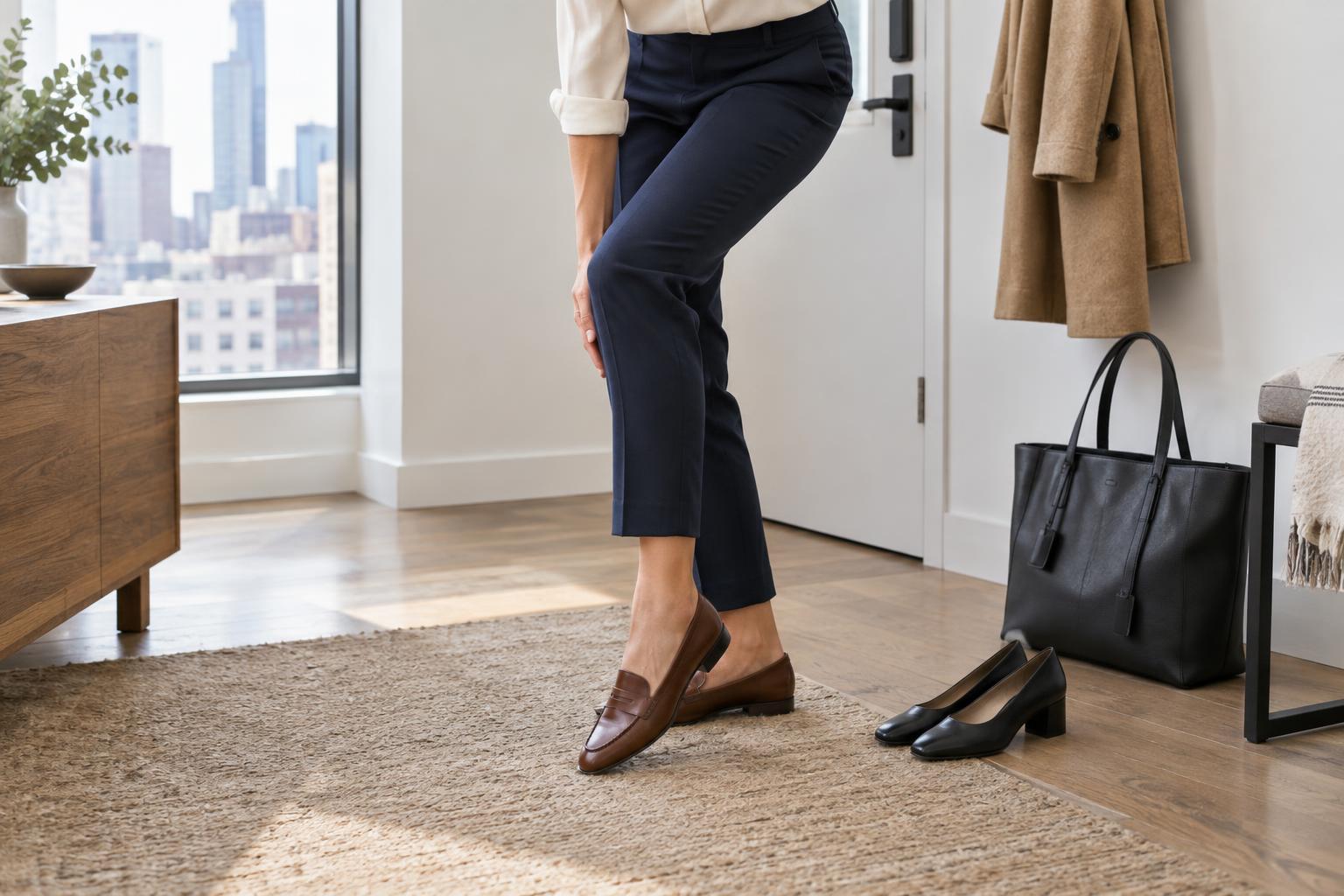
Footwear matters when an outing combines indoor standing with city walking. Choose a pair you have already worn for a similar amount of time, whether that means trainers, flat boots or another supportive style. A shoe that feels fine for a short trip may be less appealing after several hours, so avoid making an untested pair the centre of a walking-heavy plan.
You can still make practical shoes feel intentional. Repeat one of their colours elsewhere in the outfit, or pair a streamlined shoe with trousers that fall neatly over it. If your shoes are chunkier, a simple top or jacket can keep the overall look balanced. The goal is not to disguise comfortable footwear; it is to make it feel like part of the outfit.
Keep layers and belongings easy to manage
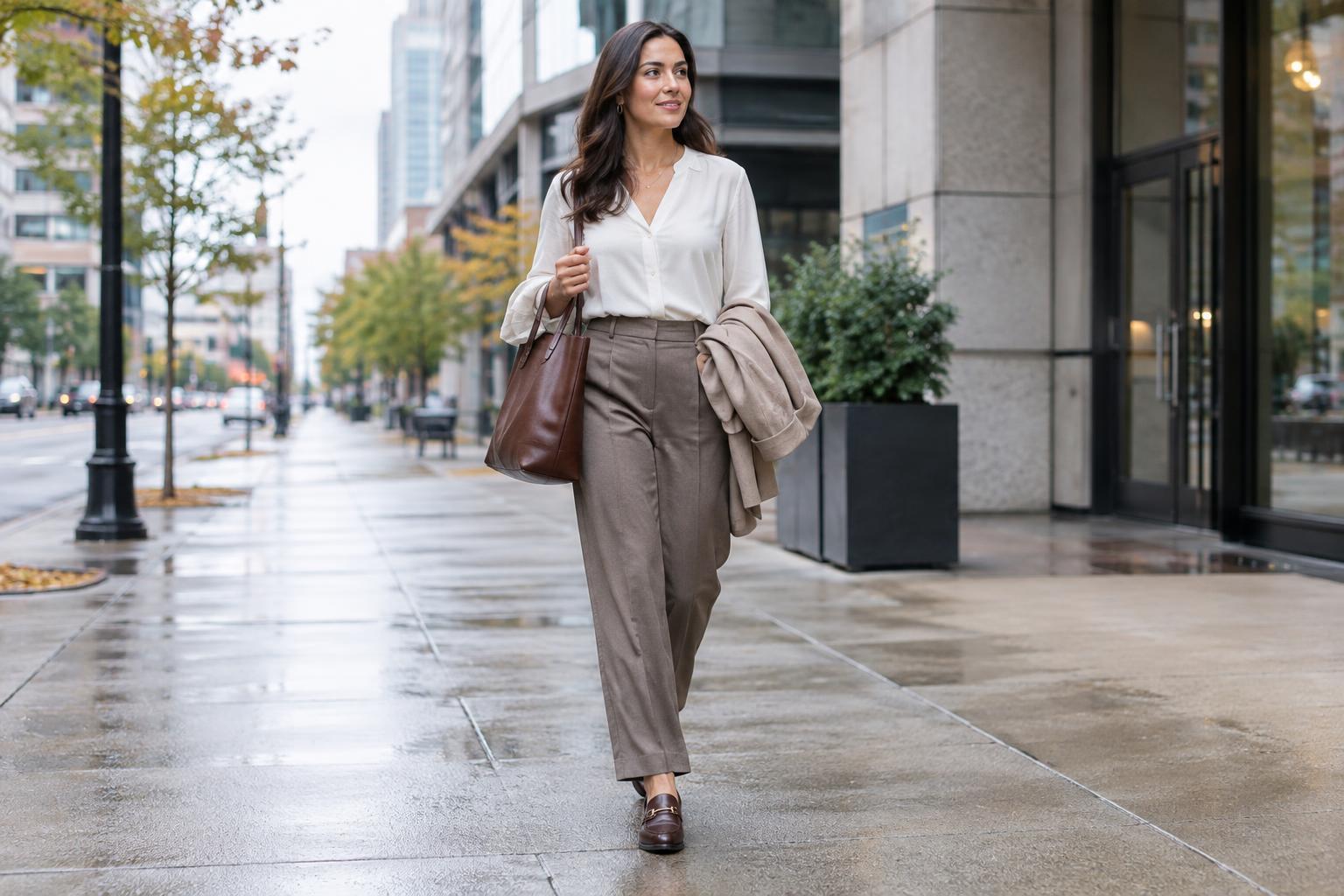
Indoor and outdoor temperatures may feel different, especially if you walk between destinations. A light cardigan, overshirt or jacket gives you an option without committing to a heavy layer all day. Consider where it will go when you take it off. A piece you can fold into your bag or carry comfortably over an arm is often more useful than one that becomes a nuisance indoors.
A small crossbody bag or secure shoulder bag can leave your hands free while you browse, provided it holds your essentials without feeling overfilled. Check any venue's bag rules before you go if you plan to bring a larger tote or backpack. Keep what you need most often, such as your phone or travel card, easy to reach so you are not repeatedly unpacking the bag.
Finish for your next stop, not just your first
Once the practical pieces are in place, one small styling choice can make the outfit feel complete. That might be a colour you enjoy near your face, a scarf that doubles as a light layer, or simple jewellery that will not get in your way. You do not need all three. Choose the detail that suits your clothes and the amount you want to carry.
Before leaving, picture the outfit at the end of the visit. Will you still be happy to walk in those shoes? Can you sit comfortably for a drink or a meal afterwards? Is your extra layer manageable if you do not need it? If the answer is yes, you have an outfit that serves the full weekend plan rather than just looking right at the door.