Start with the errands you actually make
A foldable shopping bag earns its place in your daily routine when it solves a familiar problem: picking up groceries after work, carrying a library book home or taking an unexpected purchase on the train. Before choosing one, think about the items you usually collect and how far you carry them. A bag for a few light purchases can be smaller and simpler than one intended for a substantial grocery stop.
Capacity is not just about how much fits inside. A very large bag may encourage you to load it beyond what feels comfortable on a walk or commute. Look for a shape that holds your usual purchases without leaving everything piled at the bottom. If you often carry flat items, such as a folder or magazine, check that the bag is wide enough for them to sit without bending. For more ideas on accessories that fit everyday routines, browse Personal Accessories · Odboso Living.
Check the handles before the fabric
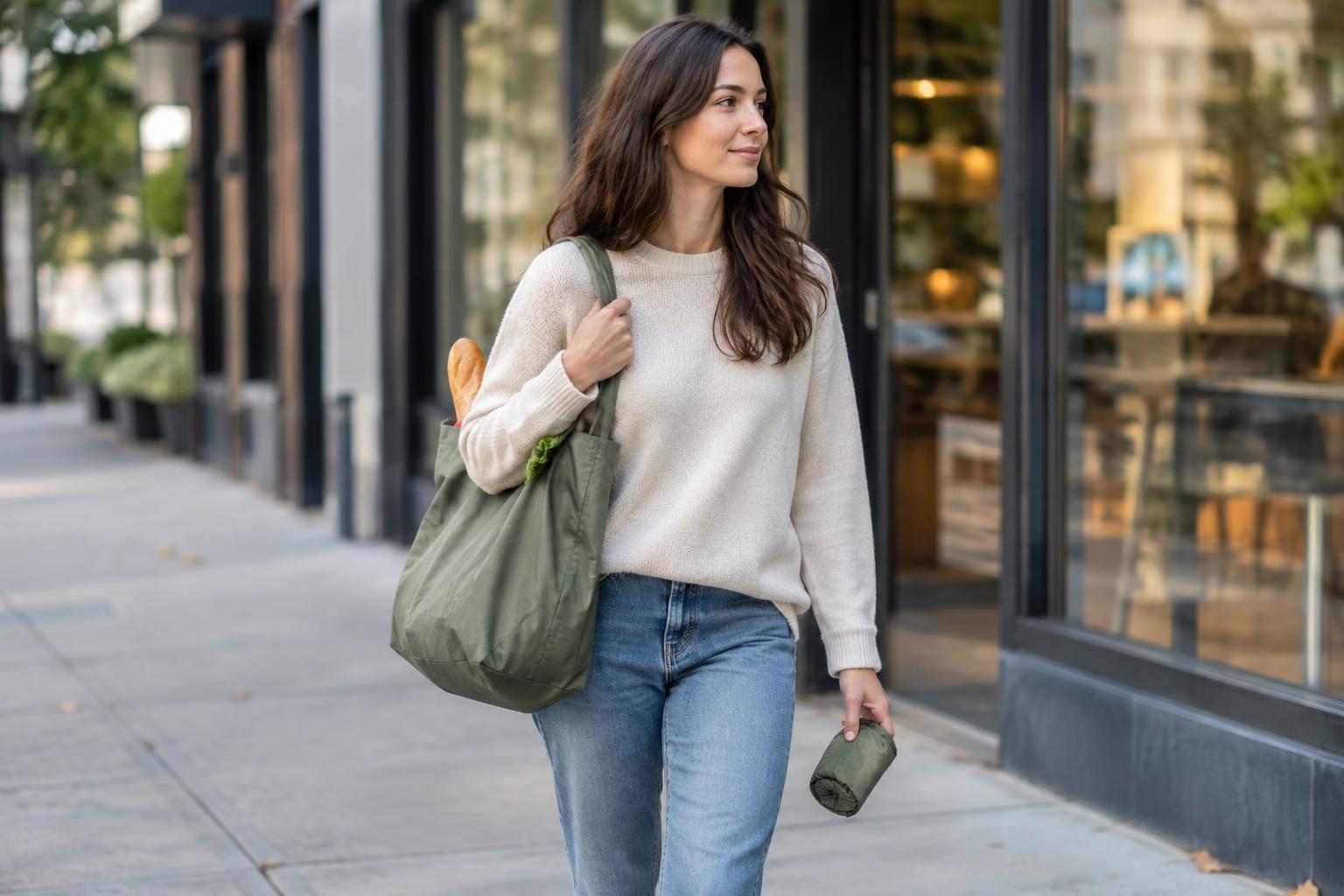
Handles make a noticeable difference once a bag is full. Short handles are easy to grab but may leave you carrying the bag by hand for the whole journey. Longer handles can sit over a shoulder, provided there is enough room when you are wearing a coat. If possible, try the bag with the outerwear you use most often and consider whether its opening remains easy to reach.
Pay attention to where the handles join the bag. Flat, securely attached handles may feel more stable than narrow ones that twist under a load. A foldable bag will not replace a structured tote for every purpose, but it should feel manageable with the weight you reasonably expect to put in it. If you tend to carry a handbag as well, choose a handle length that lets the two bags sit comfortably alongside each other.
Choose a fabric you will want to reuse
Lightweight fabric makes a bag easier to fold, but the thinnest option is not automatically the most useful. Check the seams and bottom corners, which take strain when the bag is filled. A smooth fabric may be easier to wipe after carrying groceries, while a washable fabric can be convenient if you are willing to follow its care instructions. Neither feature matters much if cleaning the bag feels so awkward that you avoid doing it.
Consider the conditions in which you usually carry it. An open-top bag is quick to pack, but its contents may need extra attention in rain or a crowded vehicle. A closure can help keep smaller items together, although it may add bulk when folded. If you would like to explore other practical items for daily life, Odboso Living is a place to browse for ideas.
Make the folded bag easy to find
The best reusable bag is the one you remember to take. Some fold into an attached pocket, while others come with a separate pouch. An attached pocket cannot be misplaced as easily; a separate pouch may be quicker to use if you do not mind keeping track of two pieces. Fold and unfold a prospective bag a few times, rather than judging it only by how neat it looks when packaged.
Give the bag a regular home: an outer pocket of your everyday bag, a hook by the door or a spot beside your keys. If you switch handbags, a visible storage place at home can prompt you to move it across. For further browsing on objects that help organise everyday routines, see Useful Home Objects · Odboso Living. The goal is not an elaborate system, just a place that makes taking the bag feel automatic.
Keep it useful over time
Empty the bag after each errand and let it dry before folding it away if it becomes damp. Check its care label before washing, especially if it has a coating, printed design or attached pouch. An occasional look at the seams and handles can help you notice wear before you rely on the bag for a heavier load.
One well-chosen foldable bag may be enough for routine errands. If your needs vary, a compact bag for light purchases and a roomier one for planned shopping may be more practical than carrying several similar bags everywhere. Choose based on comfort and the errands you actually make; a bag that fits your day is more likely to be used.