Start with the usable space, not the outside dimensions
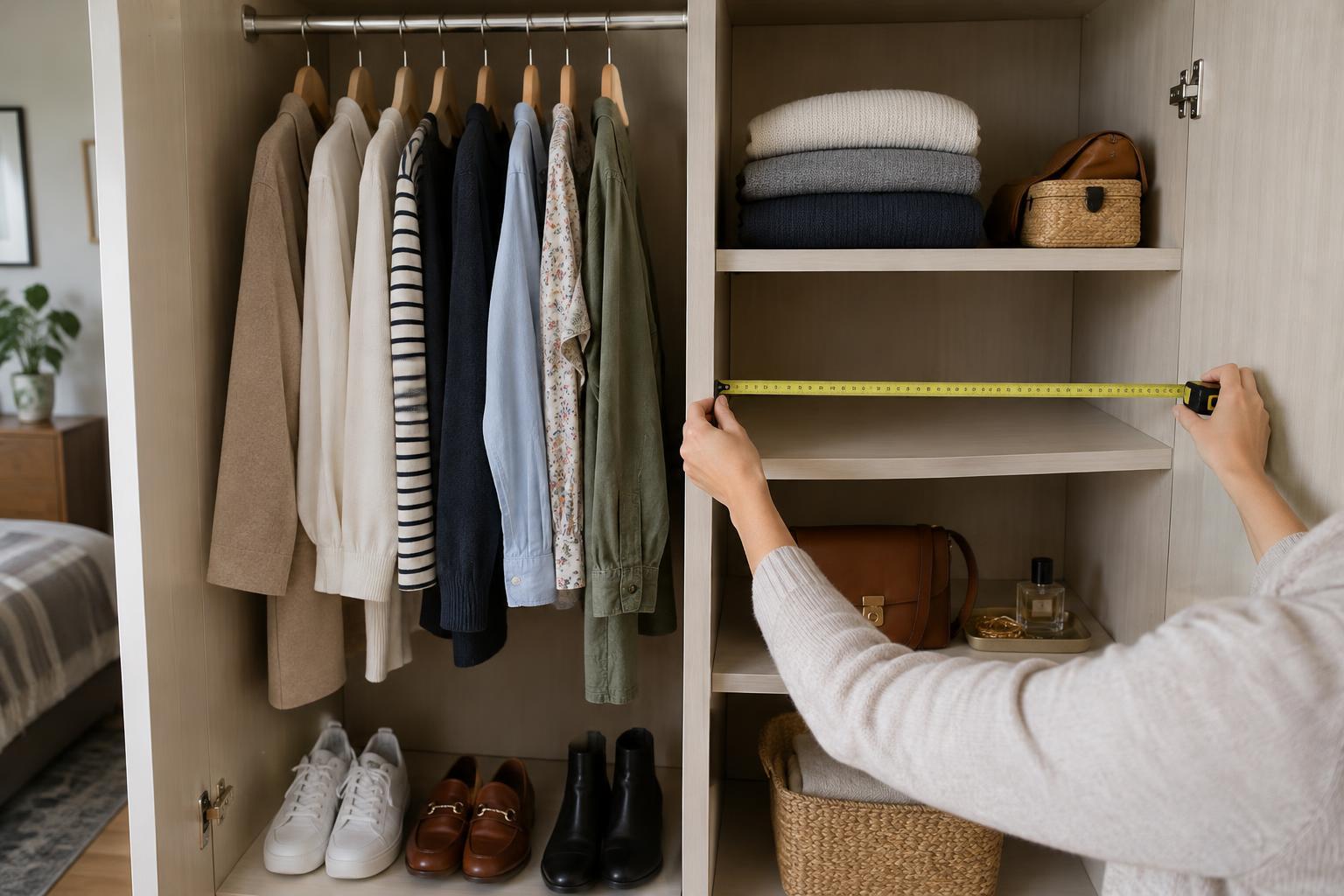
Before shopping for bins, dividers or extra shelves, measure the inside of your wardrobe. Record the width, depth and height of each section where you might put an organiser. Take measurements at the front and back, and at more than one height if the wardrobe has an uneven floor or walls. The smallest measurement is the safest one to use when checking a product’s dimensions.
Note anything that reduces the usable space: hinges, door tracks, a central support, a fixed rail or a shelf lip. Measure the opening as well as the space behind it. A box may fit on a shelf but still be too wide to pass through the doorway comfortably. Check how far doors open and leave room to lift a bin out without tipping it. If you use drawers nearby, make sure an added organiser will not obstruct them.
Measure shelves and the items they will hold
For each shelf, record its width, depth and the clear height to the shelf above. Then measure a few representative stacks of clothes rather than guessing how much space folded garments need. Jeans, knitwear and T-shirts take up different amounts of room, and a tightly packed stack can be difficult to use. If you are considering a shelf divider, check the shelf’s thickness and whether the divider needs an exposed edge to attach.
Think about reach as well as fit. Deep shelves can hide small items at the back, while a basket that nearly fills the full shelf depth may be awkward to pull forward. Measure the shelf opening and allow a little clearance around any container. You might reserve the easiest-to-reach space for everyday outfits and use higher shelves for less frequently worn pieces.
Check hanging space with clothes in place
Measure the usable length of each rail between its supports, plus the distance from the rail to the floor or shelf below. Keep several garments on hangers while you check: a coat, a long dress and a typical workday piece can reveal different clearance needs. If clothes already brush the shelf beneath them, a hanging fabric organiser or second rail is unlikely to make that area easier to use.
Rail accessories also take up width. Measure the space occupied by the clothes you need to keep hanging, then consider how much rail length remains for an accessory. Check depth too: broad hangers or a hanging shoe organiser may press against the doors. Leave enough room for garments to slide along the rail so you can see and remove them without pulling everything out.
Measure drawers, shoes and smaller accessories
For drawer dividers, measure the interior width and depth at the bottom of the drawer, along with the clear height below its frame. Subtract space taken up by handles, runners or any interior fittings. If you want compartments for socks, belts or jewellery, measure a few of the items themselves. A divider with neat-looking sections will be frustrating if a rolled belt or sunglasses case cannot fit inside.
Shoe storage needs its own check. Measure the length, width and height of your bulkiest everyday pairs, including boots if you plan to store them in the same unit. Check the floor area or shelf where a rack would sit and allow room to take shoes out. For bags, measure the widest and tallest ones you intend to store upright, including handles that you do not want to fold.
Compare dimensions before you commit
Keep your measurements in one note with a simple sketch showing fixed shelves, rails, doors and awkward corners. When comparing organisers, check their full exterior dimensions rather than relying on labels such as small or standard. For a bin, look at the interior dimensions too: thick sides, handles and tapered shapes can reduce the space available for clothes. If a product needs assembly or clips onto a shelf, check that its fittings suit your wardrobe.
Aim for a little clearance rather than an exact edge-to-edge fit. It makes organisers easier to install, remove and use as your wardrobe changes. If you are unsure about a layout, start with one organiser for the area that causes the most daily inconvenience. Testing it with your actual clothes can tell you more than filling every shelf at once.