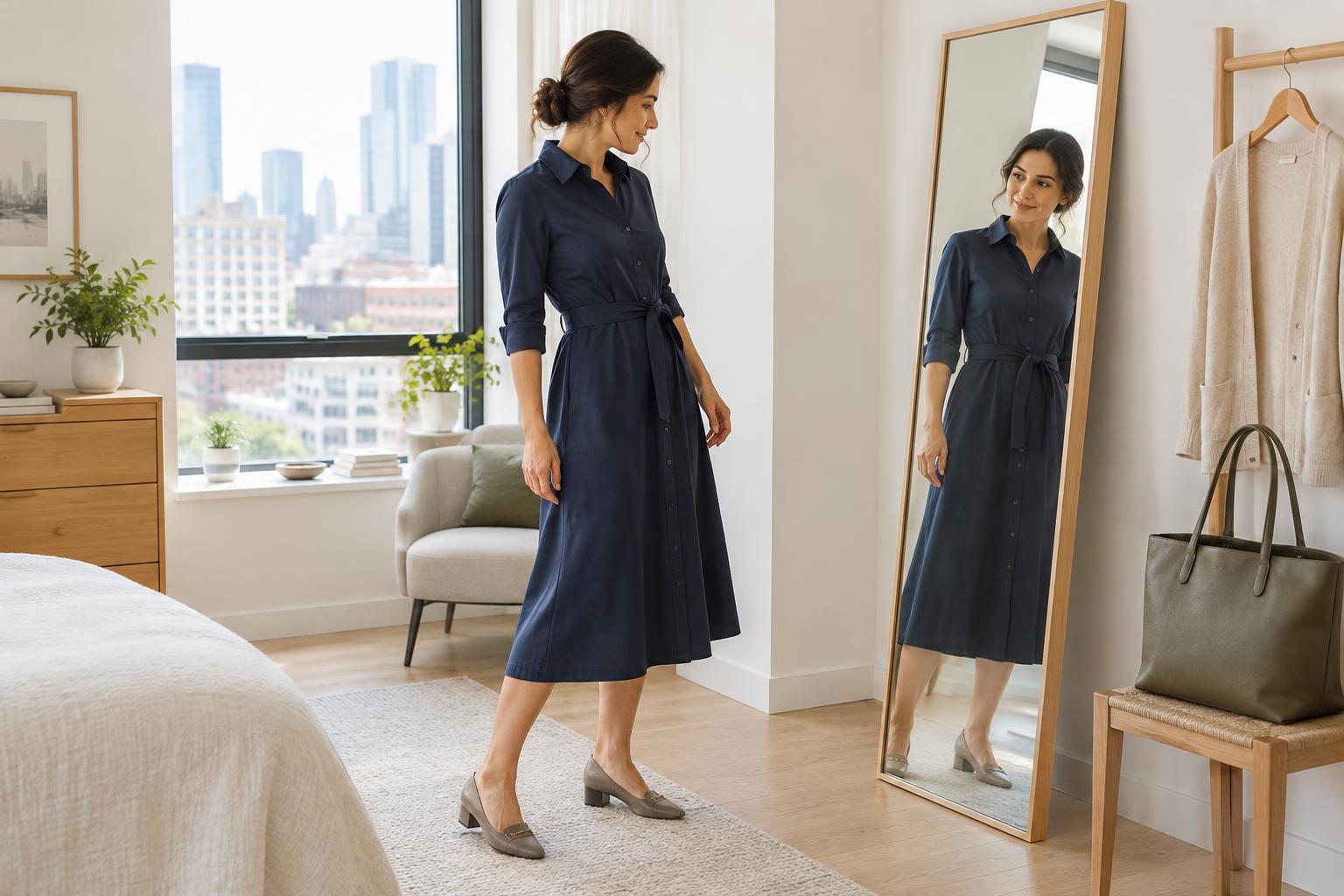
Start with the day you actually have
The best work-appropriate dress is one you can wear through your usual routine, not just one that looks good on a hanger. Think about your commute, how long you sit, whether you move between indoor and outdoor spaces, and what your workplace considers appropriate. A dress that works in a formal office may feel too structured for a casual studio; a relaxed dress may need a layer or smarter shoes for a client-facing day.
Before shopping, identify what you want the dress to do. It might need to stand on its own for warm days, fit beneath a jacket, or take you from a desk to an after-work plan. That gives you a more useful checklist than a rigid rule about hemline or silhouette. Workplace expectations vary, so use the clothes that already feel right in your setting as a guide.
Check the fit while you move
A comfortable dress should give you room to sit, walk, reach and bend without constant adjustment. When trying one on, sit down for a moment, raise your arms and take a few steps. Notice whether the hem rides up, the neckline shifts, the shoulders pull or the waist feels tight when seated. If you find yourself repeatedly tugging the fabric into place, a different cut or size may serve you better.
Look at where the dress makes contact with your body. A waist seam that sits in an uncomfortable spot, a narrow armhole or a stiff collar can become distracting over a full workday. A relaxed cut need not look shapeless, just as a more tailored cut need not feel restrictive. The goal is a fit that stays comfortable without demanding your attention.
Choose fabric for comfort and upkeep
Fabric affects how a dress feels after several hours of wear. Consider its weight, texture and stretch as well as its appearance. A very lightweight fabric may need a slip or lining to feel comfortable in bright light. A heavier one may hold its shape well but feel warm on a crowded commute. If the dress is lined, check that the lining moves easily with the outer fabric rather than pulling at the seams.
Care matters too. Read the label and be honest about the upkeep you are willing to manage. A dress that needs frequent pressing or specialist cleaning may not become an everyday favourite if you prefer a quick morning routine. If possible, gently scrunch a small area of fabric in your hand to get a sense of how readily it creases. This is not a perfect test, but it can help you decide whether the dress suits your habits.
Pay attention to the practical details
Small design choices can make a dress easier to wear. Check that buttons do not pull open when you sit or move, and that any zip is easy to use. If the dress has a slit, see where it falls both standing and seated. Pockets can be handy for a pass or tissues, but their placement and depth matter more than their presence on a product description.
Consider what you would wear underneath. Visible seams, an awkward neckline or straps that need frequent repositioning can complicate an otherwise simple outfit. Try the dress with the shoes and underlayers you would normally wear to work. This gives you a clearer sense of its length, coverage and overall comfort than trying it on in isolation.
Make sure it works with your wardrobe
A dress earns its place more easily when you can style it in several familiar ways. Picture it with a jacket or cardigan you already own, and with the shoes that make sense for your commute. A simple shape may change character with a structured layer; a patterned dress may need little more than practical footwear and a bag. Neither approach is better—the useful question is whether getting dressed will feel straightforward.
Before deciding, imagine wearing the dress on an ordinary Tuesday rather than for a special occasion. Does it suit your workplace, feel comfortable throughout the day and fit the care routine you can realistically maintain? If the answer is yes, you have found something more valuable than a dress that merely looks work-appropriate: one you are likely to reach for.


