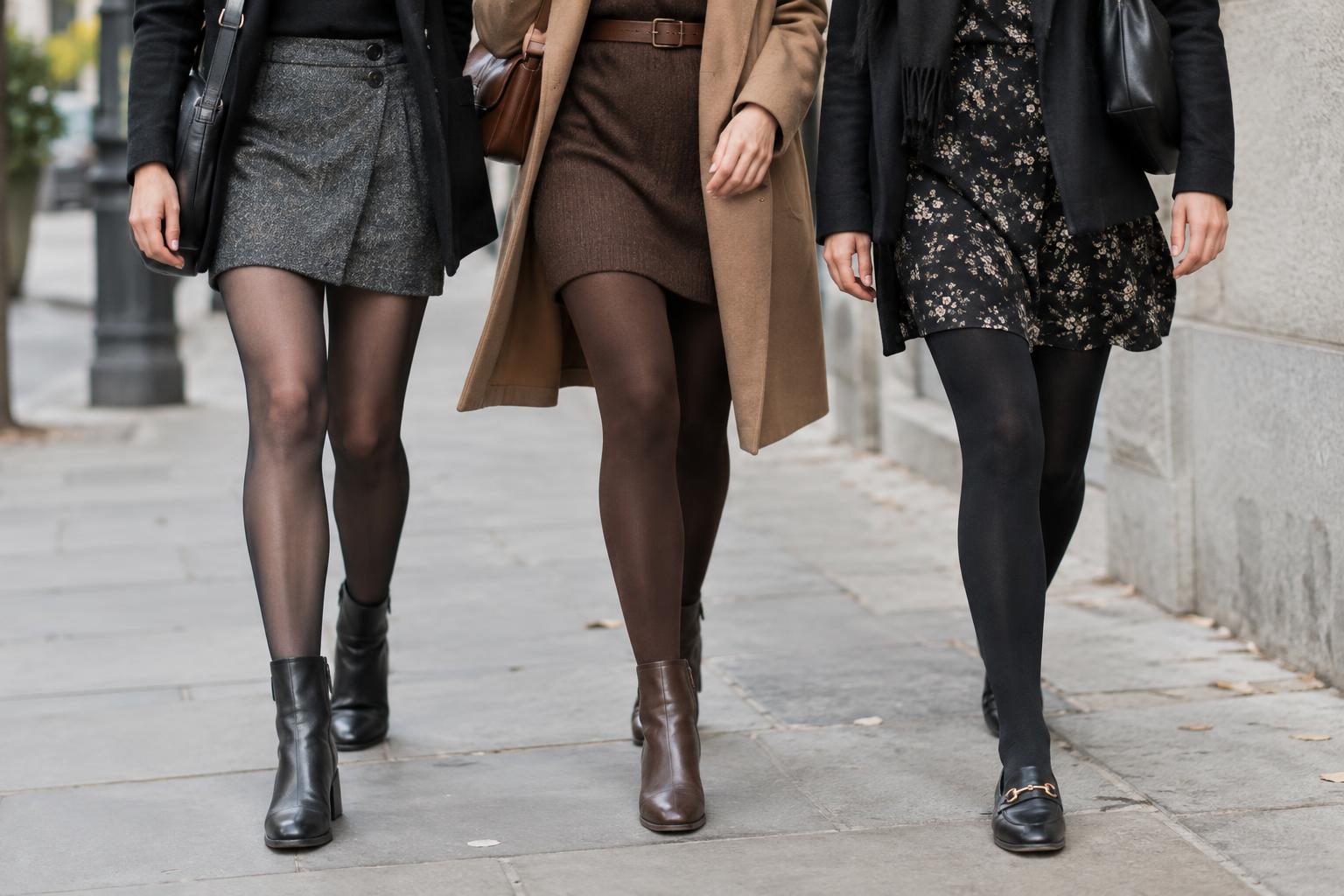
Start with thickness, but look beyond the number
Denier describes the weight of the yarn used to make tights. Lower-denier pairs generally look sheerer, while higher-denier pairs generally provide more coverage. It is a useful starting point when shopping, but it is not a complete measure of warmth, strength or opacity. Fibre blend, knit and how much the fabric stretches on your legs can all affect the result.
Sheer tights can work well when you want a light layer that leaves the colour of your skin or an outfit detail visible. Semi-opaque pairs offer a middle ground: more coverage than a sheer pair without the solid look of a dense knit. Opaque tights create a more continuous line of colour and can make a short hemline or bold shoe feel easier to combine with the rest of an outfit.
For a day involving walking, public transport and time indoors, choose thickness around the conditions you will actually meet. A very dense pair may feel comfortable outdoors but too warm in a heated office. If you are unsure, keep one lighter and one more opaque option in your wardrobe and try each with the shoes and clothes you wear most.
Choose a finish that works with your outfit
Finish changes the effect of tights even when their colour and thickness are similar. Matte tights tend to look understated and can sit quietly alongside textured skirts, knit dresses or polished workwear. A slight sheen catches more light and may make a simple outfit feel dressier. A pronounced glossy finish becomes a visible part of the look rather than a neutral background.
Consider the contrast between your tights, hemline and shoes. Black opaque tights with dark shoes can create an uninterrupted line, while a lighter or patterned pair draws attention to the legs. Neither approach is inherently more versatile: the best choice depends on whether you want the tights to blend in or serve as an accessory. Check the finish in natural and indoor light if you can, since a pair that looks matte in its packaging may appear shinier when stretched.
Fit is part of comfort and durability
Tights that are too small may pull tightly at the toes, slip at the waist or become more transparent than expected. A pair that is too large may bunch behind the knees or need frequent adjustment. Use the brand’s size guide, including height and hip measurements where provided, rather than assuming your usual clothing size will translate directly.
Look closely at the waistband, seams and toe construction. A comfortable waistband should stay in place without digging in when you sit, walk and bend. Flat or well-finished seams may feel smoother under close-fitting clothes. Reinforced toes can be useful with closed shoes, particularly if your toenails or the inside of your shoes tend to catch fine fabric. These features do not make tights snag-proof, but they can make a pair better suited to a long day.
Before relying on new tights for an important outing, wear them at home with the shoes you plan to use. That simple trial can reveal a slipping waist, uncomfortable seam or rough spot inside a shoe while you still have time to choose another pair.
Make your tights last longer
Many snags begin during dressing. Remove sharp jewellery, smooth any rough fingernail edges and gather one leg of the tights down to the toe before easing it over your foot. Pull the fabric up gradually rather than tugging from the waistband. Check shoes for worn insoles or rough edges, especially if damage repeatedly appears in the same place.
Follow the care label when washing. A mesh laundry bag can help protect tights from zips and hooks, while gentle washing and air-drying may reduce unnecessary wear. Store pairs separately from items that could catch them. If a sheer pair develops a run, it may not be suitable for the outfit you planned, so carrying a spare on a long day can be more useful than expecting a quick repair.
Build a small, useful rotation
You do not need a large collection to cover different occasions. A sheer or semi-opaque pair in a colour you regularly wear, a reliable opaque pair and one option with a different finish or subtle pattern can offer plenty of flexibility. Prioritise the pairs that work with your existing shoes, skirts and dresses rather than buying for an imagined outfit.
After each wear, notice which tights stayed comfortable and which required adjustment. Those observations are more helpful than a denier number alone when you replace a pair. For city wear, the best tights are the ones that suit the outfit, feel good through the day and are easy to care for afterward.


