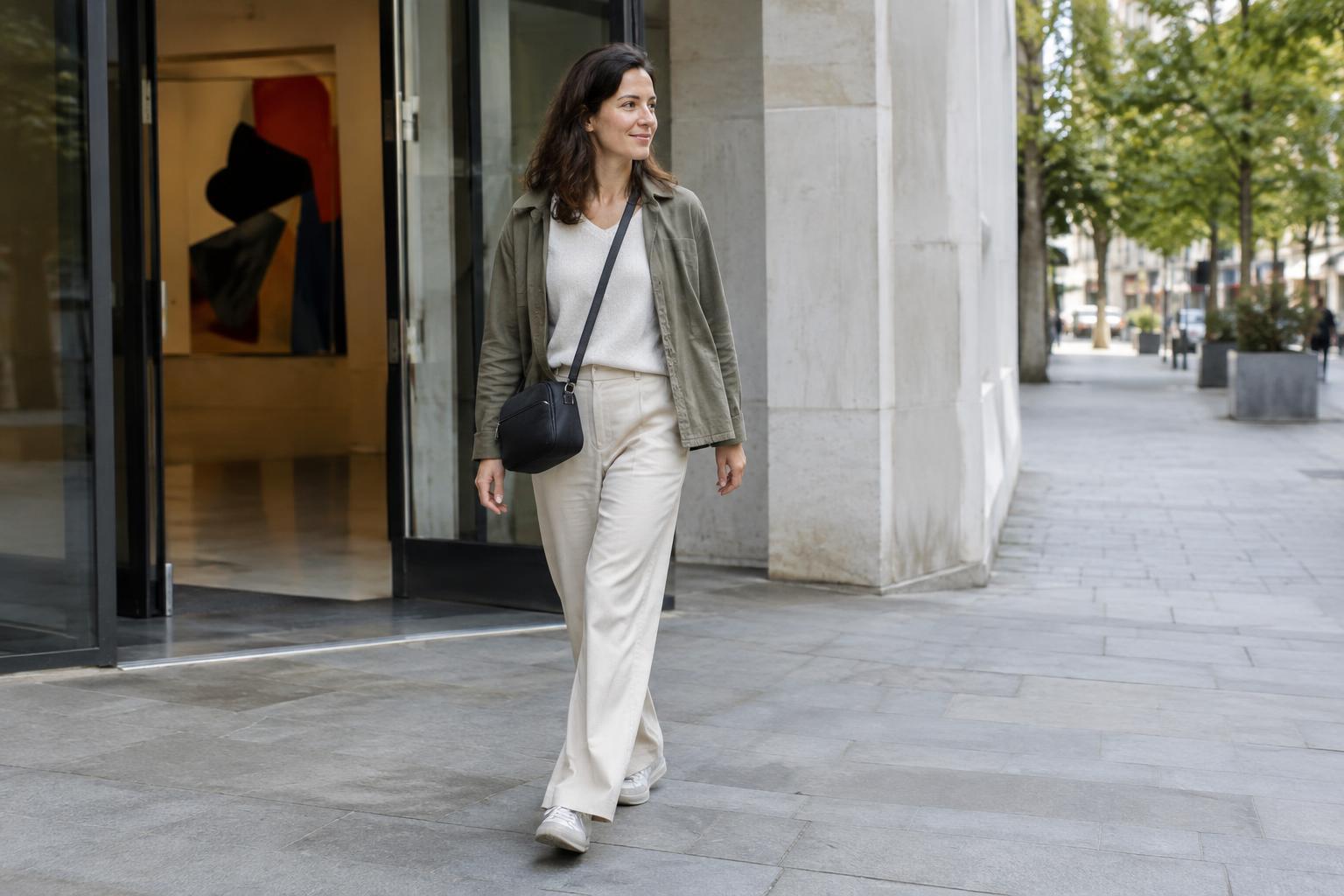
Start with your workplace, then choose the knit
A sweater does not look casual simply because it is soft. Its effect depends on its shape, condition and the rest of the outfit. Before choosing one for work, think about what people wear on an ordinary day in your workplace. A fine-knit crew neck may fit easily into an office where tailored separates are common, while a relaxed cardigan might be better suited to a less formal setting. If you are unsure about the dress code, pair the knit with pieces you would already feel comfortable wearing to a meeting.
Look for a neckline, hem and sleeves that sit where you want them to throughout the day. A knit that constantly slips off a shoulder, rides up or bunches under a jacket can make an otherwise neat outfit feel unfinished. It is also worth checking for pilling, stretched cuffs and loose threads. These small details often have more impact on how polished a sweater looks than its price or fabric label.
Use structure to balance softness
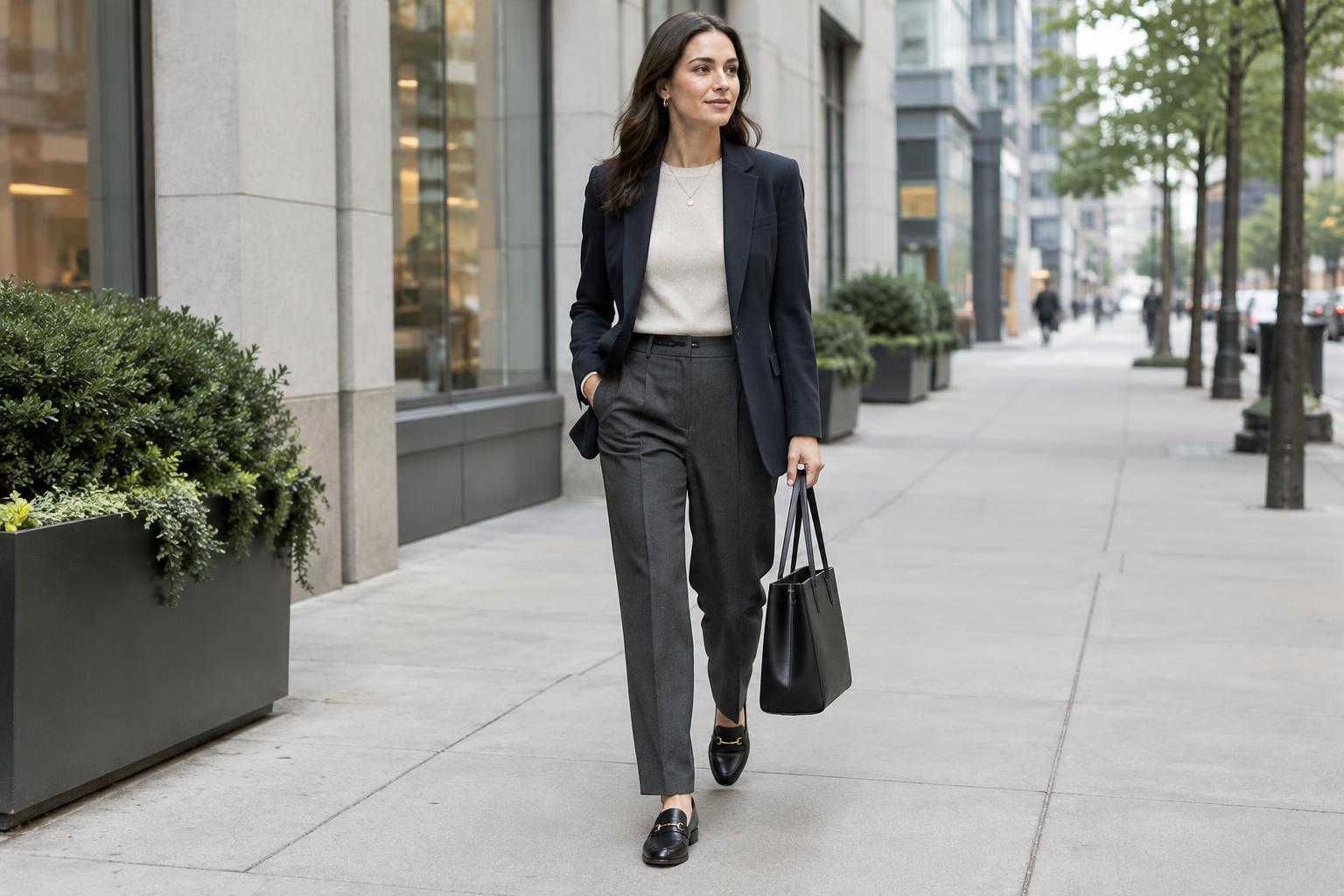
The simplest way to make knitwear feel work-ready is to put it next to something structured. Try a lightweight sweater with tailored trousers, a straight skirt or a blazer. The contrast gives the outfit a clear shape without sacrificing comfort. If your sweater is roomy, keep the lower half more defined; if you prefer wide-leg trousers, a closer-fitting knit can provide balance. These are starting points rather than rules, so adjust the proportions to suit how you like your clothes to fit.
A partial tuck can define the waist without making a sweater feel tightly arranged. If the knit is too thick to tuck neatly, choose a shorter length that ends near the waistband, or let it fall over slim, well-fitting trousers. A collared shirt beneath a crew neck adds a crisp edge, but check that the layers do not pull at the shoulders or feel restrictive when you sit down.
Choose details that look deliberate
Fine or medium-gauge knits often sit smoothly under outerwear and are easy to dress up. Ribbing, a clean mock neck or a cardigan with simple buttons can add interest without competing with the rest of your outfit. Chunky textures can work too, particularly in a relaxed office, but they tend to look more intentional with streamlined trousers or a simple skirt. Very oversized, slouchy shapes are harder to make formal, so save them for days when the setting allows more ease.
Colour can help connect a knit to the rest of your wardrobe. A sweater close in tone to your trousers creates a calm, continuous look; a contrasting colour can brighten a plain work outfit. Neither approach requires a particular palette. What matters is that the knit works with the shoes, coat and bag you actually use, rather than looking coordinated only while you are standing in front of a mirror.
Finish the outfit for the whole day
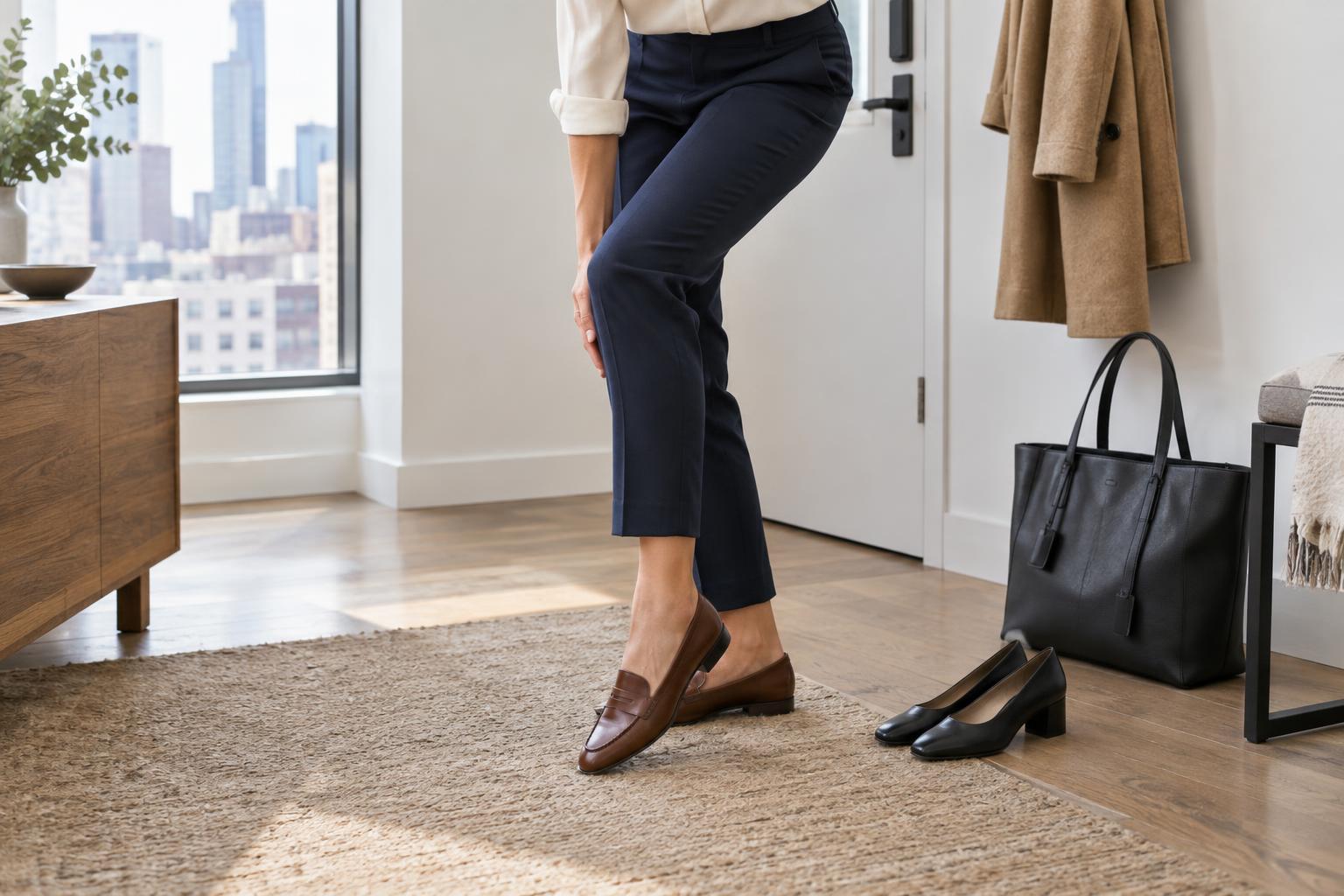
Shoes and accessories can shift the same sweater toward or away from workwear. Loafers, ankle boots or other clean-lined shoes can make knitwear feel more put-together, provided they suit your commute and workplace. A practical bag with a defined shape adds another structured element. Keep jewellery or a belt simple if the knit has a noticeable texture; with a plain fine knit, a small accessory can provide a useful finishing touch.
Consider the temperature changes built into a city workday. A commute, a warm train and an air-conditioned office may call for different layers. A cardigan can be easy to remove at your desk, while a thinner knit under a blazer offers flexibility for meetings. Before leaving, check that your coat fits comfortably over the outfit and that any shirt worn underneath still lies flat after you have moved around.
Build a repeatable formula, then care for it
You do not need a different knit for every workday. One reliable formula might be a fine-knit top, tailored trousers and comfortable smart shoes. Another could be a buttoned cardigan worn as a top with a straight skirt and boots. Change one element at a time to suit the day: add a blazer for a more formal appointment, or swap it for a coat and a lighter layer when you expect to be on the move.
Knitwear looks its best when it keeps its shape. Follow the care label, let items dry in the recommended way and store heavier sweaters folded if hanging makes them stretch. Remove pills gently with a tool designed for the fabric, and give frequently worn pieces time between wears when possible. A small amount of maintenance helps your most comfortable work clothes continue to look considered.