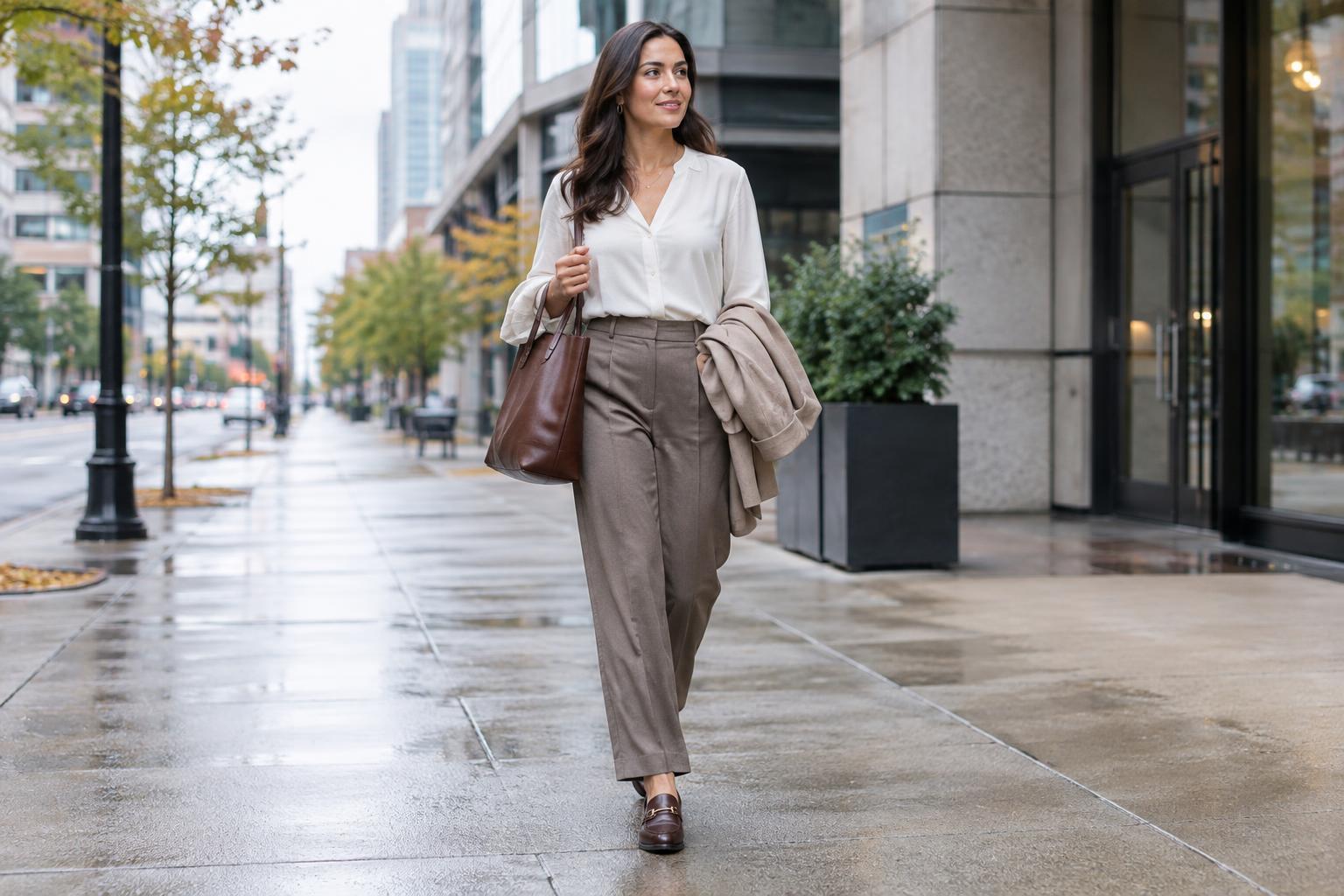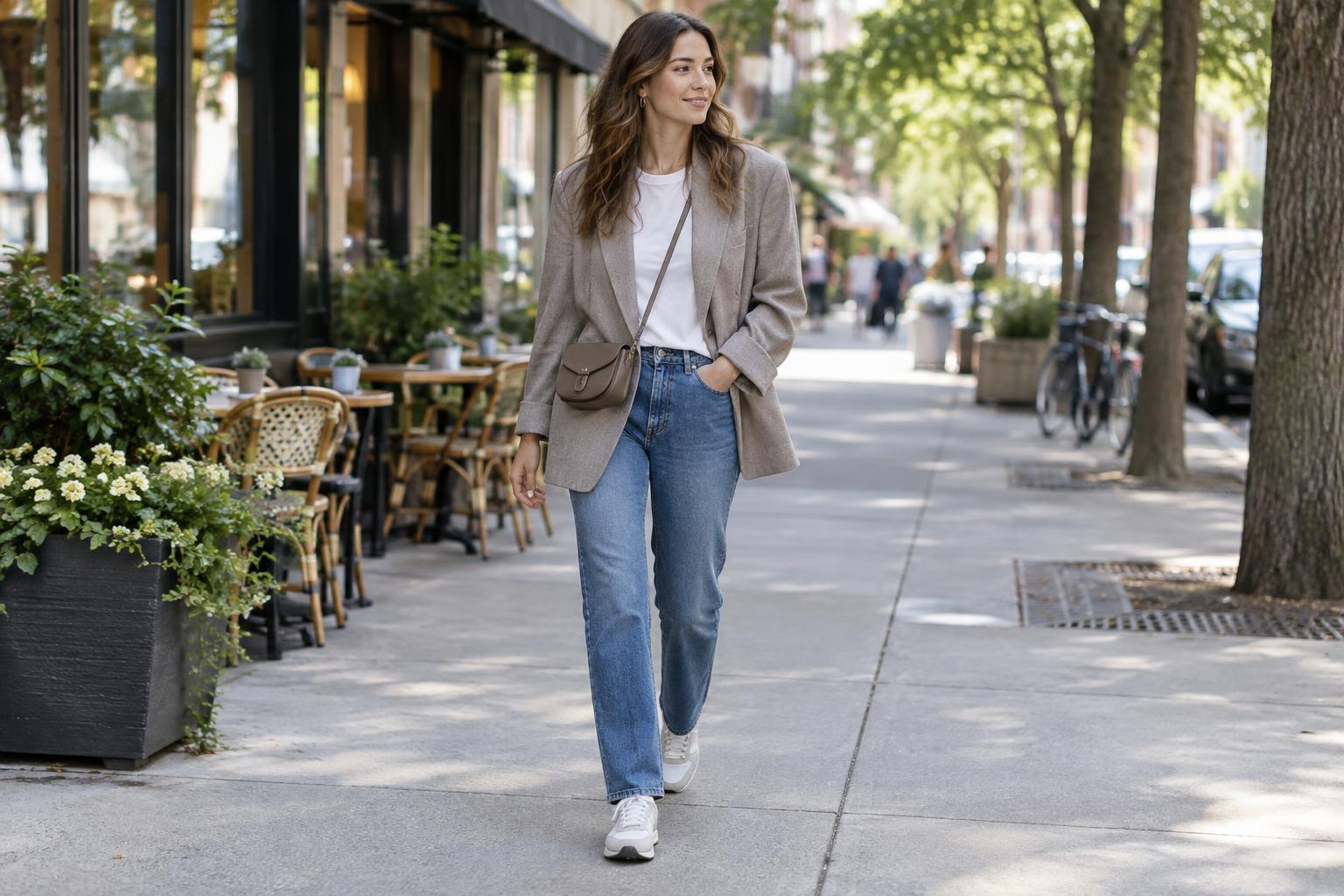
Start with a blazer you can move in
The easiest way to make a blazer feel casual is to choose one that does not demand constant adjustment. You should be able to reach forward, sit down and walk comfortably with the jacket open or buttoned. A relaxed fit leaves room for a T-shirt or light knit underneath, while a softer fabric tends to feel less formal than a sharply structured office jacket. You do not need an oversized blazer: one with a little space through the shoulders and body can be just as easy to wear.
Think about where the hem falls, too. A longer blazer can balance slim trousers or leggings, while a shorter one often sits neatly over wide-leg jeans. If you already own a work blazer, try it before buying another. Rolling the sleeves, leaving it open and pairing it with casual pieces may be enough to change its mood.
Let everyday basics do the styling
A plain T-shirt and jeans make a useful starting point because they keep the blazer from looking like part of a suit. Straight-leg or relaxed denim works with most blazer shapes. Add clean trainers for a day of walking, or loafers if you want the outfit to feel a little more put together. The result is adaptable: it can suit errands, a casual lunch or a trip across town without requiring a full outfit change.
For a softer look, wear the blazer over a fine knit or a simple long-sleeved top. A Breton-style striped top can add interest without making the outfit busy. If jeans are not your preference, try cotton trousers or a casual midi skirt. The helpful contrast is between the blazer’s tailored shape and the ease of everything around it, not a particular item you must own.
Use proportion to keep it relaxed
When a blazer feels too formal, the issue is sometimes the combination rather than the jacket itself. A fitted blazer, crisp shirt, tailored trousers and dress shoes all point in the same workday direction. Swap one or two of those pieces for something less structured. An untucked tee, relaxed trousers or flat shoes can make the outfit feel more natural for the weekend.
Proportion can also help an outfit feel comfortable rather than bulky. If your blazer is roomy, a closer-fitting top underneath creates a clear shape. With a more fitted jacket, wider trousers or a flowing skirt offer contrast. These are starting points, not rules: check the outfit while standing and sitting, and keep the combination that lets you move easily.
Dress for the plans you actually have
For a walking-heavy day, pair a blazer with comfortable jeans, a breathable top and shoes you already trust. A small crossbody bag keeps your hands free, while a lightweight scarf can add warmth without taking up much space. If you expect to move between indoors and outdoors, wear layers that are easy to remove; a blazer can act as a light outer layer in mild weather or sit beneath a roomier coat when it is cooler.
For a weekend dinner or informal gathering, you can keep the same blazer and change just a few details. Swap the tee for a simple blouse or knit, add earrings if you enjoy wearing them, and choose shoes that suit the journey as well as the destination. A blazer over a casual dress is another low-effort option. The aim is to feel ready for the occasion without losing the comfort that makes a weekend outfit useful.
Make it easy to wear again
A versatile weekend blazer does not need a new outfit built around it every time. Try laying out two or three combinations using clothes you already reach for, such as denim and a tee, trousers and a knit, or a dress and flat shoes. If a combination feels too polished, change the shoes or base layer before dismissing the blazer. Repeating a reliable pairing can be more useful than inventing a new look for every outing.
After wearing it, give the blazer room to air and follow its care label before washing or cleaning it. Store it on a hanger that supports the shoulders so it is ready to pick up again. When the fit, layers and shoes work with your usual weekend plans, a blazer stops feeling like borrowed workwear and becomes another easy option in your wardrobe.