Give each bag room to stand
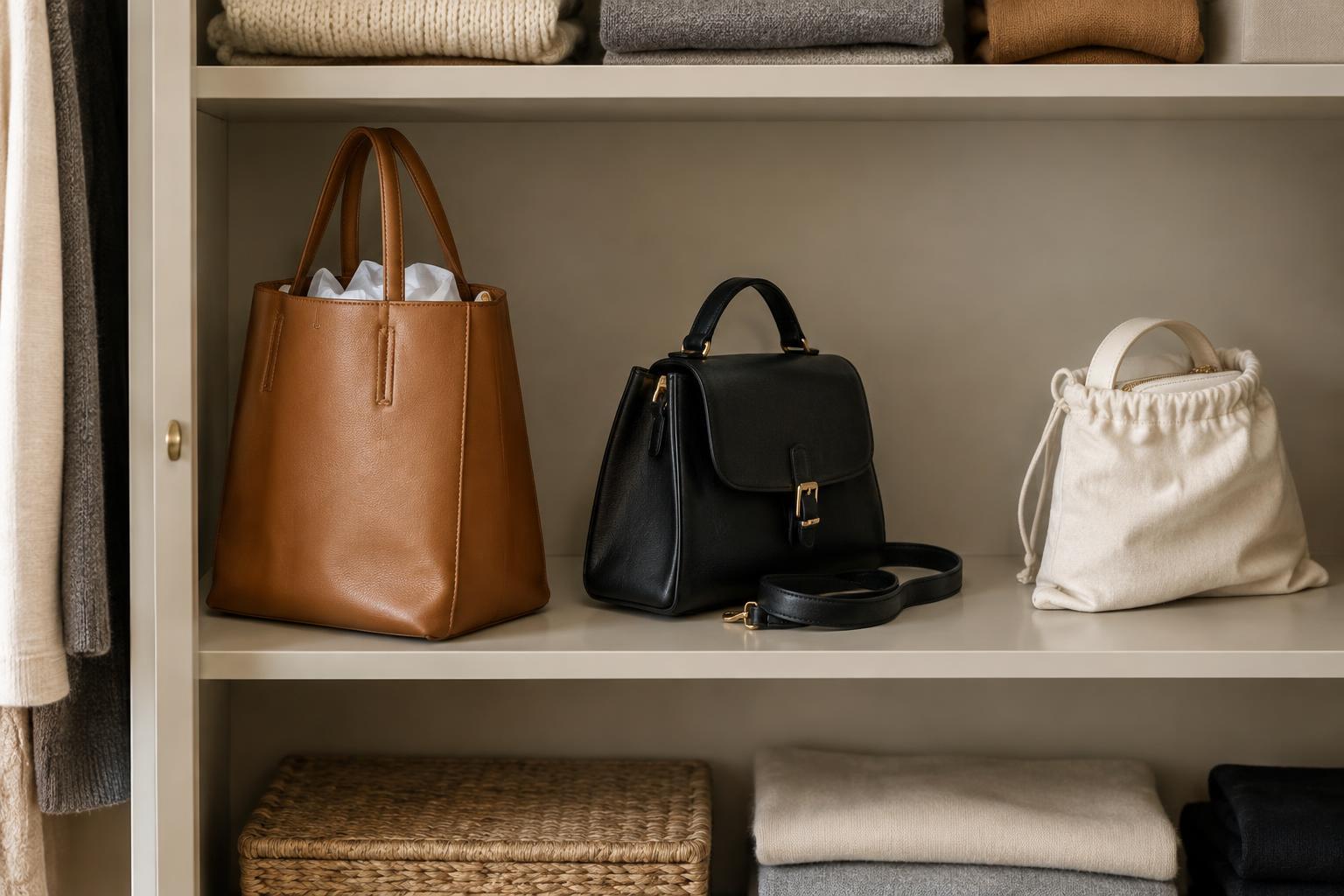
The first step is to stop treating handbags like items that can be stacked. When one bag rests on another, its weight can flatten handles, bend a flap or press a crease into a softer body. Give structured bags their own standing space on a shelf whenever possible. If a bag tips over, place a sturdy divider beside it rather than wedging it tightly between other items.
A closet shelf is useful because you can see what you own at a glance. Leave enough space above each bag to lift it out without dragging it against the shelf. In a narrow wardrobe, adjustable shelf dividers or separate open compartments can help keep bags upright. Keep heavier bags on lower shelves, where they are easier to take down without bumping or dropping them.
Support the shape from the inside
An empty bag may fold inward while it sits unused, especially if its sides are soft. Lightly fill the main compartment so the bag holds its natural outline. Clean, plain tissue paper or a soft cotton cloth can work; use enough to support the sides without making them bulge. For a roomy tote, a removable bag insert may also provide structure, provided it fits comfortably.
Avoid tightly packed newspaper, which can leave ink marks, and do not force a filler into corners. If a bag has a flap, close it as it normally sits rather than pulling it taut. Check that the base is resting flat and that nothing inside, including a forgotten pen or set of keys, is pushing against the exterior.
Protect handles, straps and surfaces
Hanging a handbag by its handles can be convenient for daily use, but long-term hanging may put pressure on the handles and their attachment points, particularly with a heavy bag. For bags you are putting away, let the body rest on a shelf. Lay a detachable strap loosely inside the bag or beside it. If a strap remains attached, arrange it so it does not pull on the bag or leave an indentation across the front.
Before storing a bag, empty it and brush away loose crumbs or dust with a method suitable for its material. Let it dry completely if it has been caught in the rain. A breathable fabric dust bag or clean cotton pillowcase can help keep dust off a bag used less often; avoid sealing a damp bag in plastic. Keep bags away from direct sunlight and sources of heat, which may affect some materials over time.
Use small spaces without squeezing bags together
A compact city wardrobe may not have a dedicated handbag shelf. Try reserving one reachable shelf for the bags you carry most often and placing less-used bags in separate compartments elsewhere. A shallow cabinet can suit slim crossbody bags, while a deeper shelf gives totes and structured shoulder bags room to stand. Measure your available space and your tallest bag before buying organisers.
If you must use a drawer, choose bags that can lie flat without anything stacked on top of them. Keep clasps, chains and other hardware from pressing into neighboring bags by using soft cloth barriers or individual dust bags. Avoid overfilling under-bed boxes: they are better for bags that fit comfortably with their shape supported than for bags you have to push into place.
Build a quick put-away routine
Good storage is easier to maintain when every bag has a clear place. After switching handbags, remove receipts, snacks and other loose contents; check for spills; then return the bag to its spot with its straps arranged neatly. Keep the bag you use every day somewhere easy to reach so careful storage does not become an extra chore on a busy morning.
Every so often, look over bags that have been sitting unused. Make sure the stuffing still supports their shape, the straps are not trapped underneath and the storage area is dry. If a shelf has become crowded, make more room rather than pressing in one more bag. A little breathing space does more for a handbag’s shape than a complicated organising system.