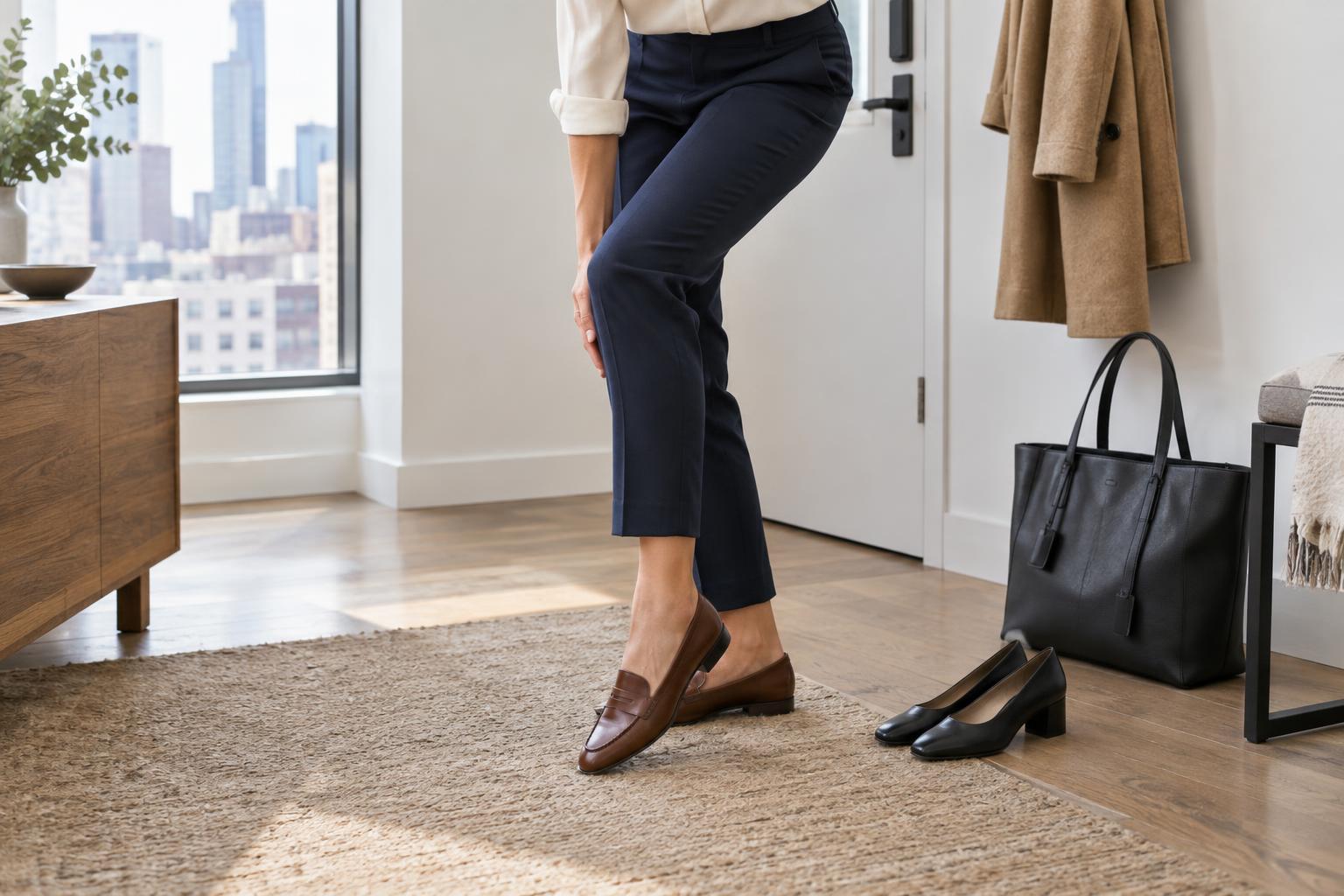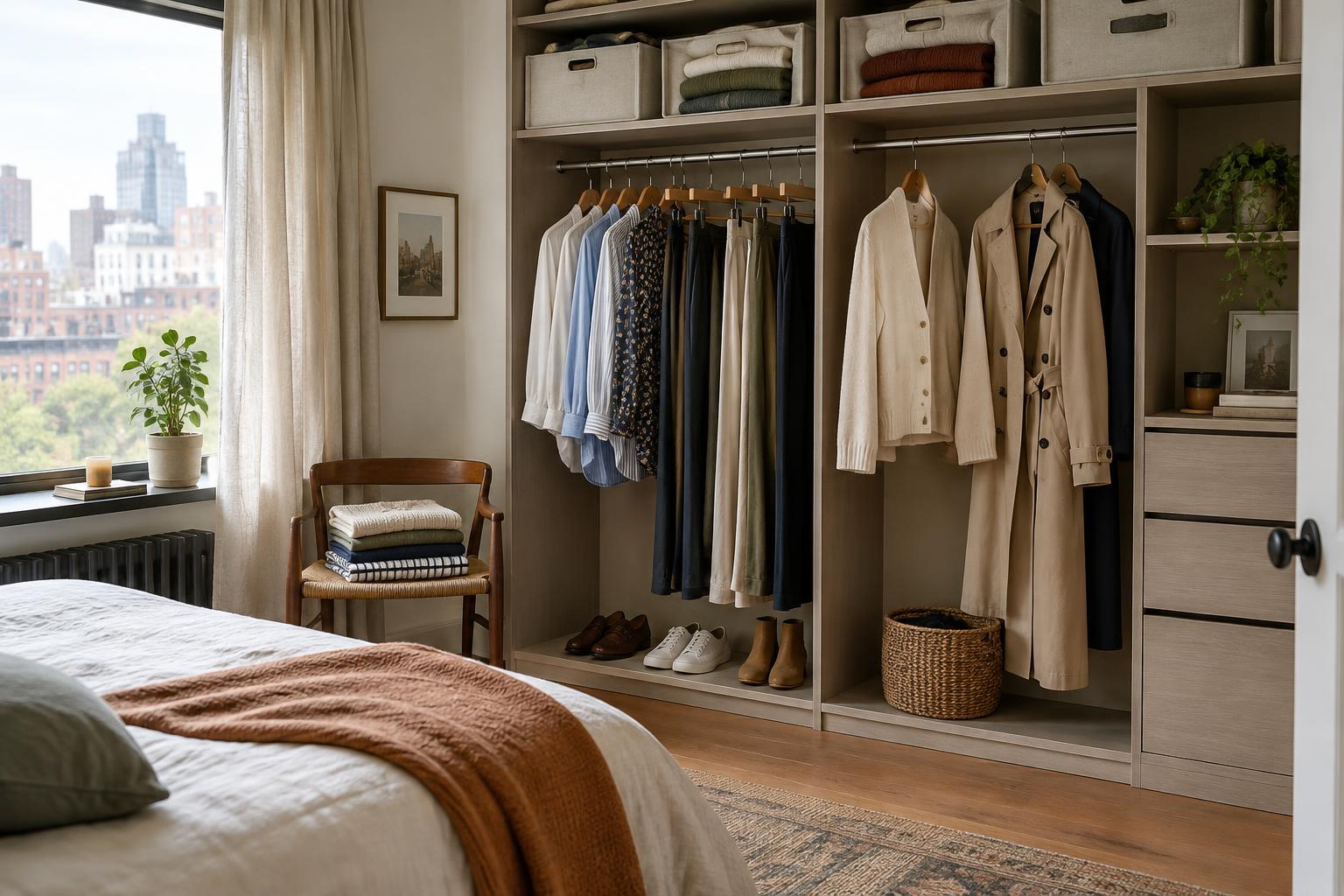
Think of the rotation as a change in access
A seasonal wardrobe rotation works best when it changes what is easiest to reach, rather than drawing a strict line between one season and the next. City days can include a warm commute, a cool office and an evening outdoors. Packing every lightweight top away when the temperature drops may leave you without a useful base layer; leaving every heavy knit in the main closet can make getting dressed feel crowded.
Start by sorting clothes into three groups: regular use, occasional use and unlikely to be needed soon. Keep regular-use pieces in your easiest drawers and on the most accessible hangers. Move occasional pieces to a higher shelf or a clearly marked box nearby. Only the unlikely-to-be-needed group belongs in deeper storage. This approach makes room without turning a change in the weather into a search through sealed containers.
Build a small year-round bridge
Before storing anything, identify the clothes that connect your seasonal wardrobes. These might include plain T-shirts for layering, a comfortable long-sleeved top, a cardigan, a light jacket, trousers that work with different shoes and a dress that can be worn alone or under a layer. The right bridge depends on your routine, not on a fixed list of wardrobe essentials.
Give this group a permanent place. A short section of rail or one drawer is easier to maintain than an overflowing pile of “just in case” clothes. Choose pieces you actually wear across different conditions, including workdays and relaxed weekends. If an item needs a very particular combination to be useful, it may not deserve a spot in this high-access area. The goal is to keep options open without keeping everything out.
Use zones instead of all-or-nothing storage
Arrange your space by how quickly you might need something. The front of a closet or top drawer is for current outfits. A nearby shelf, under-bed box or less-used drawer can hold transitional pieces, such as a warmer jumper or lighter trousers. More remote storage is for items you are unlikely to wear until conditions change substantially. Label containers by contents rather than season alone: “light layers and tops” is more helpful than “summer.”
Keep practical city accessories in the same system. An umbrella, a scarf and a compact extra layer can earn accessible spots even when they are not part of your usual outfit. If you have limited storage, use smaller containers so you can retrieve one category without unpacking everything. A simple note on your phone listing what went into each box can help, but labels and consistent placement may be enough.
Store clothes so they are ready to return
Wash or clean clothes according to their care labels before putting them away, and let them dry fully. Check pockets, close fastenings that might catch on other fabrics and deal with small repairs while the item is still in sight. Fold pieces that may stretch on hangers, such as many knits, and give delicate items enough space that they are not crushed beneath heavier clothes.
Choose storage that suits both the fabric and your home. Clean, dry containers help protect clothes from dust, while breathable storage can be useful for items that should not sit compressed for long periods. Avoid forcing too much into one box: clothes are easier to find and tend to come out in better shape when they have some room. Store shoes clean and dry, with frequently worn pairs available near the door rather than buried with clothing.
Adjust the system as your routine changes
You do not need to complete the entire rotation in one afternoon. Start with the pieces taking up the most room, then revisit the accessible zone after a few weeks. If you repeatedly pull an item from storage, move it closer. If a piece stays untouched through several opportunities to wear it, consider whether it still fits your needs before giving it prime space again.
When an unexpected change in weather is on the horizon, check the nearby transitional zone before opening deeper storage. This small pause can prevent duplicate purchases or the feeling that you have nothing suitable to wear. A useful rotation is not perfectly tidy at all times; it is easy to update and makes ordinary mornings simpler. Keep the clothes that support your actual days close, and let everything else wait its turn.