Start with your workplace, not a formula
A polished outfit does not have to include a blazer. What matters more is whether your clothes fit comfortably, look cared for and suit the day ahead. Before choosing pieces, think about your workplace dress code and your plans: a desk day, a presentation and a walk across town may call for different levels of formality. If you are unsure, take cues from what is normally worn in your workplace rather than relying on a universal list of “office essentials.”
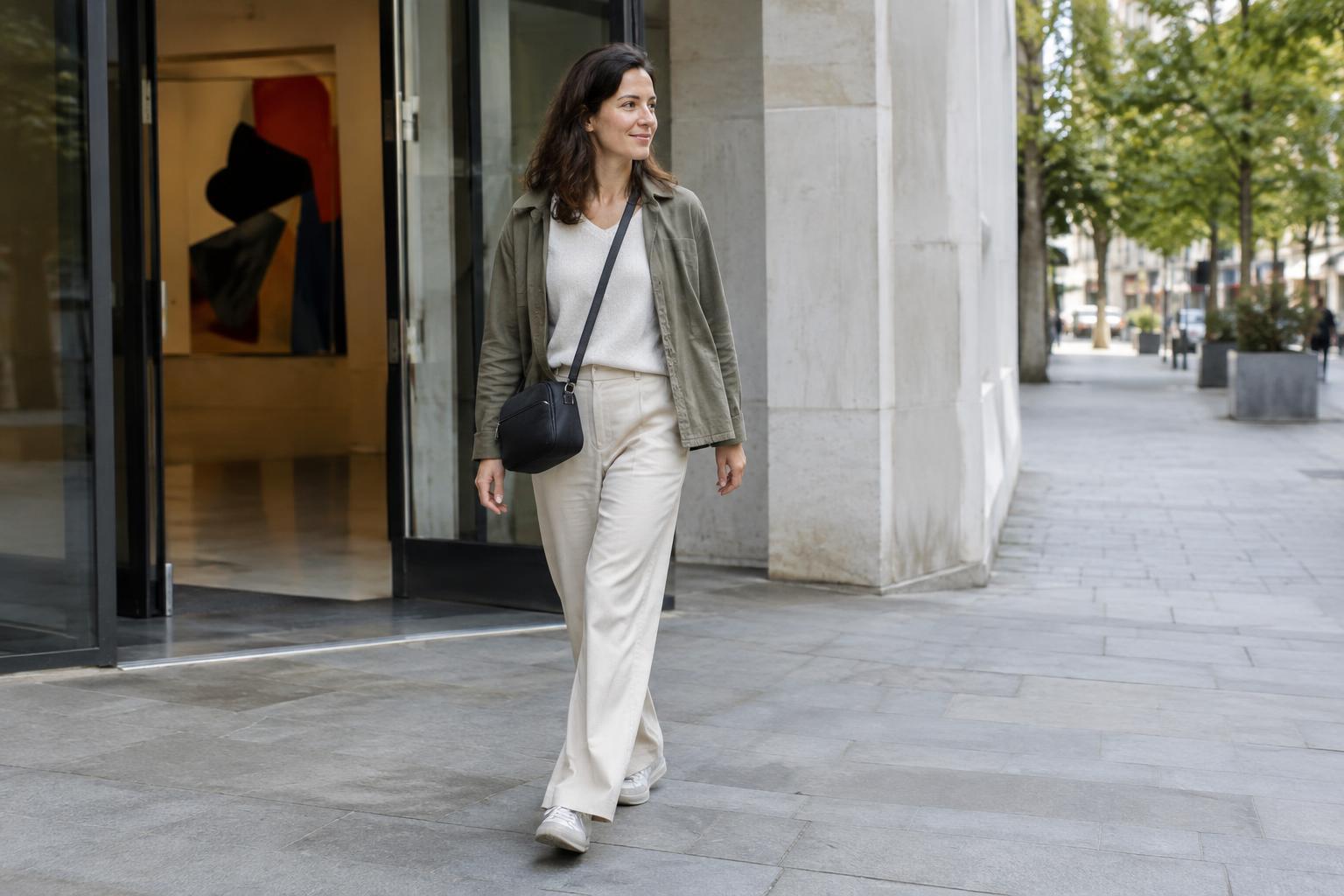
Choose one piece that gives the outfit its direction. Tailored trousers can make a simple knit feel work-ready, while a crisp shirt can lend structure to a softer skirt. You do not need every item to look formal. A useful balance is one structured piece, one comfortable piece and shoes that make sense for both the workplace and the journey there.
Let fit and fabric do the work
Without a blazer, the shape of each garment becomes more noticeable. Look for shoulders that sit where they should, waistbands that do not dig in and hems that allow you to move easily. A shirt that pulls at the buttons or trousers that need constant adjusting can make an outfit feel less composed, even if the pieces are otherwise smart. Simple alterations, such as shortening a hem, may help a frequently worn item work better for you.
Fabric affects the overall impression too. A substantial knit, smooth cotton shirt or trousers with enough weight to hang neatly can look more finished than a thin garment that twists or clings. This does not mean choosing stiff clothes. If you spend time on public transport or move between meetings, breathable fabrics and a little ease in the cut may be more useful than a sharply tailored outfit you cannot relax in. Check care labels before buying so the outfit remains manageable on busy mornings.
Build structure with other layers
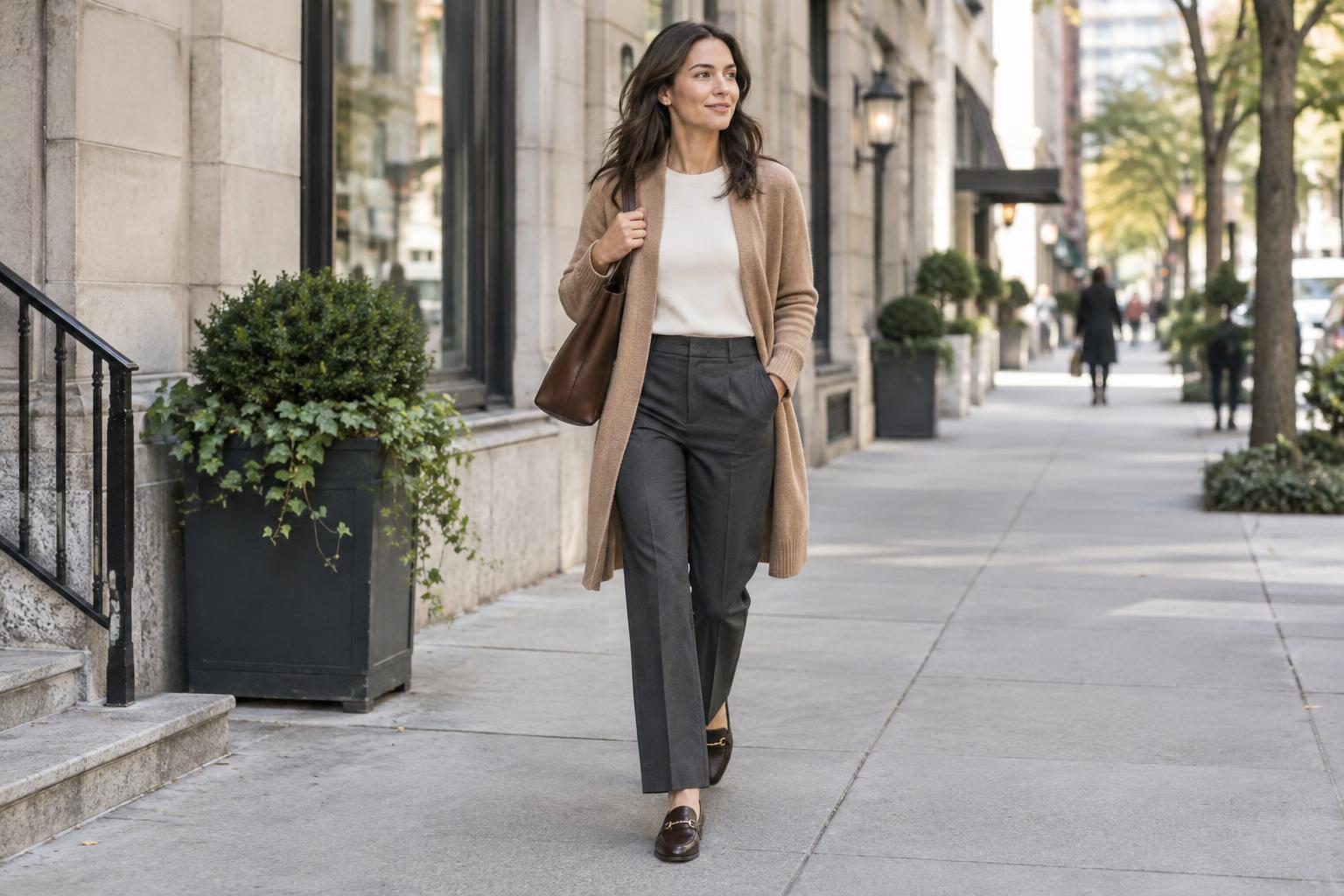
A blazer often acts as the finishing layer, but a cardigan, overshirt or fine-gauge sweater can serve a similar purpose in a less formal setting. The key is to choose a layer with a clear shape. A cardigan that holds its shoulders and ends near the waistband can define an outfit without feeling restrictive. An overshirt can add a clean line over a fitted top, provided its fabric and cut suit your workplace.
You can also create structure without an extra layer. A collared shirt tucked loosely into straight-leg trousers draws a clear line at the waist. A knitted top paired with a column skirt keeps the silhouette simple. If a dress is your easiest option, look for one that lets you sit, walk and reach comfortably; a belt is optional, not a requirement. A tidy neckline, intentional sleeve length and well-chosen hem can make these combinations feel complete on their own.
Choose shoes and accessories for the whole day
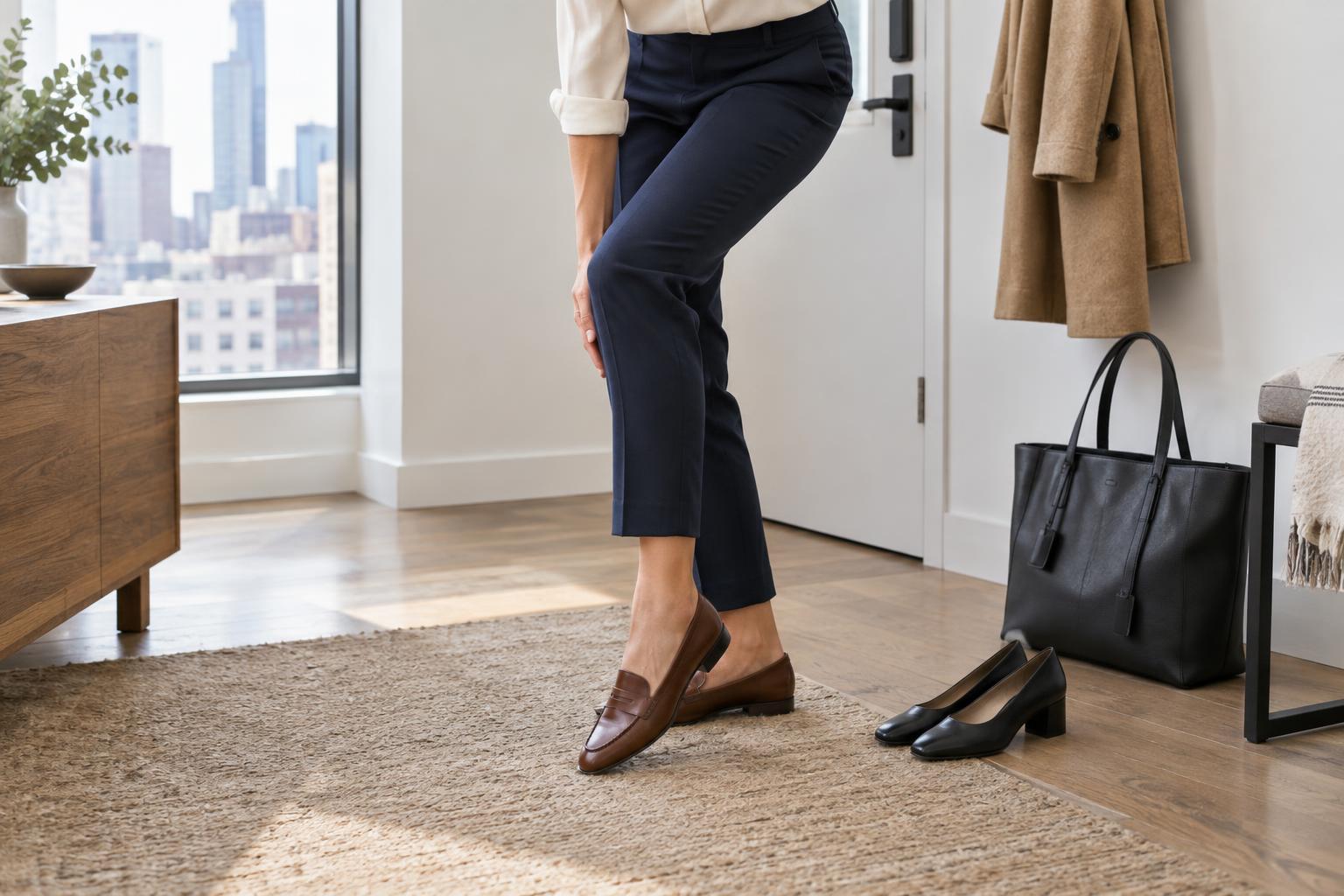
Shoes have a strong effect on how an outfit reads, but polished does not have to mean high heels. Loafers, simple flats, ankle boots or understated trainers may all work, depending on your office. Prioritise a pair you can walk in safely and comfortably, especially if your commute includes stairs or uneven pavements. Keeping shoes clean and in good condition often makes more difference than choosing a more formal style you rarely want to wear.
Accessories can add definition without making the outfit fussy. A belt can tie together trousers and a tucked-in top; a scarf or small piece of jewellery can bring colour to neutral clothes. For a city workday, consider the practical details as well: a bag that carries your essentials without straining your shoulder, space for a compact umbrella if needed and an outer layer that fits over what you are wearing. These choices help the outfit work beyond the office.
Keep a few reliable combinations ready
Getting dressed is easier when you know which pieces already work together. Try laying out a few combinations from your own wardrobe: straight-leg trousers with a knit and loafers; a midi skirt with a shirt and flats; or a comfortable dress with ankle boots and a cardigan. Check each outfit while standing and sitting, and notice whether you need to adjust anything repeatedly. Those small tests are more useful than judging a look only on a hanger.
Once you find a combination you like, vary one element at a time. Change the top, swap the shoes or add a different layer while keeping the rest familiar. This helps you build options for changing weather and different workdays without needing a separate wardrobe for every occasion. A polished outfit is ultimately one you can put on with confidence and wear through the day without giving it too much thought.