Start with the time you actually have
An after-work outing does not need to fill the whole evening. Before choosing where to go, work backward from the time you want to be home. Allow for leaving work, travelling, the activity itself and the journey back. A plan that looks easy on paper may feel hurried if it leaves no room for a delayed train or a slow walk from the office.
Give the outing one main purpose. You might want to catch up with a friend, browse a bookshop, see an exhibition or simply sit somewhere other than your desk. Trying to combine several stops can turn a welcome break into another list of tasks. If you have an hour, a single nearby destination is often more satisfying than an ambitious route across town.
Choose a destination that fits your route
Convenience matters more when your time is limited. Look for a place near your workplace, on your usual journey home or close to a station you already use. That way, the outing adds a pause to your day rather than a complicated detour. Check opening hours and any booking requirements before you leave; it is easier to adjust the plan at your desk than at a closed door.
Match the destination to the energy you expect to have after work. A quiet café or a short walk may be appealing after a busy day, while an activity with a clear start time can help if you want to switch off from work. Consider noise, seating and the weather as well as travel time. Keep one simple alternative in mind, such as a nearby indoor stop if your outdoor plan no longer appeals.
If you are meeting someone, suggest a specific place and a realistic arrival time. Agreeing on the details early avoids spending your limited window exchanging messages about where to go. It is also fine to say when you need to leave: a clear finish time makes a brief catch-up easier to plan.
Make the work-to-evening transition easy
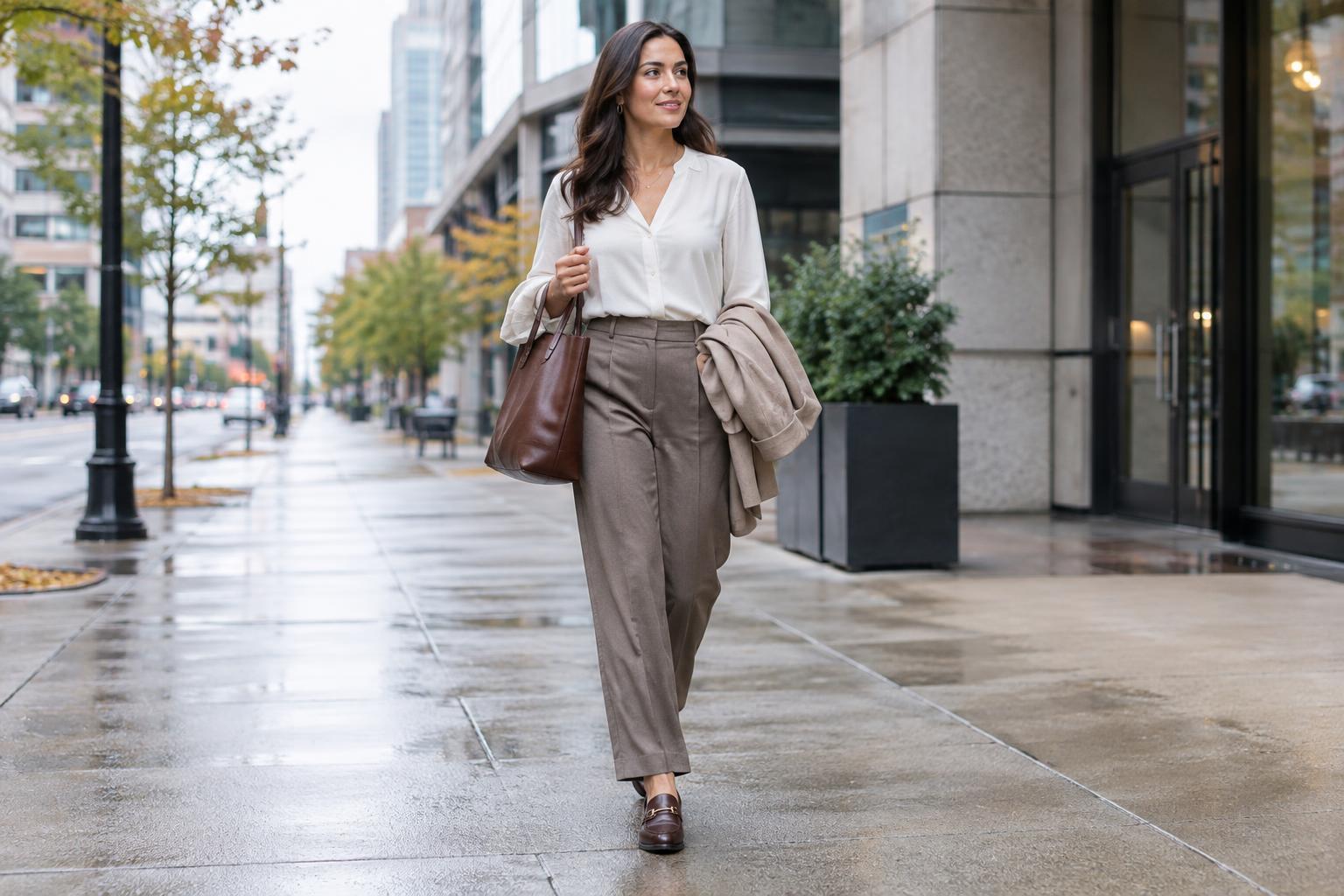
The most useful after-work outfit is one you can comfortably wear for both parts of the day. Shoes you can walk in, a layer suited to the evening temperature and a bag that leaves your hands free can make a short outing feel less demanding. If your workplace calls for a more formal look, a small change such as swapping shoes or adding a lighter layer may be enough to shift the mood.
Avoid packing for every possibility. Carry only what the plan calls for, along with everyday essentials such as your keys, phone and travel pass. A bulky bag can make a spontaneous stop feel like a chore, particularly if you will be standing or walking. If you need a change of clothes for an activity, check that you have somewhere practical to keep your work things.
Give yourself a few minutes between work and leisure if you can. Put away work messages, refill your water bottle or take a short walk before meeting anyone. This small transition helps the outing feel like a break rather than an extension of the workday.
Protect the pleasant part of the plan
A tight schedule benefits from a loose middle. Once you arrive, resist adding errands simply because they are nearby. Leave enough time to enjoy what you came for, even if that means ordering something simple, taking a shorter route through a gallery or choosing conversation over a second stop. The aim is not to make the evening impressive; it is to use your available time in a way that feels worthwhile.
Think about the trip home before you settle in. Know which route you expect to take and when you should start heading back. If you are going somewhere unfamiliar, check the return journey in advance. You do not need to watch the clock constantly, but a quiet reminder on your phone can prevent an enjoyable outing from ending in a rush.
Keep a smaller version ready
Some workdays run long, and sometimes you will have less energy than you expected. A smaller version of your plan can save the evening without forcing it: meet for one drink instead of dinner, take a brief walk instead of a long one, or visit a place near home rather than near the office. If you are meeting someone, let them know promptly when the plan needs to change.
You can also decide that heading straight home is the better choice. Limited free time is valuable, but it does not have to be filled. Planning an after-work outing well means making it easy to enjoy and equally easy to shorten when the day calls for it.