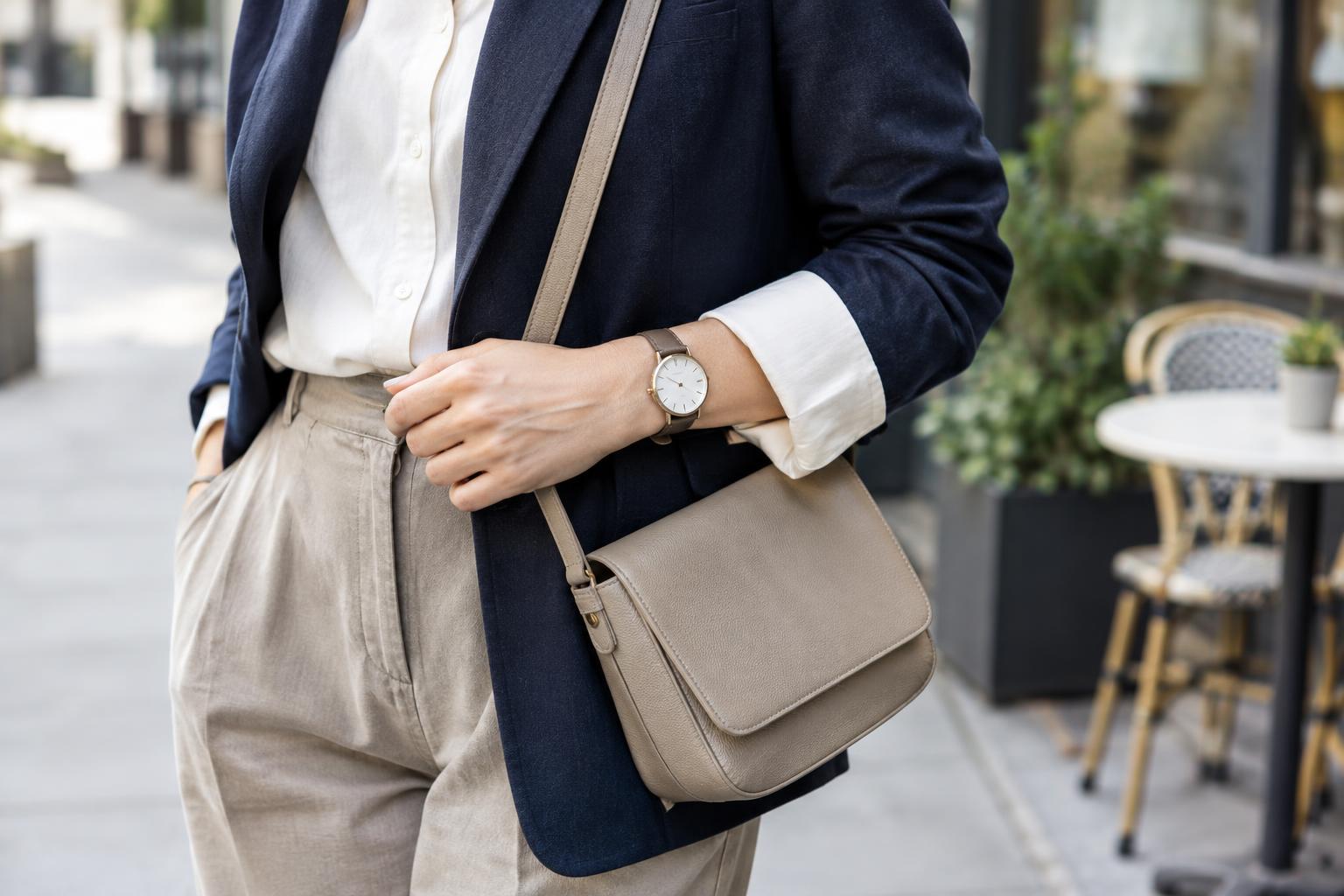
Start with the days you actually dress for
A watch is easiest to wear regularly when it suits your ordinary schedule, not just one ideal outfit. Think through a typical week: commuting, working, running errands, meeting friends and spending time outdoors. If you often move between these settings without changing clothes, a simple watch may be more useful than one with a strong formal or sporty look.
Consider what you want the watch to do. Some people mainly want to check the time without reaching for a phone; others want reminders, activity features or a decorative finishing touch. Those preferences can help you choose between a traditional watch and a smartwatch. Neither needs to match every item you own. The aim is to find one you feel comfortable wearing with several outfits you already repeat.
Choose proportions that feel right on your wrist
Watch size is about more than the width of the face. The thickness of the case, the length of the lugs where the strap attaches and the weight all affect how a watch wears. A watch can look balanced in a product photo but feel bulky beneath a shirt cuff or shift around while you walk. If possible, try it on and move your wrist as you would during a normal day.
Check that the face is easy for you to read at a glance. A clear dial with distinct hands or numbers can be helpful on a busy commute. Smaller, minimal faces can look understated, while larger ones tend to become a more noticeable part of an outfit. There is no single correct size for a particular wrist: choose proportions that feel comfortable and look intentional to you.
If you wear long sleeves often, test how easily the watch slides under a cuff or jacket sleeve. Also check whether the clasp or buckle presses into your wrist when you type. Small points of discomfort are worth noticing before you decide to wear something all day.
Let the strap do some of the styling
The strap often determines whether a watch feels polished, casual or practical. A metal bracelet can sit comfortably alongside workwear and simple weekend clothes, provided its weight and fit suit you. Leather can soften a structured outfit, though it may need more care if it is frequently exposed to water. Fabric and silicone straps can feel relaxed and are often easy to pair with casual layers.
Think about the colours and textures you reach for most. If your wardrobe centres on neutrals, a black, brown, tan or muted metal strap can be straightforward to repeat. If you enjoy colour, a brighter strap may add interest to otherwise simple outfits. A model with an easily changeable strap offers flexibility without requiring several watches, but check which replacement straps will fit before relying on that option.
Match the finish to your wardrobe, not a rulebook
A watch does not have to match every piece of jewellery or every bag clasp. Still, noticing what you already wear can make the choice easier. A silver-tone case may blend into a wardrobe with cool-toned accessories; a gold-tone or warmer finish may feel at home with earthy colours. Mixed finishes can also work, especially when the watch has a restrained face and strap.
Try picturing the watch with three real outfits: one for work, one for a casual day and one for an evening plan. For example, a clean-faced watch might sit neatly with tailored trousers, a knit and trainers, then add a quiet finishing touch to a dress. If you would wear it with only one of those looks, decide whether that narrower role is what you want. An everyday watch earns its place by being easy to put on without rethinking the whole outfit.
Check practical details before you buy
Style matters, but daily use also depends on fit and upkeep. Make sure the strap can be adjusted securely, particularly if your wrist size changes slightly during the day. Check the watch’s stated water resistance rather than assuming it can handle rain, handwashing or swimming. If you choose a smartwatch, consider how often you are willing to charge it and whether its notifications will be useful or distracting.
Set a budget that leaves room for any strap adjustment or replacement you may want. A versatile watch does not need to be the most expensive option; it needs to be one you can read, wear comfortably and care for realistically. Once you have chosen it, wipe it down as appropriate for its materials, store it somewhere it will not be knocked about and follow the maker’s care guidance. Those simple habits help keep an everyday accessory ready for the next outfit.


