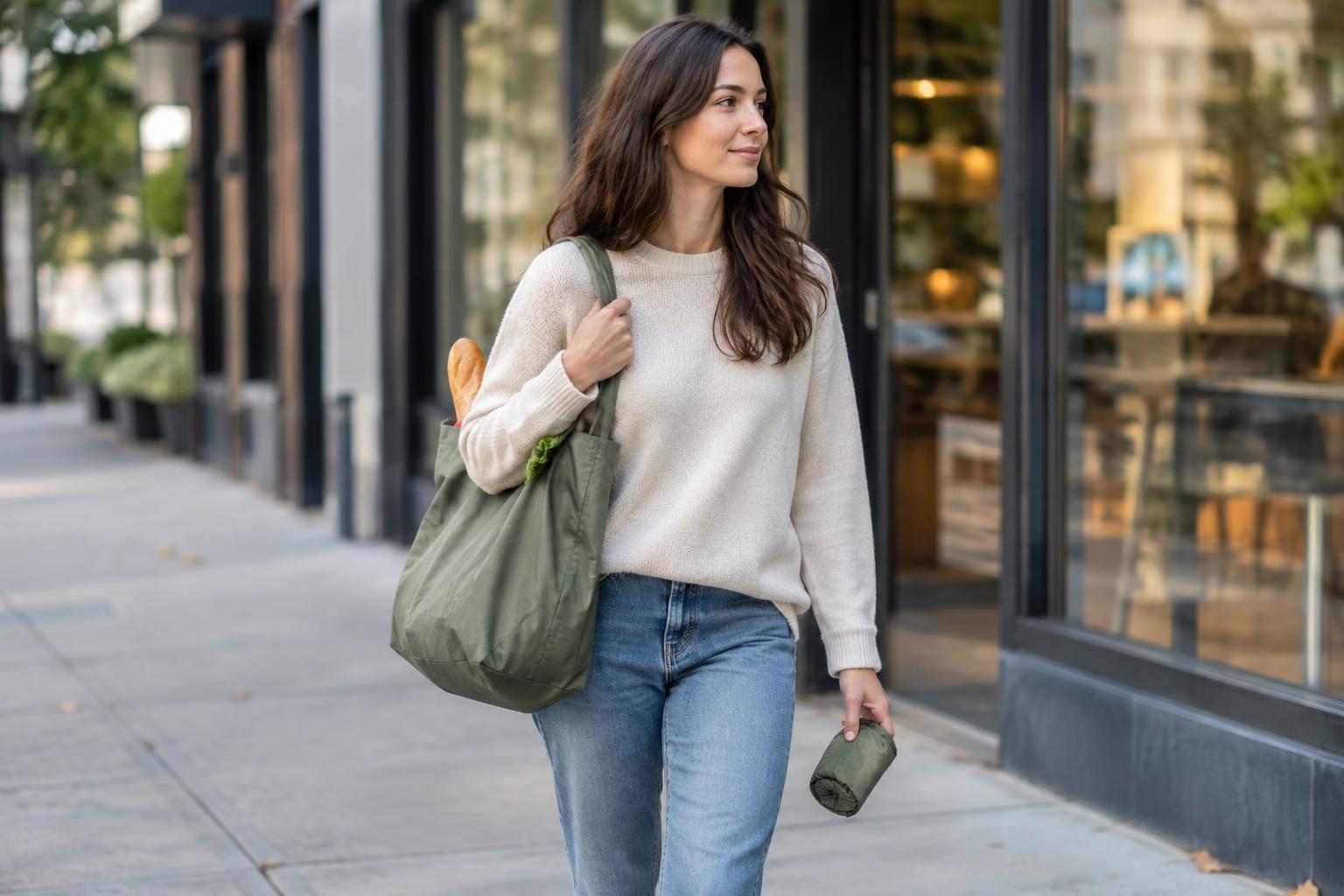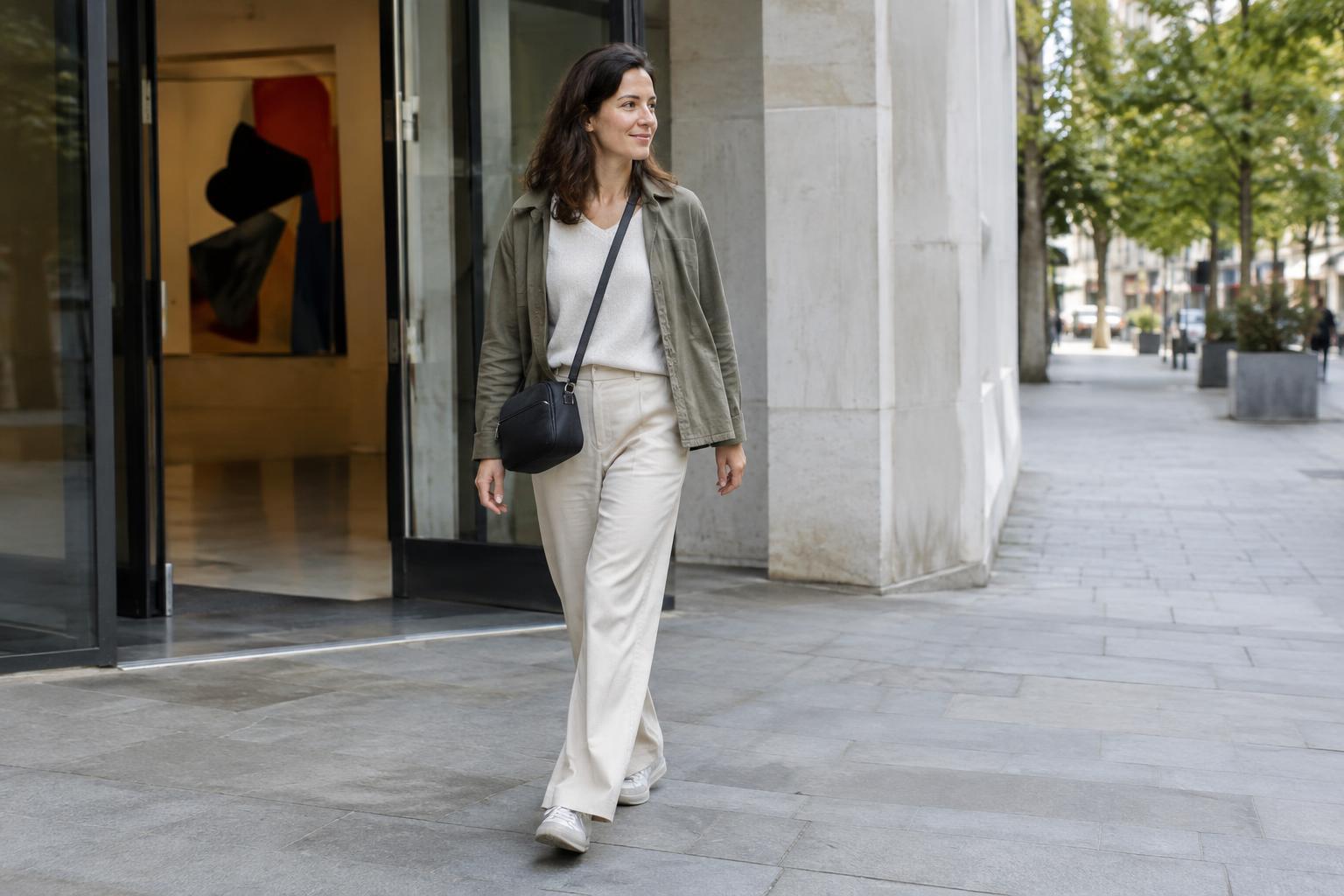
Start with the day, not the bag
A small bag is easiest to pack when you decide what the day requires before you start filling it. Think through your journey, your plans and what you will need to reach quickly. A workday with a lunch stop may call for a different mix from a relaxed afternoon out. Begin with the items you would find difficult to manage without, then add only what serves a clear purpose.
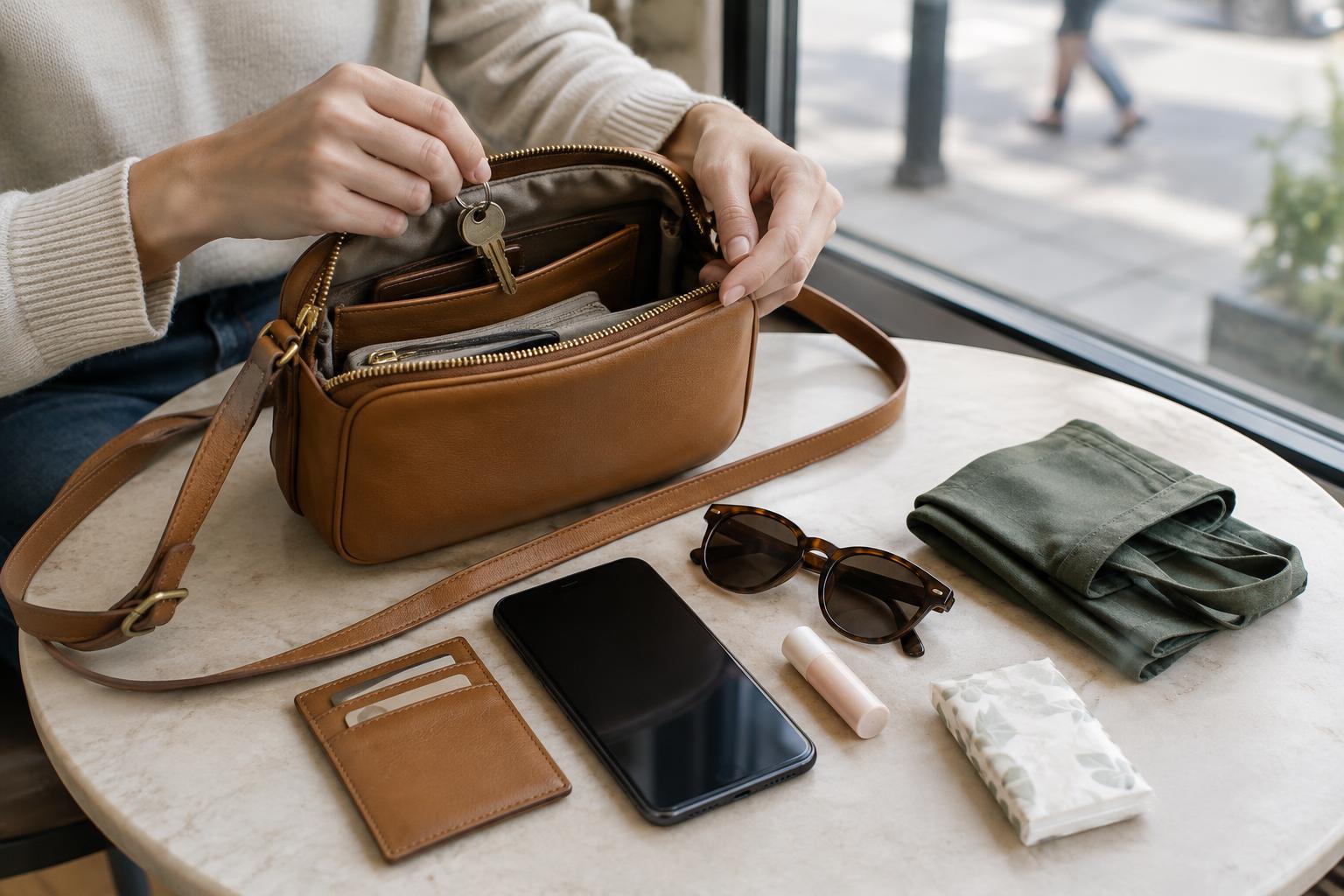
A useful starting list might include your keys, phone, payment method and any personal essentials you regularly use. Add a travel card, glasses or a small hygiene item if the day calls for them. Keep the list short enough to remember. If you repeatedly carry something home unused, consider whether it belongs in your everyday bag or should be added only for particular outings.
Give every essential a home
The trick to finding things in a small bag is consistency. Choose one pocket or section for your keys, another for your cardholder and a reliable spot for your phone. If the bag has no built-in compartments, one slim pouch can hold small items that would otherwise settle at the bottom. Avoid filling it with so many objects that you must empty it to find one.
Put the things you reach for most often where you can access them without disturbing everything else. Less frequently used items can sit behind or beneath them. Before buying an organiser, try arranging what you already own: a compact cardholder and a single pouch may be enough. The goal is not a perfect-looking interior but a layout you can use without thinking.
Choose compact items without duplicating them
Packing lightly does not mean leaving useful things behind. It means choosing versions that fit the space and removing unnecessary overlap. A slim cardholder may work better than a full wallet for a short outing, while a small comb may be easier to carry than a large brush. Check that any container closes securely before putting it beside your other belongings.
Watch for duplicates that arrive gradually: several receipts, spare hair ties in different pockets or multiple lip products. One well-chosen item is often more helpful than a handful you cannot locate. If you use different bags during the week, keep a short checklist near where you store them rather than buying a separate set of everything. It makes switching bags simpler and gives you a moment to notice what is missing.
Pack for access and comfort
A bag can technically hold everything and still be awkward to carry. Place heavier items toward the side that rests against your body, where the bag’s shape allows it, and avoid forcing the zip shut. If the strap pulls uncomfortably or the bag bulges, take that as a sign to edit the contents. A small bag should make moving through the day easier, not demand constant adjustment.
Consider the moments when you will open it. You might need your travel card while standing, your keys at the door or your phone while carrying something else. Keeping these items in predictable places cuts down on rummaging. If your bag has an open top, use its secure pockets for small valuables and check the closure before you leave. What works best depends on the bag’s design and how you use it.
Build a brief reset into your routine
Even a carefully packed bag collects scraps of paper and stray objects. A quick reset when you get home can stop clutter from becoming the new normal. Take out receipts, return borrowed items and check whether anything needs replacing. Put your keys and cardholder back in their usual places, especially if you moved them during the day.
Before leaving again, run through your essentials list and make any small changes for the occasion. A compact bag for a weekday errand need not be packed exactly like one for an evening out. Keeping the core items in familiar spots gives you flexibility without making each departure a search. The best system is one you can maintain in a few moments, even on a busy day.