Start with the clothes, not the furniture
A missing closet can make every chair and spare corner look like storage. Before buying a rack or a set of boxes, gather your clothes in one place and sort them by how you use them: frequent wear, occasional wear, off-season pieces and items that need washing or repair. This gives you a better sense of how much hanging, folded and hidden storage you actually need.
Set aside clothes you no longer want to keep, without turning the project into a demand for a smaller wardrobe. The aim is to make room for what you wear. Notice which pieces need to hang to stay ready for work or evenings out, and which can be folded without making your mornings harder. Measure the available floor space and height before choosing furniture, and leave enough room to open doors, walk past the bed and reach a window.
Give everyday clothes the easiest-to-reach space
Organise by frequency of use rather than trying to give every garment equal access. Keep your usual workday pieces, current-season layers and regularly worn shoes within easy reach. Less-used occasion wear can go higher up or farther back. If you share the room, assign each person a clear section so that clothes do not gradually spread across every surface.
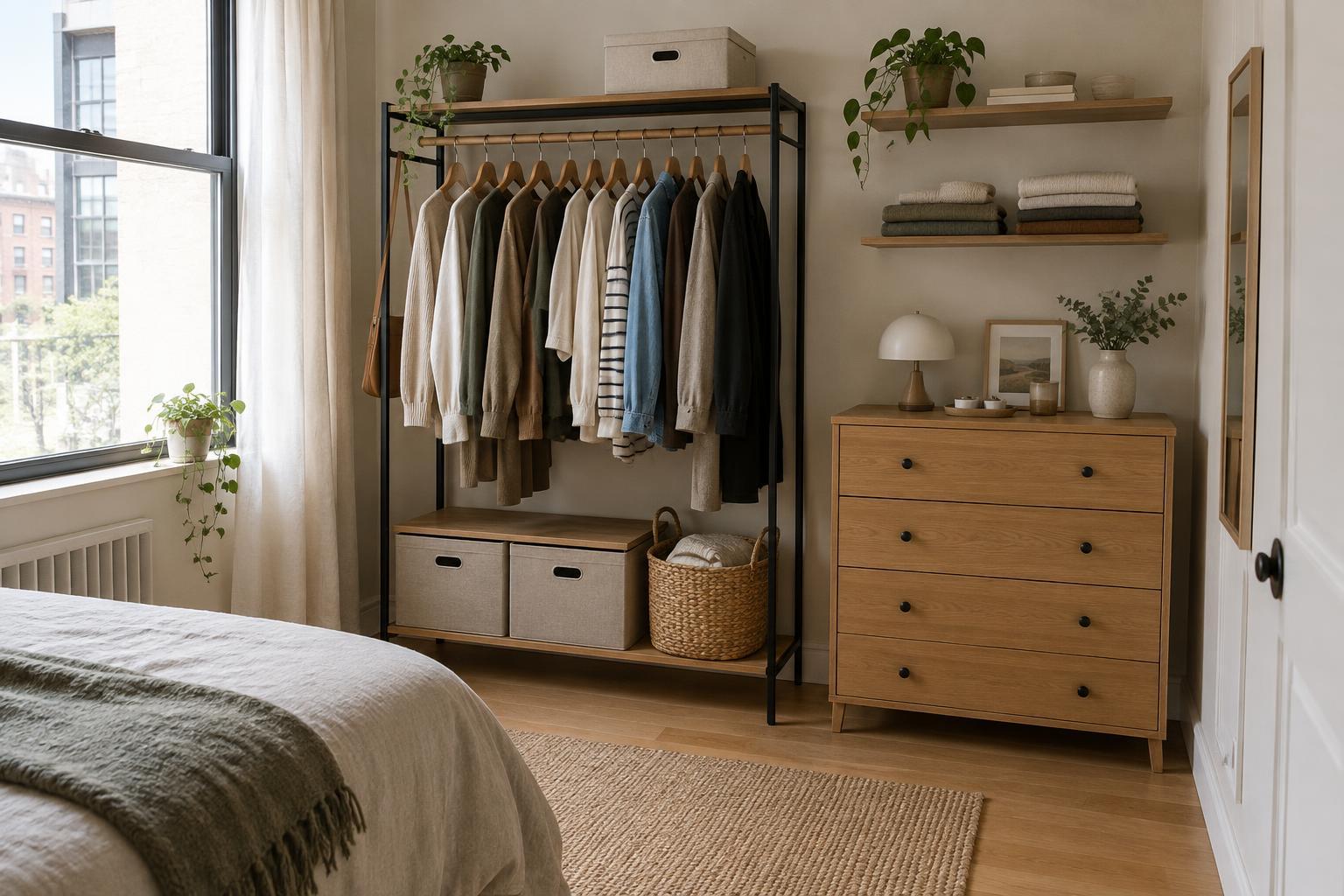
A simple setup might pair one hanging rail for jackets, shirts and dresses with a chest of drawers for knitwear, T-shirts and trousers. If a chest will not fit, sturdy shelves with baskets can serve the same purpose. Give small items their own containers: socks in one drawer or basket, accessories in another. The more clearly each category has a home, the less sorting you need to do when getting dressed.
Choose storage that works with the room
A freestanding clothes rack is useful when you need hanging space without installing anything. Choose one with enough capacity for the clothes you plan to hang, rather than filling a lightweight rail until it bends. A rack with a lower shelf can hold shoes or a few boxes, but keep the floor below it accessible for cleaning. If visible clothes make the room feel busy, position the rack along a wall and use matching hangers to reduce visual clutter.
Drawers protect folded clothes from dust and keep the room looking calmer. Shelves are more flexible, but baskets or bins help stop small piles from toppling. Under-bed containers can hold off-season clothing if there is sufficient clearance; choose ones you can pull out easily. Before using the top of a wardrobe or a tall shelving unit, check that the furniture is stable and follow the maker’s guidance on securing it. Keep heavy items low and avoid blocking vents or heat sources.
Make open storage look intentional
Without a closet door, clothing becomes part of the room. You do not need a colour-coordinated wardrobe, but a little consistency helps. Group hanging pieces by type, leave a small gap between crowded sections where possible, and fold shelf items to a size that fits their containers. Labels can be useful on opaque boxes, especially for clothing stored above eye level.
Treat the back of a door, a wall hook or a small tray as a landing spot for things you reach for daily, such as a bag, scarf or belt. Check what the door and fittings can safely support before hanging anything heavy. Keep a separate place for clothes that are worn but still clean enough to wear again. A single hook or small basket is easier to manage than a growing pile on a chair.
Keep the system easy to maintain
The best arrangement is the one you can reset quickly. Put clean laundry away by category, return hangers to the rail and empty the worn-again basket regularly. When a drawer becomes difficult to close or a rack grows crowded, reassess that area before adding another container. Extra storage can help, but it can also hide a problem with too many items in one category.
Check stored clothes occasionally, particularly if they sit near an exterior wall or in a poorly ventilated corner. Allow air to circulate, and make sure garments are clean and fully dry before packing them away. As seasons or routines change, swap the easiest-to-reach items rather than rebuilding the whole setup. With clear zones and a little breathing room, a bedroom without a built-in closet can still support a straightforward daily routine.


