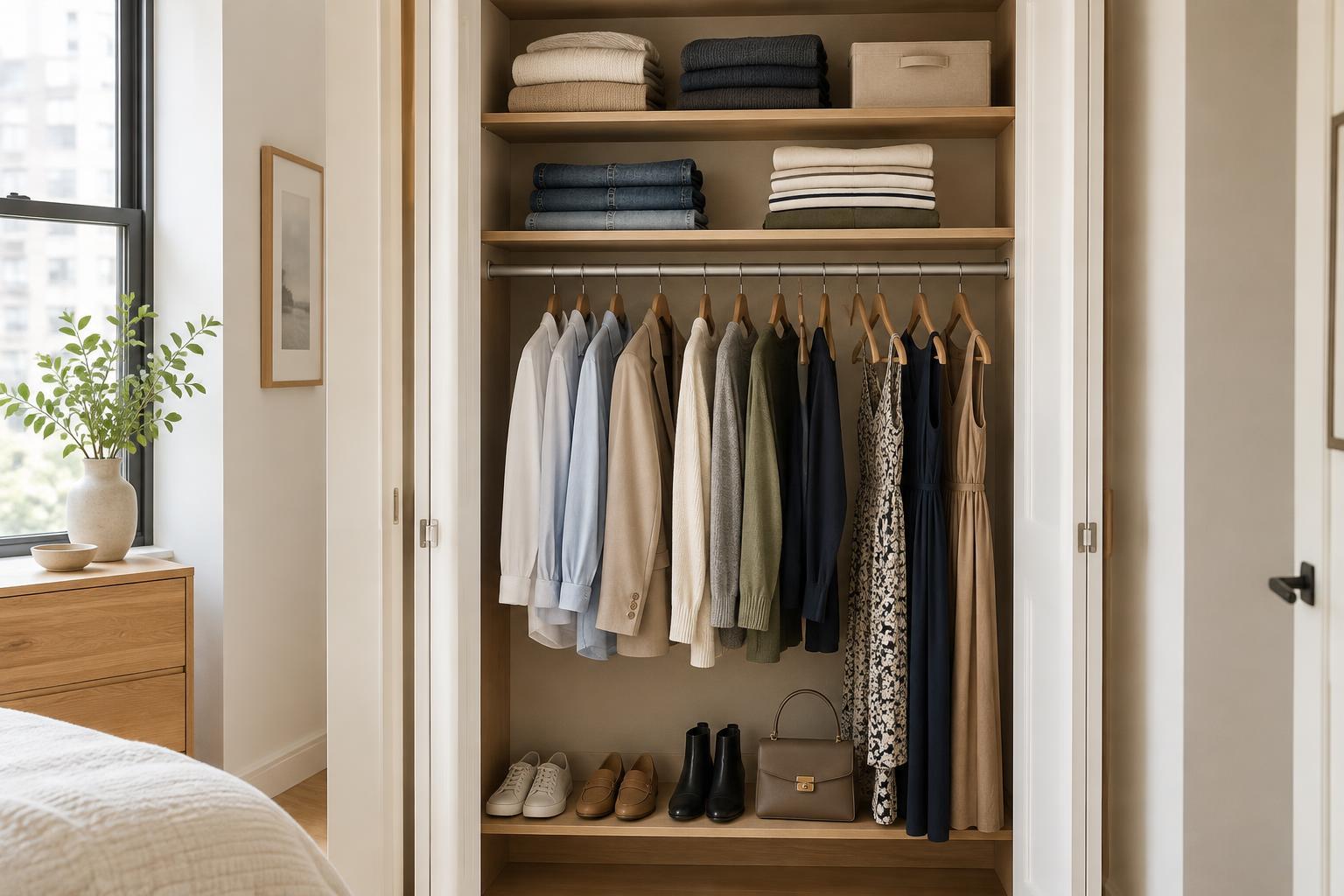
Start with what the closet needs to hold
Before buying organisers, take everything out of the closet and sort it by type: clothes that need hanging, clothes that can be folded, shoes, bags and smaller accessories. Set aside anything that belongs elsewhere, such as laundry or items waiting to be repaired. This gives you a clearer view of the space you have and the space your current wardrobe actually needs.
Put the pieces you wear most often in one group. For a city wardrobe, that might include workday trousers, everyday tops, a light layer and a weekend outfit. These items deserve the easiest-to-reach positions. Occasion wear and out-of-season pieces can sit higher up or farther back, provided you can still retrieve them safely. The goal is not to fit everything into the closet at any cost; it is to make getting dressed less of a search.
Give hanging space a specific job
Reserve the rail for garments that crease easily, are awkward to fold or are easier to see on a hanger. Jackets, dresses, shirts and some trousers often fit this category. Knits and stretchy tops may keep their shape better folded on a shelf. If the rail is crowded, moving those pieces out can make the hanging section more useful without adding any hardware.
Arrange hanging clothes in a way that matches how you dress. You could group them by garment type, then keep your most-used pieces toward the centre or nearest the door. Similar hangers can reduce tangles and give each item a more predictable amount of room, but they need not all be replaced at once. Leave enough space to slide garments along the rail: if you cannot see or remove one piece without disturbing several others, the section is too tightly packed.
If there is substantial unused height below shorter hanging items, a second rail may help. Measure the longest garments first so coats and dresses still hang freely, and check that the existing structure can support any addition. Where a second rail is impractical, a narrow set of drawers or a low shoe shelf may make better use of the floor beneath the clothes.
Turn shelves into easy-to-use zones
Deep shelves often look spacious but become difficult to use when clothes are stacked in tall piles. Try shorter stacks organised by category, such as jeans, T-shirts and knitwear. Place frequently used pieces at eye level or just below it. A shelf divider can keep neighbouring piles apart, while a shallow bin can hold smaller items that would otherwise drift toward the back.
Choose containers for what they need to do, not just how they look. An open bin makes everyday accessories easy to grab; a labelled box can keep seldom-used items together on a high shelf. Measure the shelf’s width, depth and clearance before buying anything, and leave room to lift a container out comfortably. If a shelf is especially deep, keep less-used items behind daily ones rather than stacking everything where it is hard to reach.
Avoid making the top shelf a place for every object without a home. Give it a limited purpose, such as off-season accessories or spare bedding, and use containers you can handle securely. Heavy items are generally easier to manage on lower shelves, where you do not have to reach overhead.
Use doors and floor space selectively
The back of a closet door can hold belts, scarves or small bags, but only if an organiser leaves the door free to close and does not catch on the hanging clothes. Removable hooks or an over-door rack may suit a rental, although it is worth checking the door’s clearance and the organiser’s weight guidance first. Keep the most-used accessories visible rather than filling every hook.
The closet floor works best when it has a defined role. A low shoe rack can keep everyday pairs together, while a single basket might hold a handbag or items to put away later. Leave a clear path to anything stored at the back and avoid piling things directly beneath long garments. If shoes arrive wet or dirty, let them dry and clean them before returning them to an enclosed space.
Keep the arrangement simple enough to maintain
A small closet needs a little spare room to remain usable. Once you have assigned a place to each category, try getting dressed from it for a week. Notice which items are hard to reach, which shelves collapse into mixed piles and whether you can put clean laundry away without reshuffling everything. Those points tell you more than a perfectly arranged closet on the first day.
Make small adjustments rather than starting over. Move an everyday category down a shelf, give accessories a smaller container or free up a few hangers if the rail feels cramped. When a new item comes in, decide where it will live before it disappears into an overfull stack. A workable closet is not the one that holds the most; it is the one that lets you find, wear and put away what you own.


