Start with the part of your outfit that already works
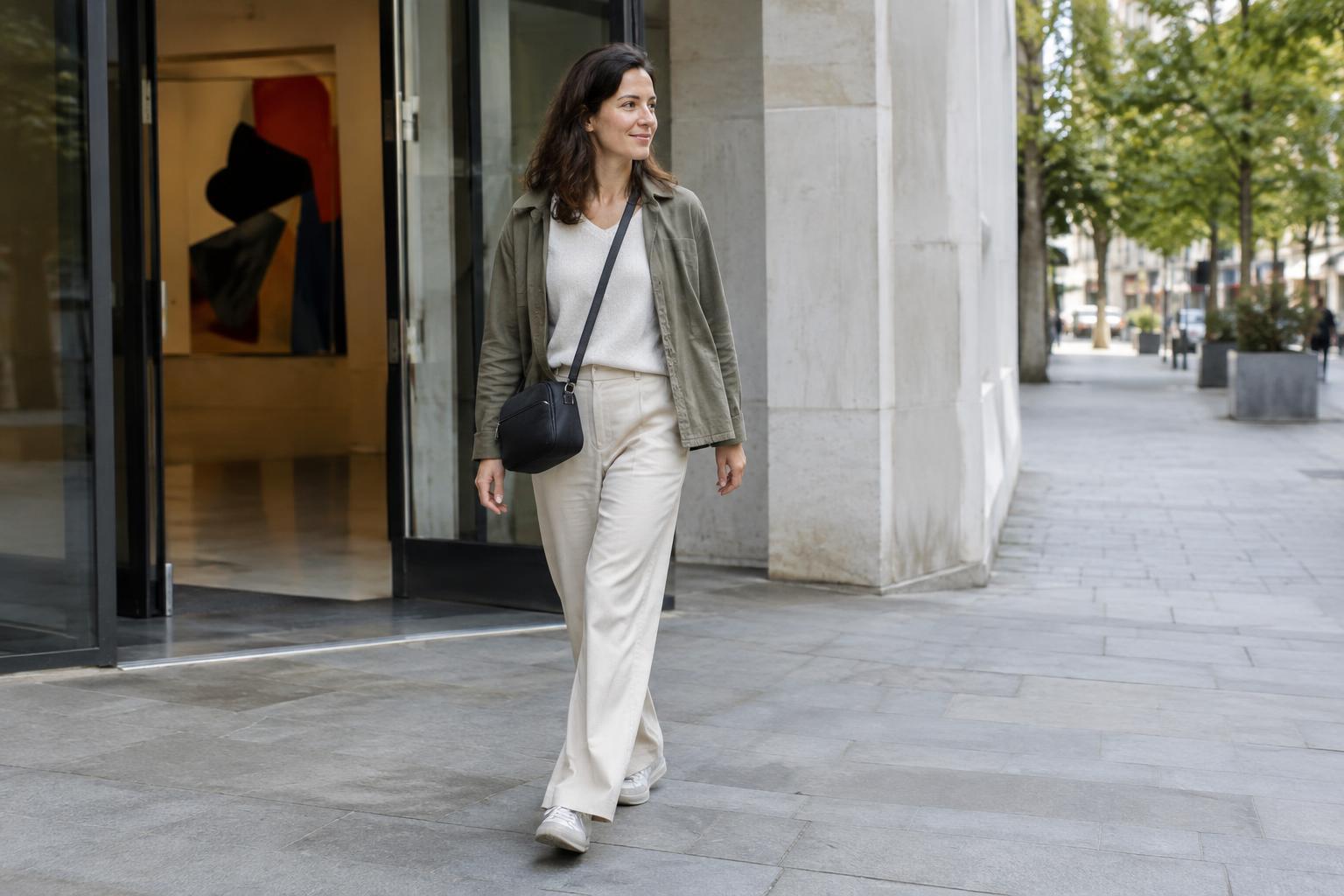
A weekend can move from errands or a walk to dinner, a film or drinks with little time to change. Instead of planning two complete outfits, choose a daytime base that you would be happy to wear for several hours. Straight-leg trousers, dark jeans, a relaxed skirt or a simple dress can all work. The best starting point is not the dressiest option; it is the one that fits comfortably and suits what you are doing before the evening begins.
Look at your outfit as a set of parts. Keep the pieces that still feel right, then decide what needs to change for the next stop. A clean knit might look great with the same trousers you wore all afternoon, while a daytime T-shirt could sit under a sharper jacket. If your plans are casual, you may need only one adjustment. There is no reason to replace a whole outfit when a small change makes it feel appropriate.
Make one visible change
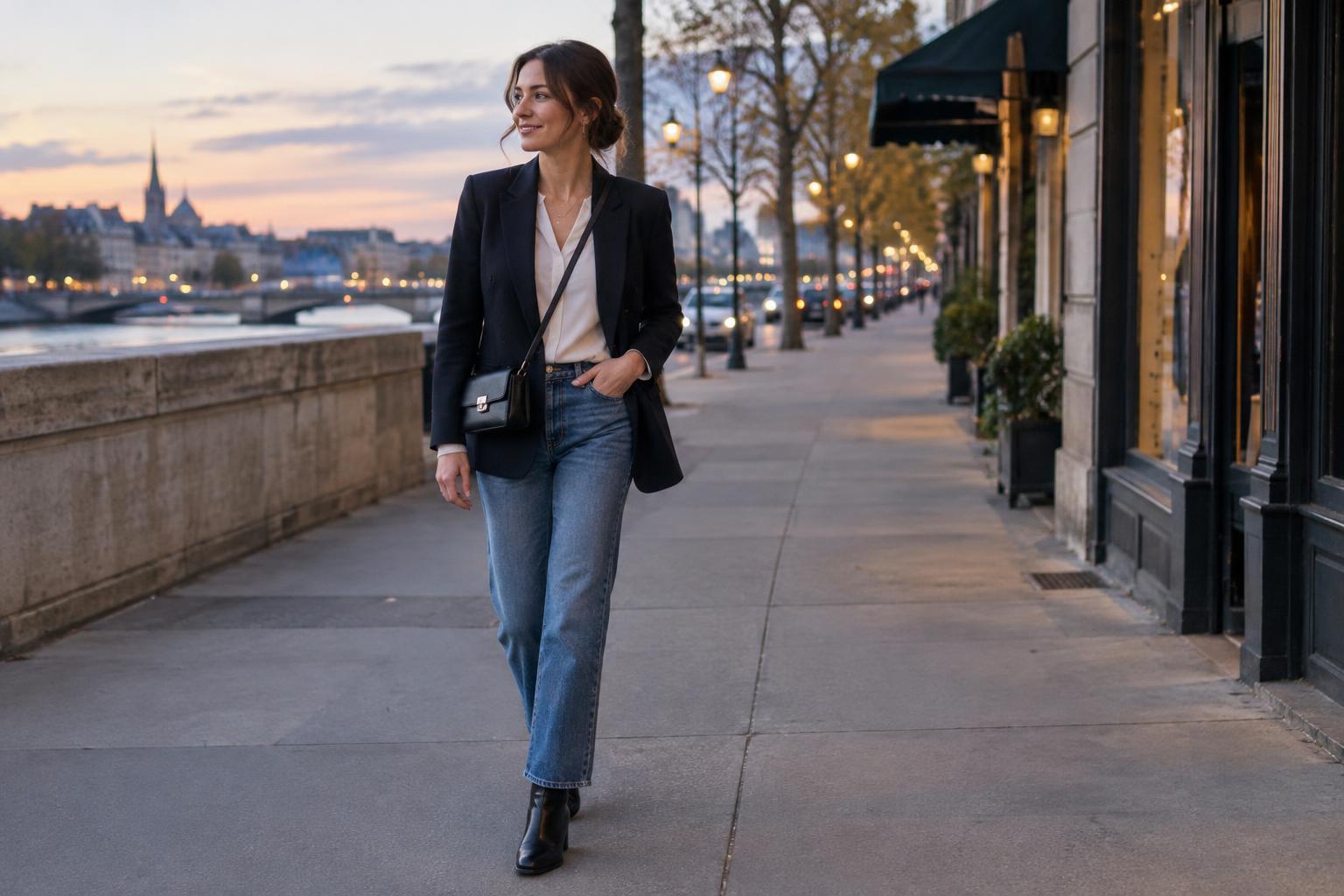
An evening shift often comes from a single noticeable detail. Swap a roomy daytime tote for a smaller crossbody bag, add a belt, change your earrings or put on a more structured outer layer. These choices can alter the feel of an outfit without asking you to carry a spare wardrobe around the city. Pick a detail that works with your own style rather than adding something simply because it seems more formal.
Think about where you are going before choosing that change. A casual meal may call for little more than a neat layer over your daytime clothes. A more dressed-up invitation might make a change of top worthwhile. If you know you will be moving between places, aim for an outfit that feels comfortable at the least formal stop and still put-together at the most formal one. That middle ground is usually easier to wear than an outfit designed for only one moment.
Let shoes support the whole evening
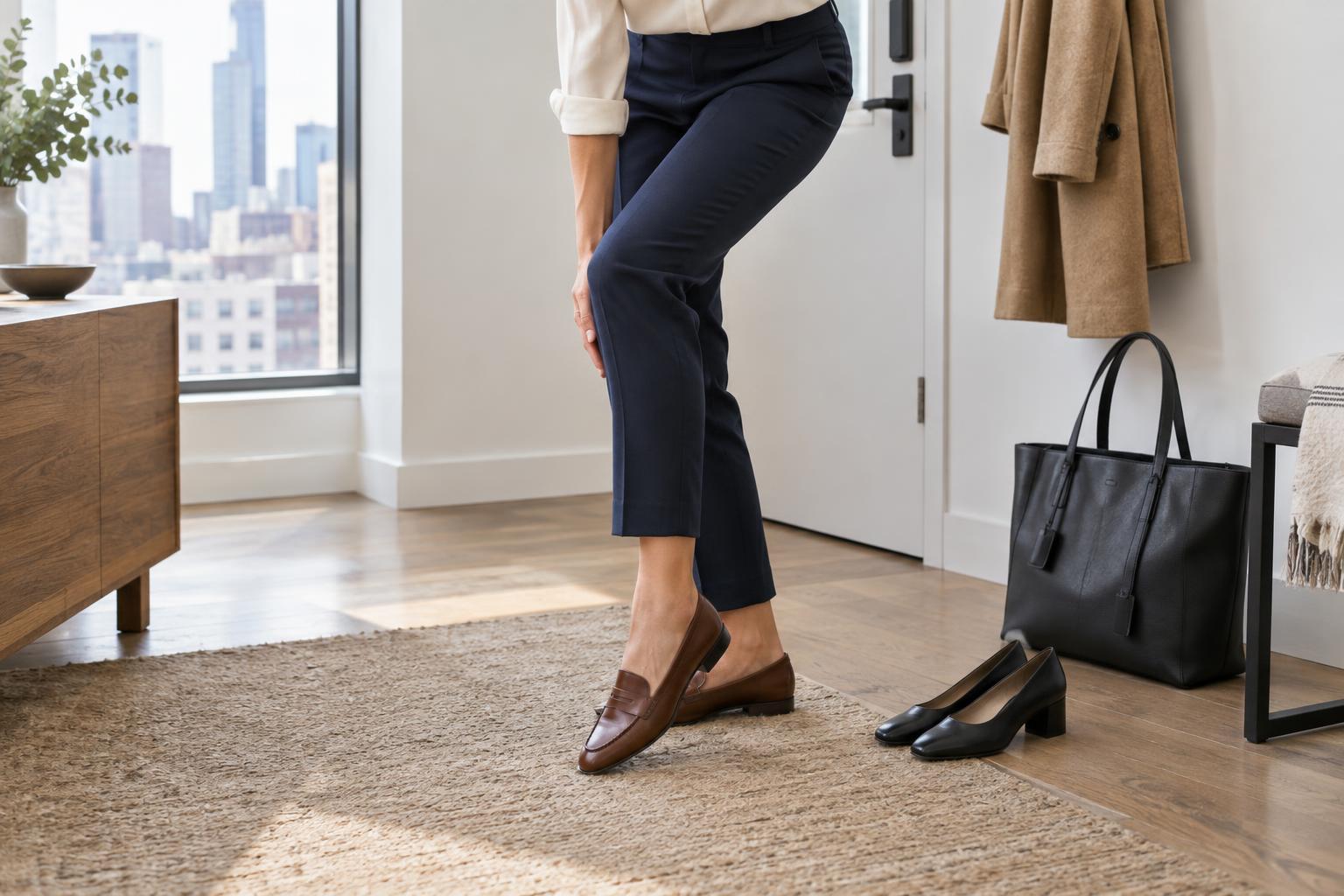
Shoes can change an outfit quickly, but they also determine how easily you can get around. Before packing a second pair, consider the walking, standing and travel involved in both parts of the day. Clean trainers, loafers, low boots or comfortable flats can suit many weekend plans. If you prefer a dressier pair for the evening, choose something you can realistically wear for the journey as well as the destination.
A footwear change works best when it is easy to manage. Consider whether your bag can hold the pair you take off, and whether you have somewhere to change without rushing. If carrying extra shoes sounds inconvenient, build the outfit around one versatile pair instead. Comfortable footwear is not a compromise when it lets you enjoy the plans you made.
Use layers for polish and practicality
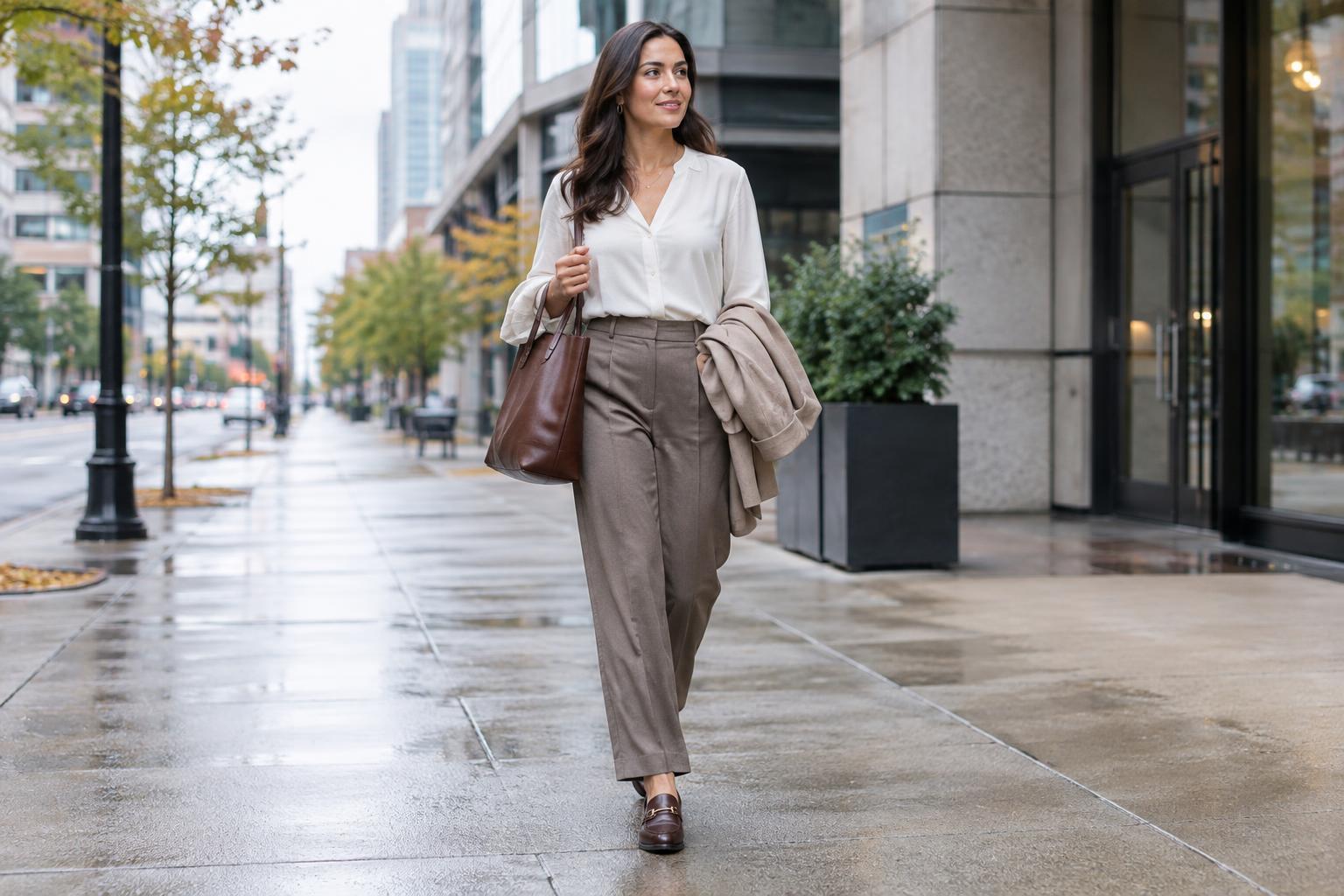
An extra layer can make a familiar outfit feel intentional. A blazer, tidy cardigan, lightweight jacket or overshirt can give shape to a simple top and bottom. Choose one that works with your coat if you will be outside later. An evening look that only works with your coat removed may be frustrating when part of the plan involves a walk, a terrace or a journey across town.
Temperature matters indoors, too. If you tend to get warm, a removable layer gives you more flexibility than a heavy top. If the evening may turn cool, a layer you can keep on comfortably is more useful than one chosen only for its appearance. Checking the forecast and thinking through your route can help you decide what to wear or carry, without making the outfit complicated.
Keep a small transition plan
For weekends that regularly run into the evening, it helps to have a simple plan you can repeat. Decide which base outfits can serve both parts of the day, then identify one optional change for each: perhaps a different bag for a dress, a jacket for jeans or a compact accessory for a plain knit. Keep those items easy to find so getting ready does not become another task.
Before leaving home, check the practical details: where you are going, whether you will be on your feet, what you need to carry and how you will get back. Those answers are more useful than a rigid rule about what counts as an evening outfit. When your clothes fit the full stretch of your plans, the change from day to night can be as simple as adding a layer, switching a bag or heading out exactly as you are.