Start with the walk, then consider the office
The easiest walking-commute outfit begins with two questions: How far will you walk, and what does your workplace expect you to wear? A short stroll in mild weather may need little adjustment. A longer route, crowded crossings or changing temperatures can make stiff fabrics and delicate shoes feel less practical. Use the walk to set your comfort requirements, then choose pieces that fit your office dress code.
You do not need a separate wardrobe for the journey. Look for work clothes that let you take a full stride, climb stairs and sit comfortably afterward. Trousers with some ease through the hips and knees, a skirt that does not restrict your steps, or a dress that works with a comfortable layer can all bridge the gap. Before relying on a new outfit, try walking around in it with your usual bag. That simple test can reveal a slipping strap, a waistband that shifts or a hem that needs attention.
Make footwear the foundation
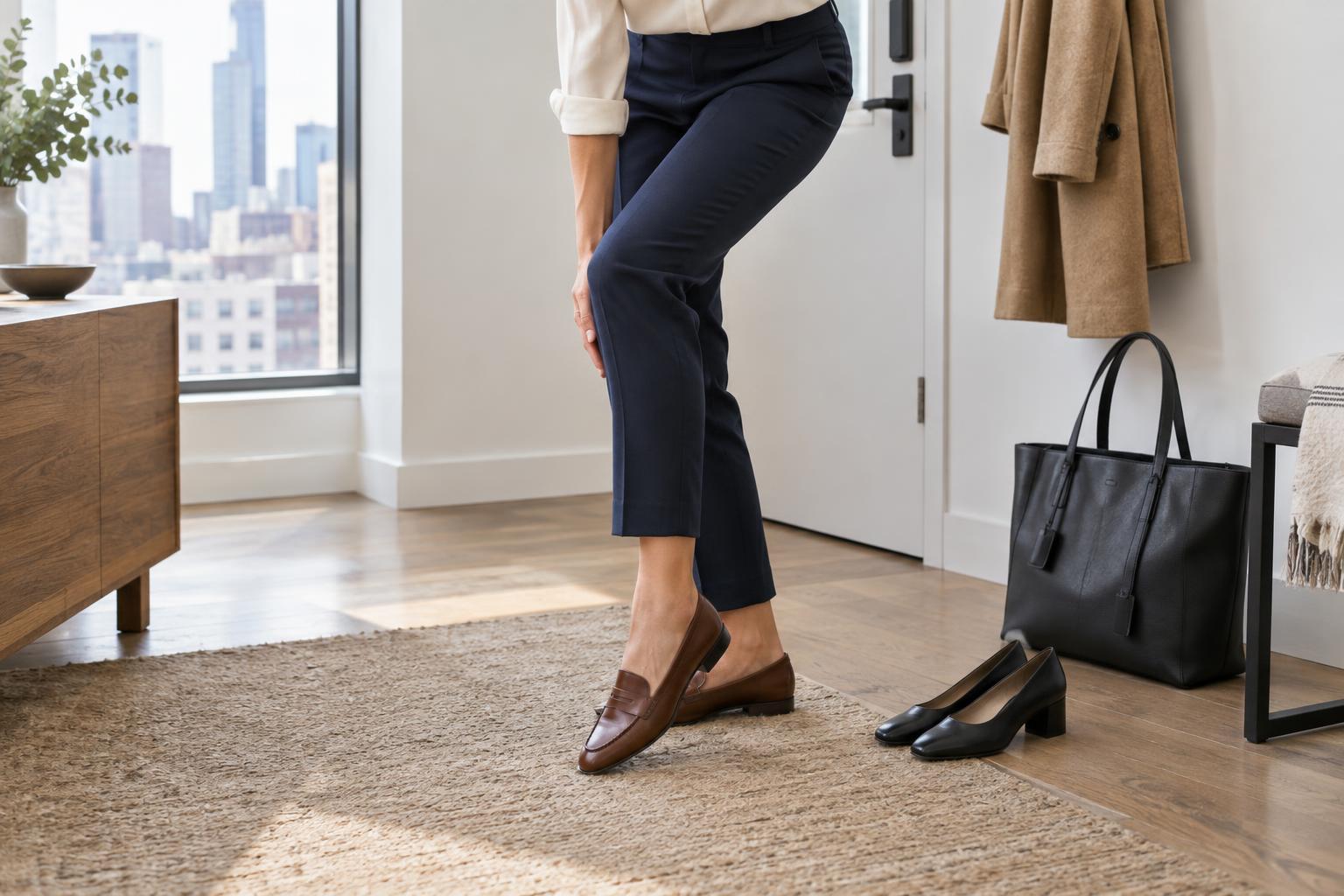
Shoes have the biggest effect on how a walking commute feels. Choose a pair that fits securely, has a sole suited to your route and does not need constant adjustment. Depending on your office, that might be a clean leather trainer, a supportive loafer, a low boot or another polished flat. Rather than assuming a shoe will soften with wear, test it on a walk before making it your regular commute pair.
If your preferred office shoes are not comfortable for the journey, carrying a change of shoes is a sensible option. Keep the pair you wear to walk in good condition, too: practical does not have to mean scruffy. Socks or tights matter as well. Choose ones that stay in place and work with your shoes, so you are not distracted by rubbing or bunching on the way in.
Use layers to handle changing temperatures
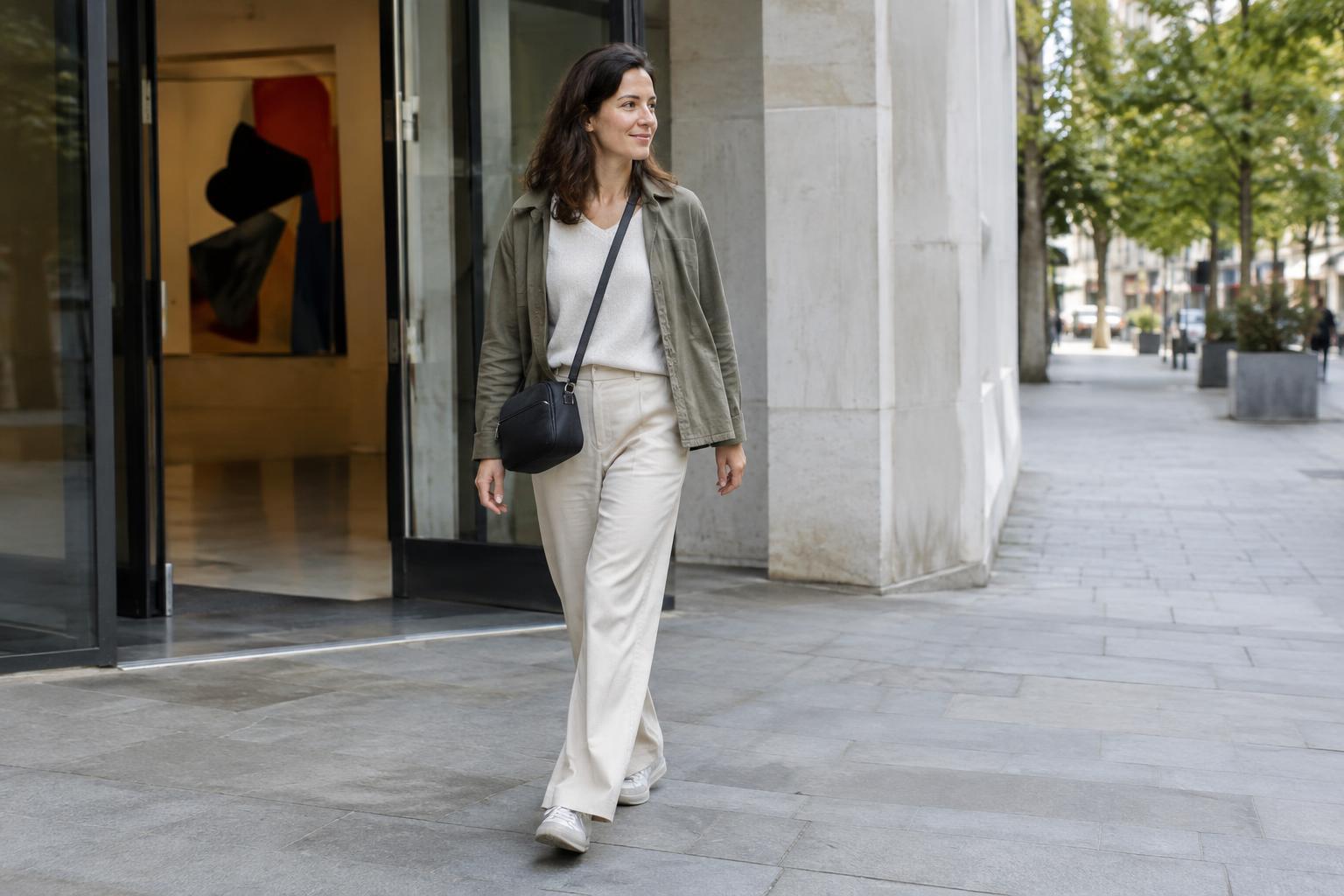
Walking can make a cool morning feel warm, while the office may feel cooler once you stop moving. A light base layer and an easy-to-remove outer layer give you more control than one heavy piece. A shirt, fine knit or simple top under a cardigan or jacket can suit many work settings; choose fabrics and cuts that feel comfortable against your skin and under your coat.
Think about where each layer will go when you take it off. A jacket that folds into your bag or hangs neatly at your desk is easier to manage than one you must carry in your hands all morning. For unsettled weather, a coat with useful coverage and a compact umbrella may protect an outfit better than adding several bulky layers. If rain is likely to affect your hems or shoes, adjust the outfit before leaving rather than counting on it drying perfectly at work.
Choose a bag that carries its share
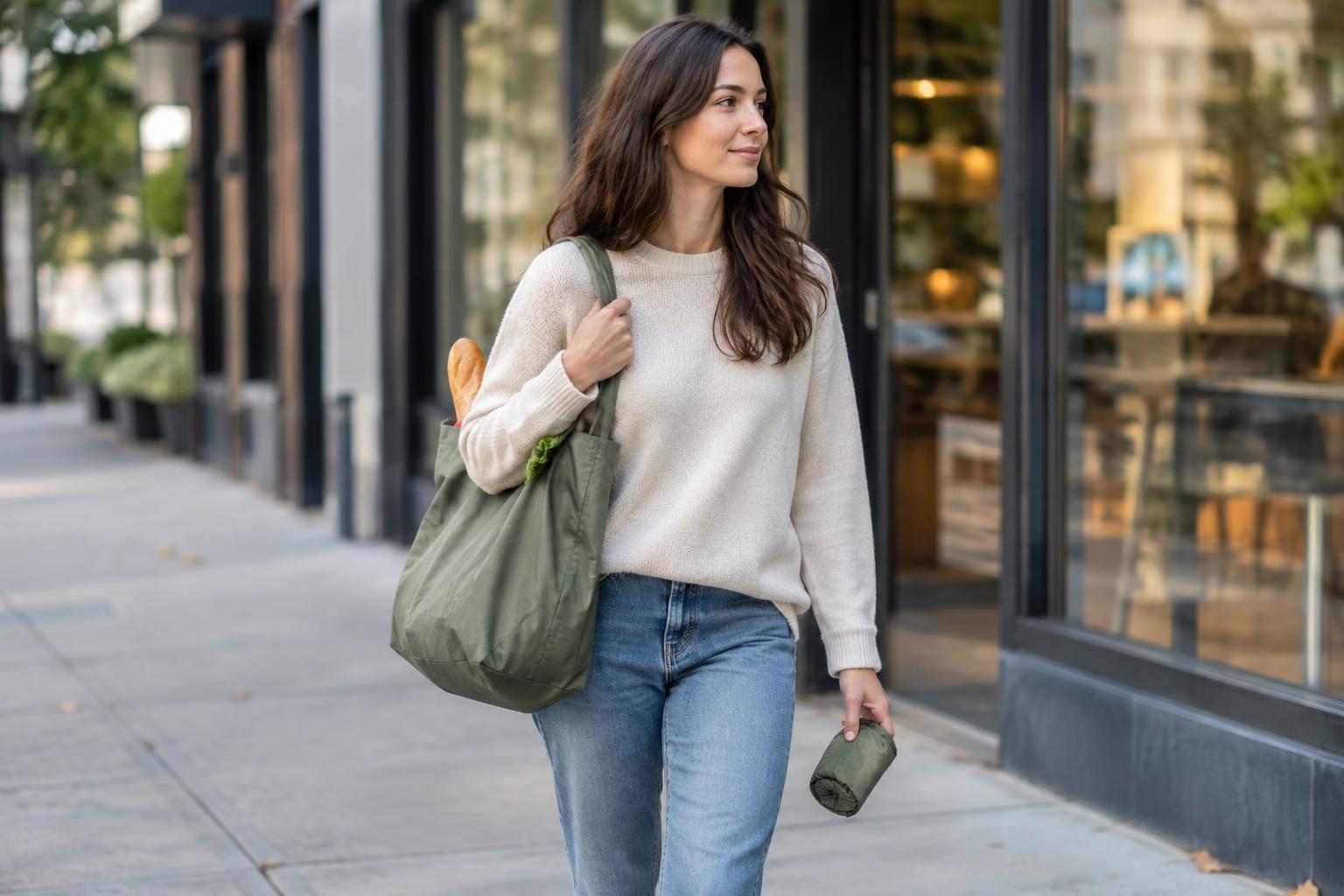
A work bag needs room for your essentials without making the walk awkward. Consider what you actually bring each day: perhaps a laptop, lunch, water, keys and a spare layer. A backpack can distribute the load across both shoulders, while a crossbody bag keeps your hands free for a lighter carry. A tote may suit a short route, but check whether it stays comfortably on your shoulder when it is full.
Organisation makes arriving easier. Put small items where you can find them without unpacking everything, and keep a separate pouch for anything that might leak. If you carry a change of shoes, use a bag or compartment that keeps them away from clean clothing. The goal is not to pack for every possibility; it is to bring what helps you move through your usual day without unnecessary weight.
Build in a simple arrival routine
An office-ready finish does not have to happen before you leave home. Allow a few minutes after the walk to remove your outer layer, change shoes if needed and check that your clothes are sitting as intended. A small comb, hair tie or other item you already use can help with a quick reset. If you tend to feel warm after walking, giving yourself a moment to cool down before putting on a jacket may be more comfortable than rushing straight to your desk.
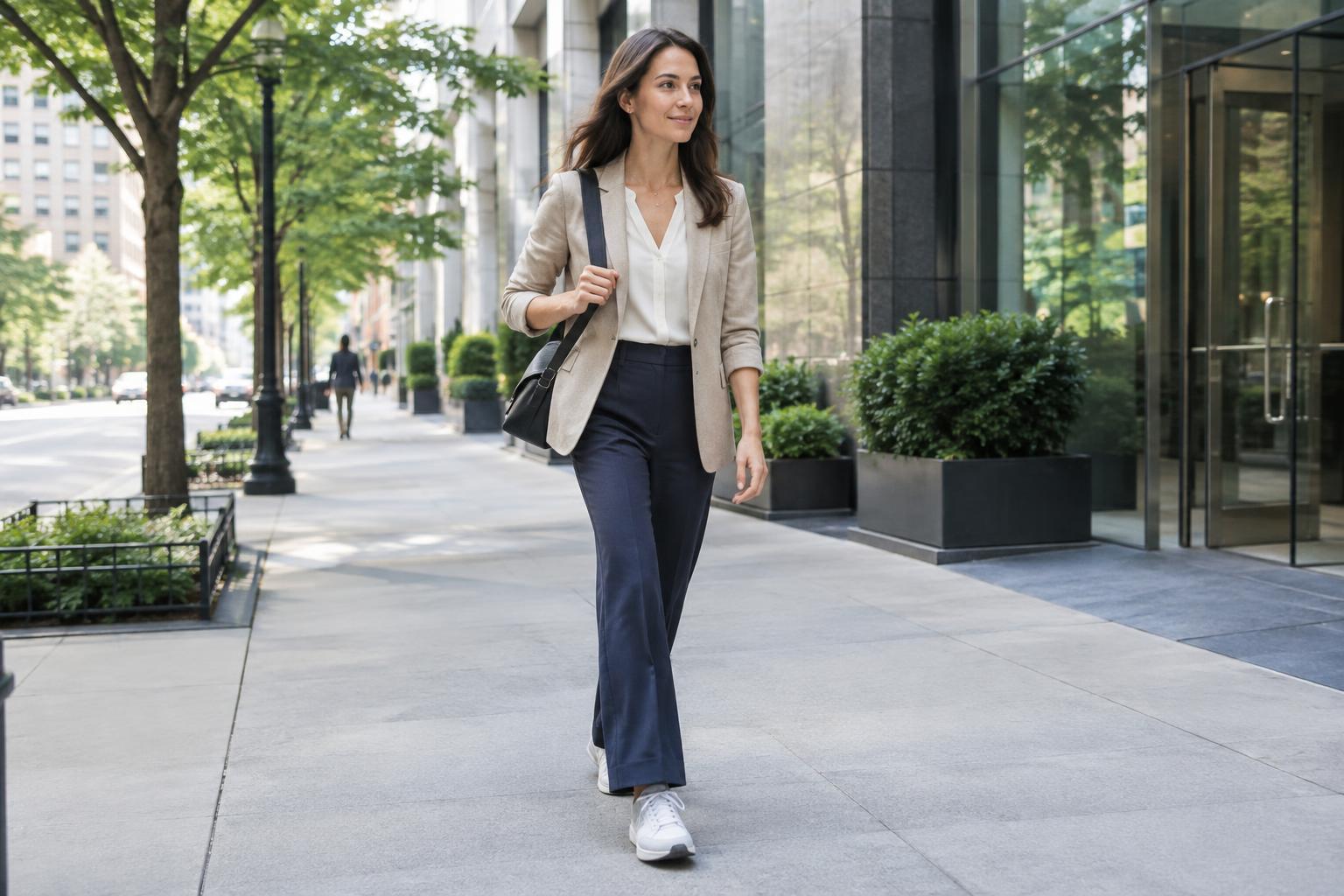
Keep the routine realistic. A typical outfit might be relaxed tailored trousers, a breathable top, a jacket carried or worn as needed, and comfortable shoes that meet your workplace’s standards. On another day, it might be a dress with room to move, a light coat and walking shoes you swap on arrival. Once you know which combinations work for your route and office, getting dressed becomes less about choosing between comfort and polish—and more about making both part of the plan.