Start with the outfit you actually want to wear
Rain can make getting dressed feel like a choice between looking ready for work and staying dry on the way there. It does not have to be. Begin with an outfit that suits your day, whether that is tailored trousers and a knit, a dress and cardigan, or jeans that fit your workplace dress code. Then think of rain protection as a layer around that outfit, rather than a reason to replace it.
Consider the length and shape of what you are wearing. Trousers that drag on the pavement can pick up water, while a long skirt may need a little attention when stepping around puddles or boarding transport. On a wet day, a slightly shorter hem or a trouser leg that sits clear of the ground can save fuss without changing the overall look. If your usual outfit includes a delicate fabric, you might choose a sturdier piece with a similar feel for days when you expect to spend longer outdoors.
Let your outer layer do the hard work
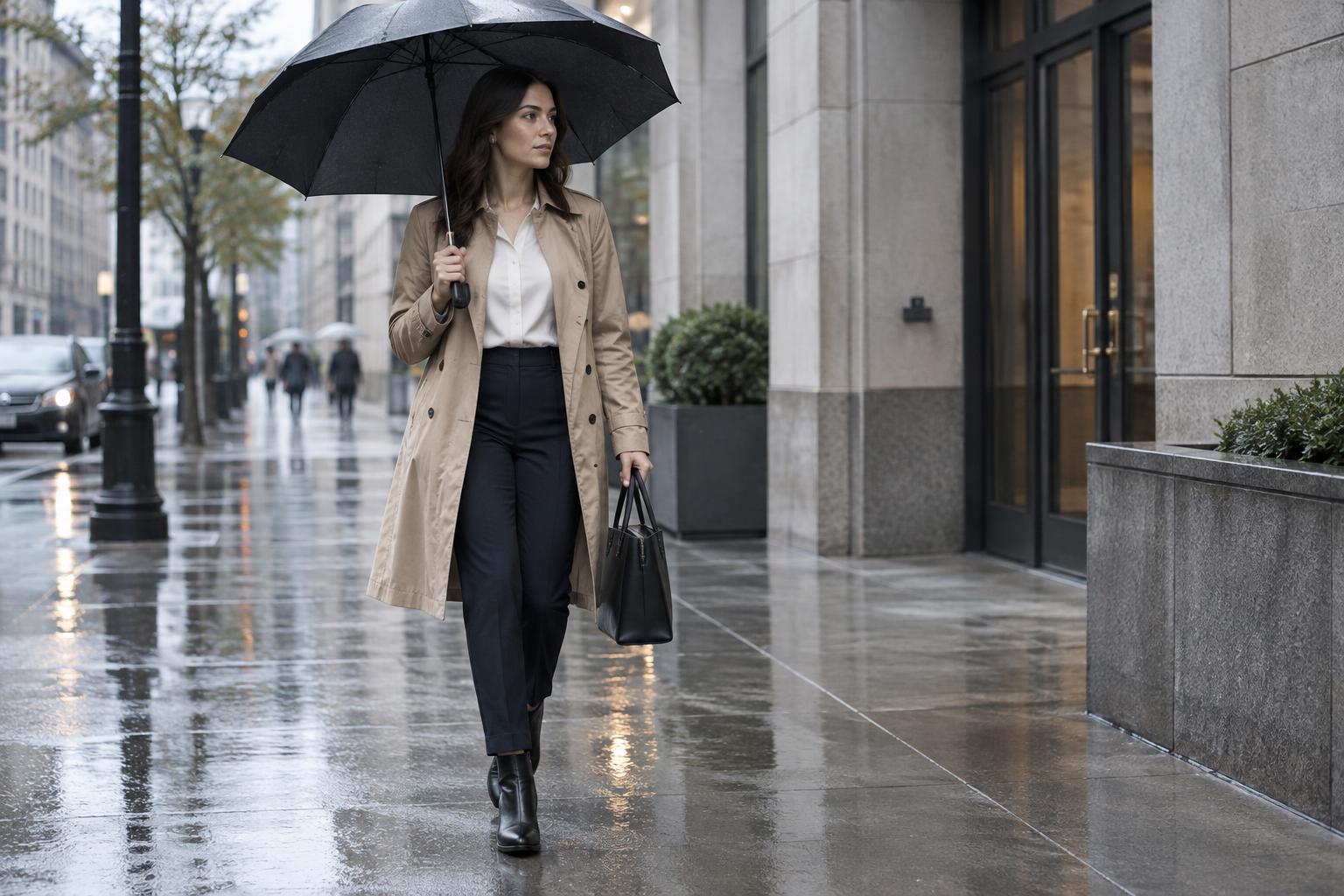
A rain-ready coat is the simplest way to protect an outfit you already like. Look for enough room to move comfortably over your work layers, and check that the coat covers the parts of your outfit most exposed while you walk. A hood can be useful when carrying an umbrella is awkward, but its fit matters: one that slips over your eyes or blows back easily may not offer much help.
Weather protection and comfort both count. A heavy coat over a warm office outfit can feel uncomfortable on a crowded train or during a brisk walk. If your commute includes indoor stretches, choose an outer layer you can open or remove easily. You can also keep your underlayers relatively light and let the coat provide most of the protection outside.
Before relying on a coat for an important day, try it with your usual bag and work clothes. Make sure you can reach your pockets, lift your arms and sit down without the coat pulling. Those small checks often matter more in daily use than how a coat looks on its own.
Choose shoes for the journey, not just the destination
Wet pavements call for shoes that feel secure underfoot and can tolerate a splash. Soles with some grip, comfortable uppers and a fit that does not rub are worth prioritising. A polished ankle boot or a simple, weather-tolerant flat may work with many office outfits, depending on your workplace. Whatever the style, avoid testing brand-new shoes on a long rainy commute.
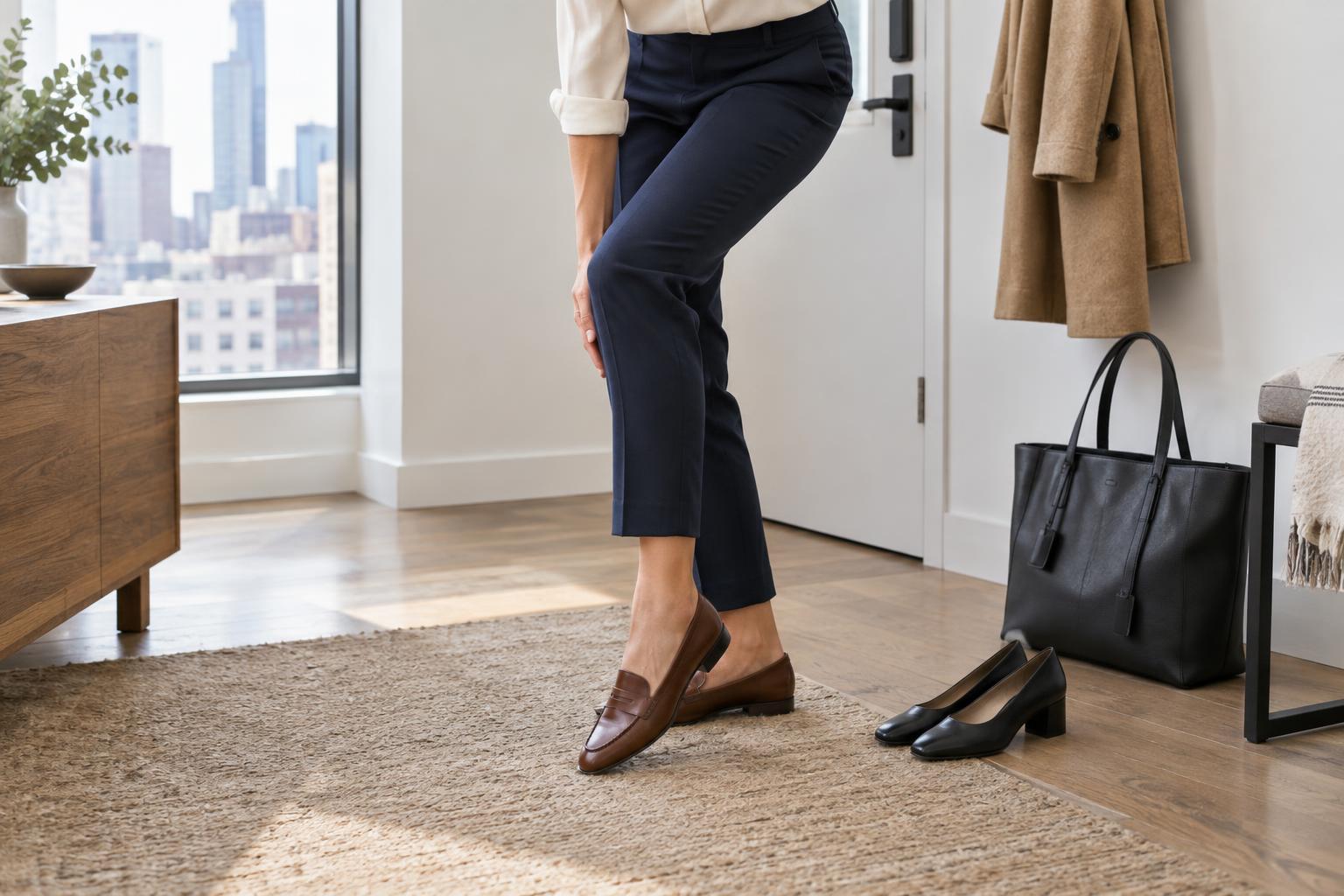
If your preferred work shoes are unsuitable for the route, carrying a lightweight pair to change into at your desk is an option, but it need not become a full outfit change. A compact shoe bag keeps the rest of your belongings cleaner, and a pair left at work can spare you from carrying them every day. If you would rather wear one pair throughout, build an outfit around shoes you are comfortable wearing both on the journey and indoors.
Keep your bag and essentials easy to manage
A bag that closes securely gives your belongings a better chance of staying dry than an open tote. If you like your usual bag, a small pouch can add a layer of protection for items such as a notebook, headphones or makeup. Keep anything you may need on the journey, including your travel card and keys, somewhere you can reach without leaving your bag open in the rain.
An umbrella is useful when the route allows you to hold one comfortably. Choose a size that suits your walk and the space you have to carry it afterward. A simple sleeve or separate pocket for a wet umbrella can help prevent drips inside your bag. For windy or crowded stretches, a hood and a hands-free bag may be easier to manage than an umbrella alone.
A few small items can help you settle in when you arrive: a tissue or cloth for a damp bag, and a spare pair of socks if wet feet are a recurring problem on your route. Keep the extras modest. The aim is to make your normal commute easier, not turn your work bag into emergency luggage.
Give yourself a quick arrival routine
Once indoors, shake off or fold away your outer layer where it will not drip onto your clothes or other people’s things. If you have space, let a damp coat or umbrella air out rather than leaving it tightly packed all day. Check your hems and shoes, smooth down your outfit, and you are ready to move on with your morning.
A reliable rainy-day outfit is usually a familiar work outfit with a few thoughtful adjustments: a protective coat, shoes suited to the journey and a bag you can close. After a few commutes, notice what actually gets wet or feels awkward. Adjust that one detail next time instead of rebuilding your wardrobe around the forecast.