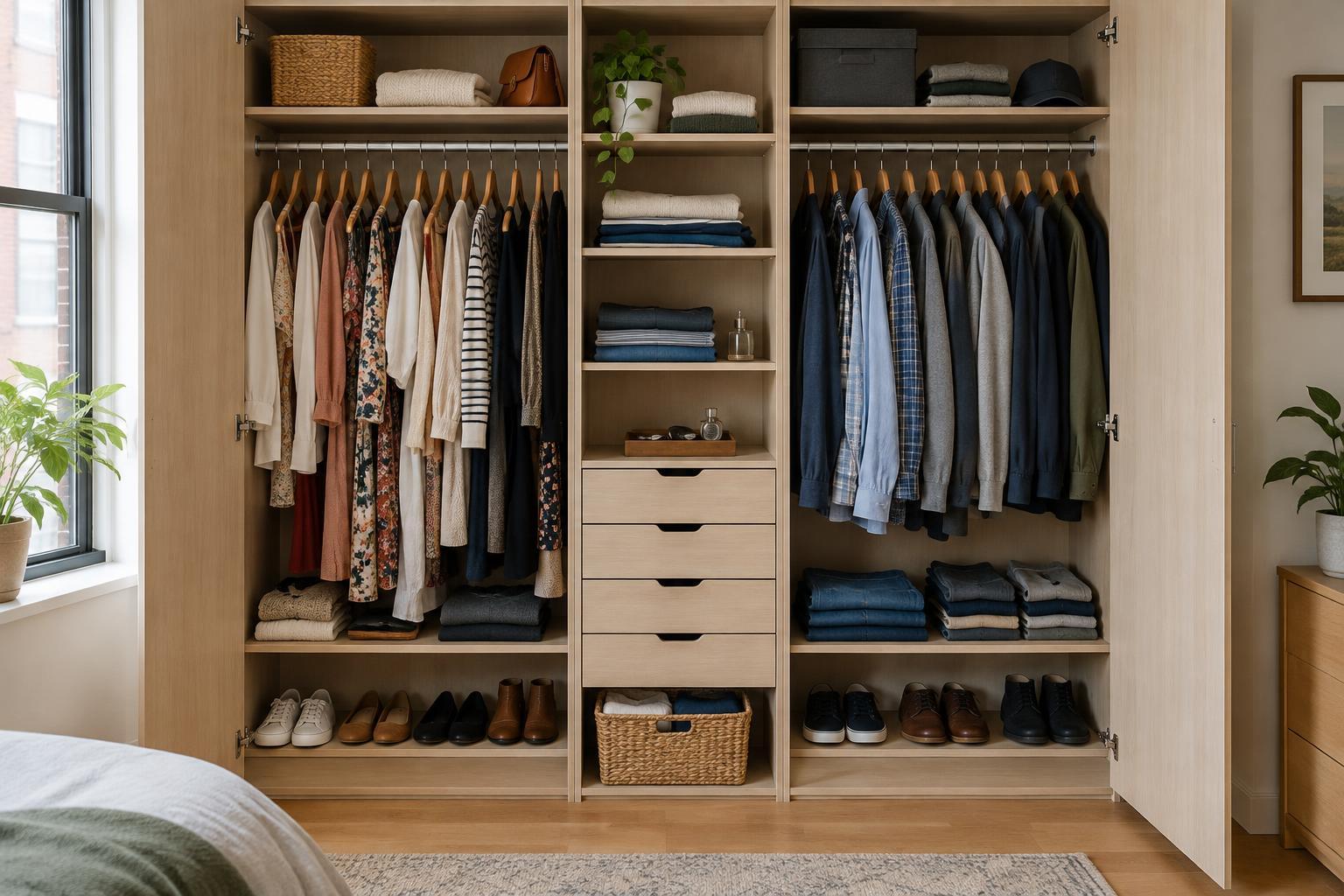
Start with the space, not the clothes
Before deciding who gets which side, empty the shared wardrobe and note what it contains: hanging rails, drawers, shelves, high compartments and awkward corners. Measure or roughly mark the usable space in each area. A narrow shelf and a full-length hanging section are not interchangeable, so counting shelves alone will not give you a useful picture.
Next, each person can sort their clothing into broad groups: items that need hanging, folded everyday clothes, shoes, accessories and pieces worn only occasionally. This is also a good time to remove anything that belongs elsewhere, such as laundry, spare bedding or an empty shopping bag. You do not have to complete a major clear-out; the aim is to understand what both people need the wardrobe to hold.
Agree on what “fair” means for both of you
An equal split is a straightforward starting point, but fairness may look different when one person owns more garments that must hang and the other relies on drawers. Talk about the space each person needs by storage type, rather than treating the wardrobe as one large rectangle. If one person uses more rail space, the other might use more shelves or drawers. Any arrangement should still leave both people with practical access to their daily clothes.
Discuss which items need to be close at hand. Work outfits, frequently worn layers and everyday shoes may deserve the easiest-to-reach spots; occasionwear and off-season pieces can usually go higher or farther back. If one person has a temporary change in routine, such as needing more formal clothes for a period, agree to revisit the split rather than assuming that change is permanent.
It helps to name limits as well as preferences. For example, decide whether either person is comfortable with shared storage for scarves or bags, and whether a shelf assigned to one person should stay exclusively theirs. Clear boundaries can prevent a seemingly harmless overflow pile from gradually taking over someone else’s space.
Give each person a usable zone
Once you have a plan, assign recognizable zones. These might be one section of the rail per person, separate drawers and clearly divided shelves. Shelf dividers, matching boxes or simple labels can make a boundary visible without requiring a new wardrobe. Leave enough room to remove a garment without pulling out its neighbours; space that is too tightly packed is difficult to use, even if it looks evenly allocated.
Think about access as part of the division. A high shelf may hold the same volume as a waist-height shelf, but it is less convenient for daily use. If one person is shorter or has difficulty reaching a particular area, avoid counting that area as their main everyday storage. Keep a small, agreed space for genuinely shared items, if you have any, rather than letting them drift into whichever section happens to be less full.
For accessories, containers can be more helpful than a strict left-right split. Give belts, jewellery, ties or other small pieces their own trays or boxes so they do not spread across a shared drawer. If shoes live in the same wardrobe, decide how many pairs can stay there at once and where the rest will go.
Handle overflow without hiding the problem
If everything still does not fit, avoid solving the problem by quietly pushing one person’s clothes into a harder-to-reach corner. First, check whether seasonal items can move to another suitable storage spot. Clean, dry clothes stored in labelled bags or boxes are easier to retrieve when the weather or your routine changes. You can also fold sturdy garments that do not need a hanger, freeing rail space for pieces that do.
Additional storage can help, but agree on its purpose before adding it. An under-bed box for off-season clothes is different from a permanent overflow area that only one person has to use. If the wardrobe is simply too small for both collections, an honest discussion about what can be stored elsewhere is more useful than repeatedly rearranging the same crowded shelves.
Make the arrangement easy to maintain
A fair division only works if both people can keep using it. Choose a simple rule for returning clean clothes to their assigned zones, and deal with items left in shared areas before they become permanent piles. A spare hanger or small empty section can provide breathing room, but it should not become an unspoken claim on the other person’s space.
Check in after a few weeks of ordinary use. Notice whether a drawer is always overstuffed, a rail section is rarely used or someone has to move another person’s clothes to get dressed. Adjust the layout together based on those observations. The goal is not a perfect-looking wardrobe: it is one where both people can find what they need, put it away and feel that the available space has been shared thoughtfully.