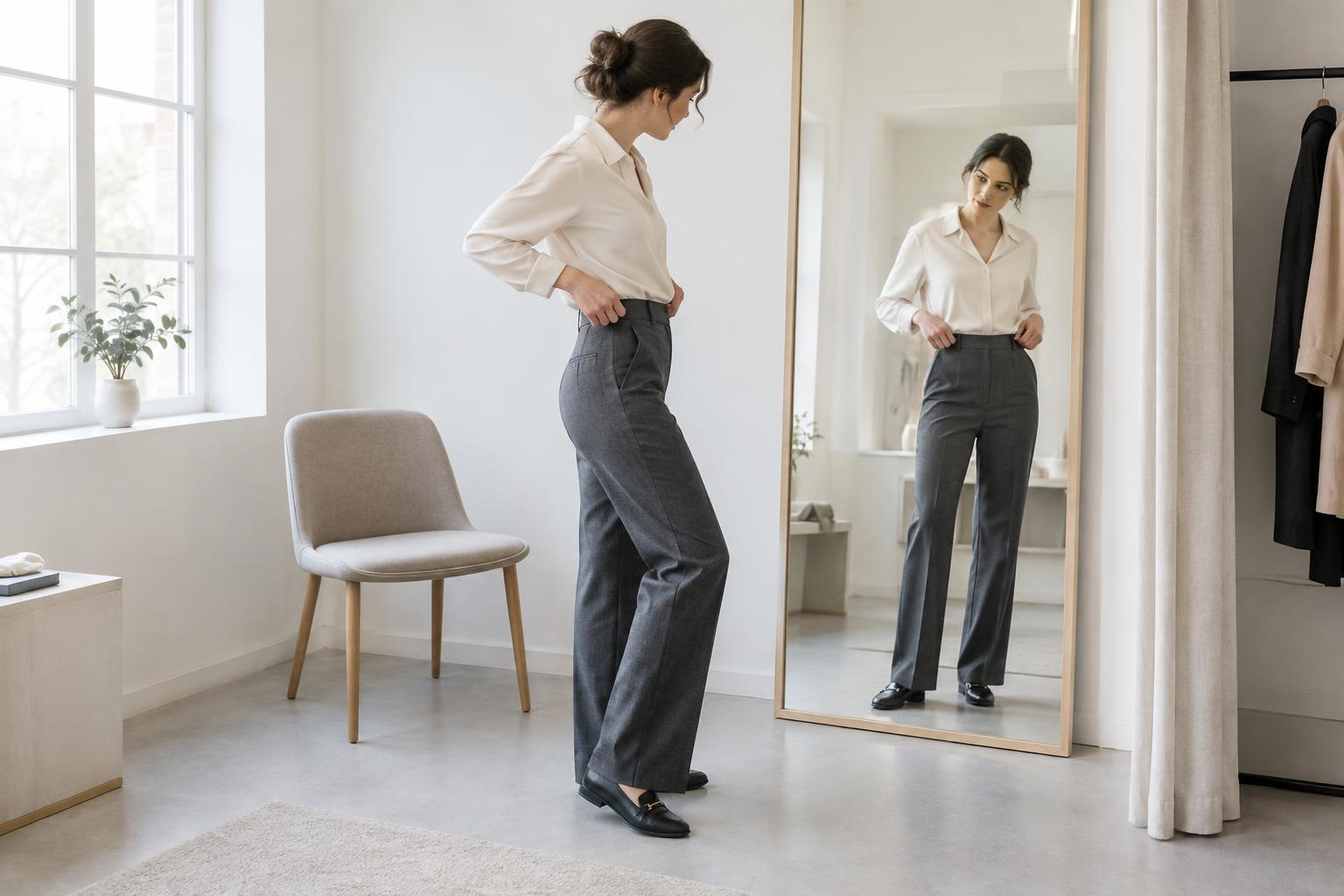
Start with the way you spend your workday
A pair of work trousers can look right in a fitting-room mirror yet feel restrictive after an hour at a desk. Sitting changes how the waistband, rise and fabric rest against your body; standing reveals whether the trousers fall neatly through the hips and legs. The aim is not a pair that looks identical in both positions. It is one that lets you move comfortably and returns to a shape you like when you stand.
Before shopping, think about your usual day. Do you walk between meetings, cycle or take public transport, sit for long stretches, or move between a desk and shared spaces? Consider what you wear with your trousers, too. A tucked-in shirt, longer knit and fitted jacket each place different demands on the waistband and silhouette. These details help you judge fit against your real wardrobe rather than an imagined outfit.
Check the waist, rise and seat together
Fasten the trousers without holding your breath or pulling the waistband into place. Standing, it should stay where you want it without digging in or slipping down. Then sit in a chair and notice whether it presses uncomfortably against your stomach or gaps at the back. A little movement is normal, but a waistband that repeatedly needs adjusting is unlikely to become more convenient during a workday.
The rise is the distance from the crotch seam to the waistband. A higher rise may offer more coverage when sitting; a lower one may suit a different torso length or preferred look. Neither is automatically better. Check that the fabric does not pull sharply across the front or seat when you sit, then stand and look for persistent bunching below the waistband. If the waist fits but the seat feels tight, try another cut rather than assuming a larger size will solve everything.
Give your legs room to move
Pay particular attention to the thighs and knees. Sit with your feet on the floor, cross your legs if you normally do, and take a few steps. The fabric should allow those movements without feeling strained or riding up so far that you have to tug it back into place. Vertical creases are part of many trouser designs, but strong horizontal pulling across the thighs can signal that you need more room.
The best leg shape depends on your preferences and the rest of your wardrobe. Straight-leg trousers can work with many shoe styles, while wider legs offer an airy silhouette and may need careful hemming. Tapered trousers can look neat with flats or loafers, provided they leave enough room at the calf. Check length with the shoes you expect to wear most often, and look at the hem both standing and after you get up from a chair.
Choose fabric for comfort and appearance
Fabric affects how trousers behave as much as the cut does. A structured weave can hold a crisp line, while a softer fabric may drape comfortably but show wrinkles or pocket outlines more readily. A small amount of stretch can make sitting easier, though stretch is not a substitute for a suitable cut. If trousers feel tight across the hips when standing, relying on the fabric to give is a gamble.
In the shop, gently scrunch a small section of fabric in your hand and release it to see how it recovers. Check the garment label for care instructions you can realistically follow, and consider whether the weight suits the spaces where you work. Lining can help some fabrics hang smoothly, but it may change how warm the trousers feel. Try the pair on with the kind of underwear you would normally wear so you can judge opacity and how the fabric lies.
Use a fitting-room test before deciding
Spend more than a few seconds in a promising pair. Walk, sit for a minute, lean forward to pick up a bag, then stand and look in the mirror again. Notice whether the waistband has shifted, the knees have stretched out or the fabric needs smoothing after each movement. View the trousers from the side and back as well as the front. Comfort matters, but so does whether you feel at ease wearing them.
If two sizes both seem possible, compare how each fits at the hips and thighs before focusing on the waist. A tailor may be able to adjust the hem or make a modest waistband change, but alterations have limits and add to the cost. Take a photo if the shop permits it, and compare the trousers with pieces you already own. The most useful pair is one that works with your everyday shoes and tops without requiring constant adjustment.


