Start with the day your clothes need to handle
The most comfortable work outfit is not necessarily the softest one on the hanger. It is the one that works across the activities on your calendar. Think through your commute, how much time you spend sitting or standing, whether you need to move between buildings, and how formal your workplace expects you to look. A day with a presentation may call for a different combination than a day spent mostly at a desk.
Identify the part of the day that usually causes discomfort. If you get warm on the journey in, you may need a removable layer rather than a lighter outfit for the entire day. If a waistband bothers you after hours of sitting, changing the cut may help more than changing the fabric. Starting with a specific problem makes shopping and outfit planning more useful.
Check fit while moving, not just standing
Work clothes should allow for ordinary movements without constant adjustment. When trying on trousers or a skirt, sit down, take a few steps and check whether the waistband stays comfortable. In a shirt or jacket, reach forward as though using a keyboard and lift your arms enough to test the shoulders. Notice any pulling, slipping or bunching that you would have to manage throughout the day.
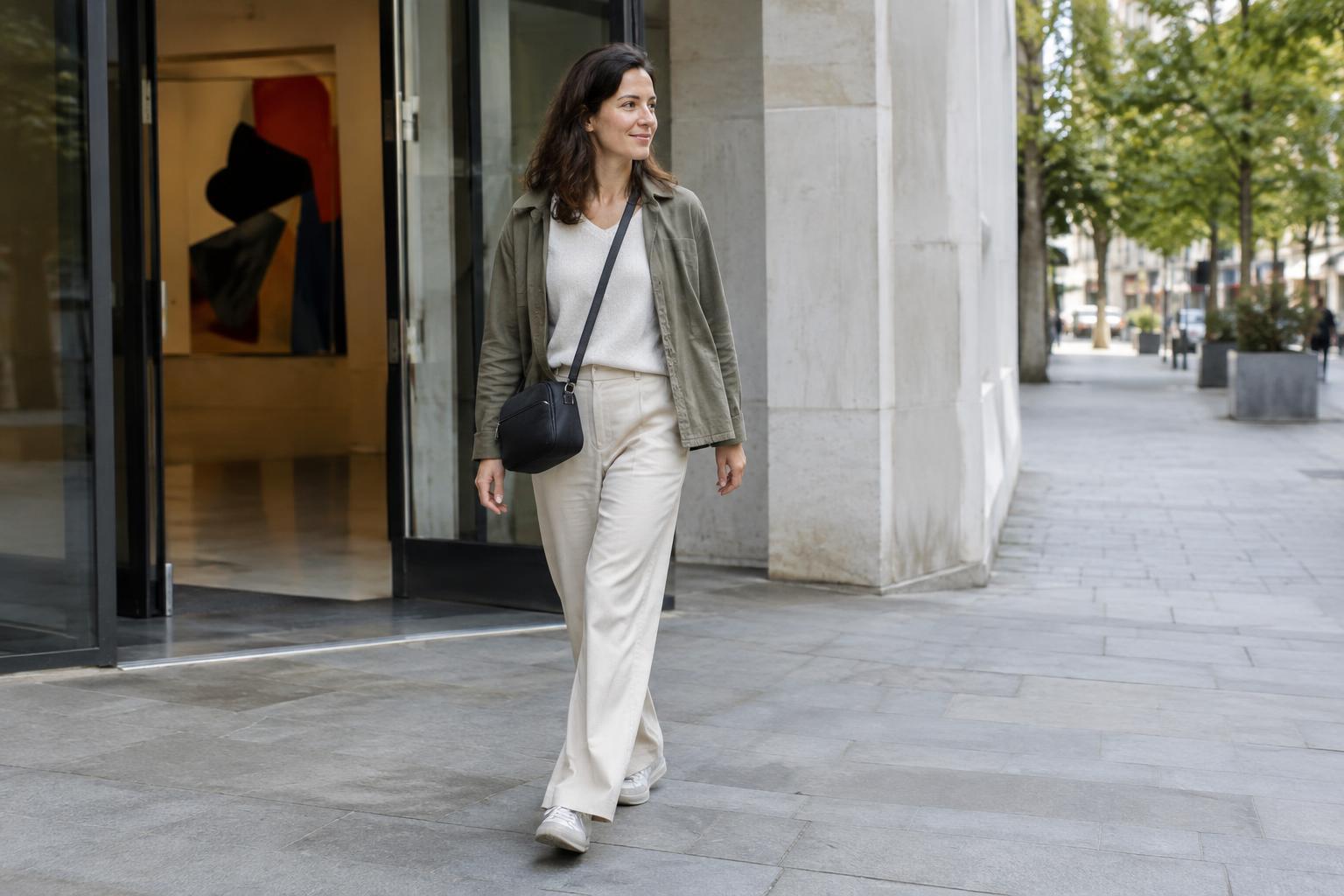
A polished fit does not have to be tight. Straight-leg or relaxed trousers, a skirt with room to walk, or a jacket that closes without strain can look intentional while leaving space to move. If a garment fits one area but not another, consider whether an alteration is practical before buying it. Do not count on an uncomfortable item becoming comfortable simply because you wear it often.
Choose fabrics for their feel and upkeep
Fabric comfort depends on more than a label. Texture against the skin, weight, stretch and how a garment hangs can all matter over a long day. A little give may be helpful for clothes worn while sitting, while a fabric with some structure can keep a relaxed cut looking suitable for work. Check the lining too: a smooth outer fabric will not help much if the inside feels scratchy or restrictive.
Think about care before making an item part of your regular rotation. If you are unlikely to follow its washing or ironing instructions, it may become difficult to rely on. For a useful test at home, wear a new piece for a few hours before its first full workday. This gives you a chance to spot creasing, clinging or irritation while you can still rethink the outfit.
Build outfits that can adjust during the day
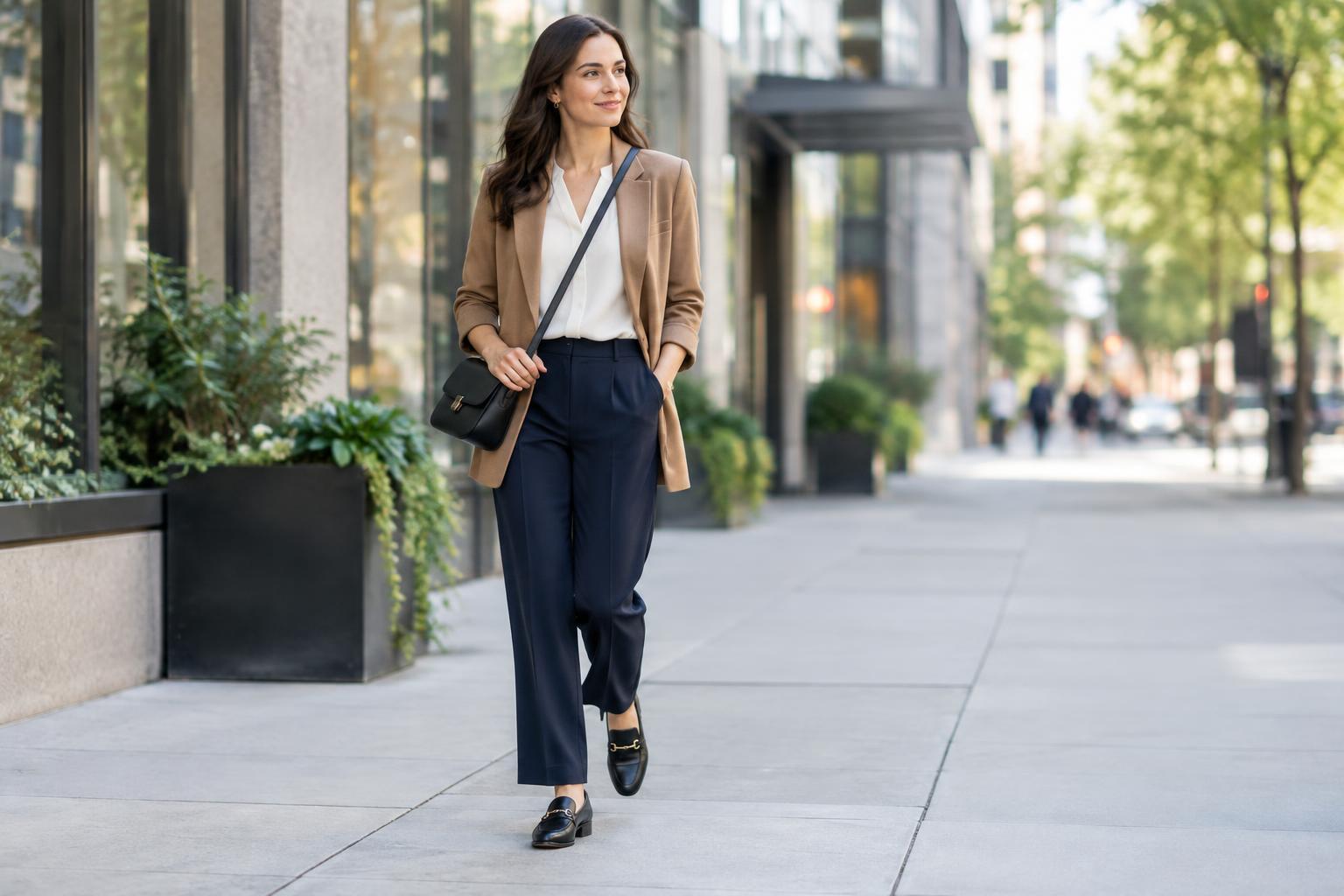
Layers help when the commute, office and journey home feel different. A comfortable base top under a cardigan, overshirt or blazer lets you change your level of warmth without changing the whole outfit. Choose layers that work together: a sleeve that bunches tightly inside a jacket, for example, can be distracting even when both pieces feel fine on their own.
A small set of compatible pieces also makes comfortable dressing easier on busy mornings. Try pairing a few reliable bottoms with tops and layers that suit your workplace. Neutral colours can simplify mixing, but they are not required; repeating a colour or silhouette you enjoy can work just as well. The aim is to have combinations you have already worn and liked, rather than a closet full of pieces that only look good separately.
Give shoes and accessories a full-day test
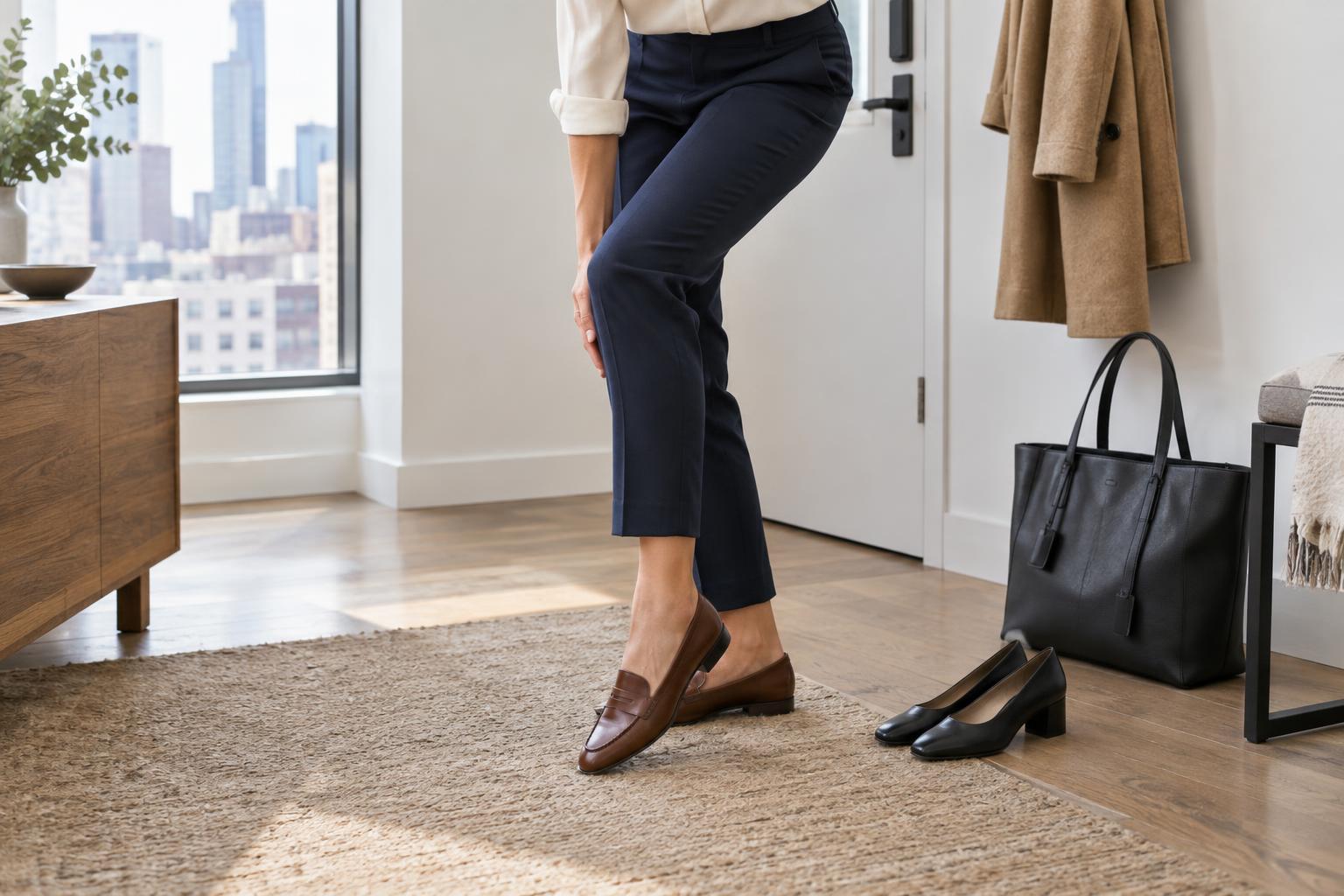
Shoes deserve as much attention as the outfit. Try them with the socks or tights you would wear to work, and walk on the kinds of surfaces your day includes where possible. Check for rubbing, slipping at the heel and pressure at the toes. If your commute demands different footwear from your workplace, a change of shoes may be simpler than asking one pair to do everything.
Accessories can add comfort or quietly take it away. A bag that holds your essentials without becoming overloaded is easier to manage on a crowded journey. Before leaving, check whether a belt digs in when you sit, jewellery catches on clothing, or a scarf becomes awkward under your outer layer. Keep the items that make the day easier and leave behind those you spend the day adjusting.
Finally, treat comfort as something you can refine. After a long day, note which pieces you forgot you were wearing and which ones needed attention. Those observations are a practical guide for future outfits: repeat what worked, and change one troublesome element at a time.