Start with the clothes and the space
Before buying containers, sort the clothes you expect to leave untouched for several months. Separate everyday cotton pieces from bulky knits, structured jackets and delicate fabrics. A stack of T-shirts can tolerate a different storage setup from a wool coat or a beaded dress. Set aside anything that needs repair or cleaning rather than packing it with ready-to-wear clothes.
Next, look at the storage space itself. An under-bed gap may call for low, rigid boxes, while a high shelf may be easier to use with lightweight bags. Choose a place that stays reasonably dry and avoids prolonged direct sunlight. If a space tends to feel damp or has shown signs of pests, address that problem before storing clothes there. A good container cannot make an unsuitable space safe for fabric.
Choose bags for flexibility, boxes for protection
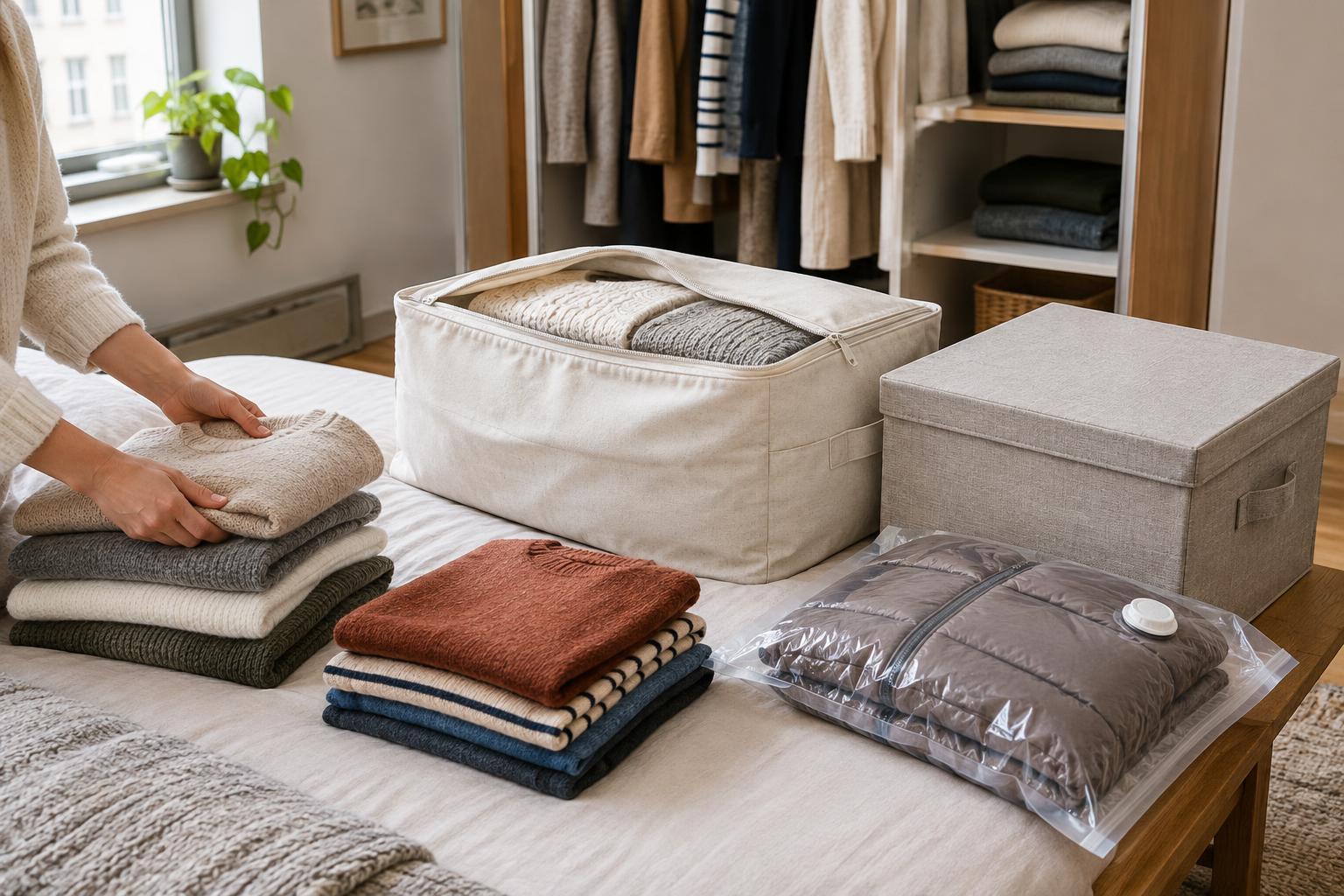
Fabric storage bags suit clothes that benefit from airflow, especially when they will be kept in a dry, clean area. They are light and can fit into awkward spaces, but soft sides offer little protection against crushing. A zippered fabric bag can help keep dust off while making it easier to see and retrieve what you packed. Check the bag's seams and closure before filling it.
Rigid boxes are useful when you need to stack containers or prevent other belongings from pressing into your clothes. A smooth, lidded plastic box is easy to wipe clean and can help shield contents from dust, though you should only pack garments that are completely dry. A sturdy cardboard box may be sufficient in a dry cupboard, but it is less forgiving if the floor or surrounding air becomes damp. Avoid overfilling any box: a lid that closes without force is less likely to squash the top layer.
Vacuum bags can save space for resilient, bulky items such as some casual outerwear or spare bedding. They are a less appealing choice for structured garments, leather, or knits you do not want compressed for months. If you use them, follow the bag's instructions and leave enough room to avoid forcing the seal. Space saved is only useful if the clothes are still in good shape when you take them out.
Prepare each garment before packing
Wash or otherwise clean clothes according to their care labels, then let them dry thoroughly before storage. Even a small mark is easier to deal with now than after months in a box. Empty pockets, fasten zips that could snag neighboring items, and remove accessories that might leave an impression. Do not add scented products directly to fabric; their fragrance may linger longer than you want.
Fold heavy knits instead of hanging them for long periods, since their own weight can pull them out of shape. Fold garments along natural seams where practical, without pressing sharp creases into delicate areas. Place heavier, sturdier pieces at the bottom and lighter items on top. If a piece has decorative details, consider wrapping it loosely in clean, acid-free tissue so embellishments do not catch on other clothes.
Make the contents easy to find later
Group clothes by a system you will remember: season, garment type or occasion. For example, keeping warm workday layers together makes more sense than mixing them throughout several boxes. Label each container on an end you can see from the shelf, using broad descriptions such as “winter knits” rather than trying to list every item. If you store several similar-looking bags, a simple written inventory can prevent unnecessary unpacking.
Think about access as well as capacity. Put the clothes you may need unexpectedly, such as a light jacket for a cool weekend, closer to the front. Reserve the deepest or highest space for items you are confident you will not need soon. Keep containers small enough to lift comfortably; one enormous box may use space efficiently but be frustrating to move in a compact city home.
Check your setup when the season changes
When it is time to bring clothes back into rotation, open each container and give the contents room to air out. Check for musty smells, marks or damage before returning items to the wardrobe, and clean anything that needs attention. This is also a useful moment to decide what still fits your life rather than automatically storing every piece again.
A practical seasonal setup does not require matching containers throughout your home. It requires clean, dry clothes, a suitable place to keep them, and bags or boxes that protect the pieces you actually own. Start with the most vulnerable garments, then choose containers that fit both your space and the way you will use your wardrobe.