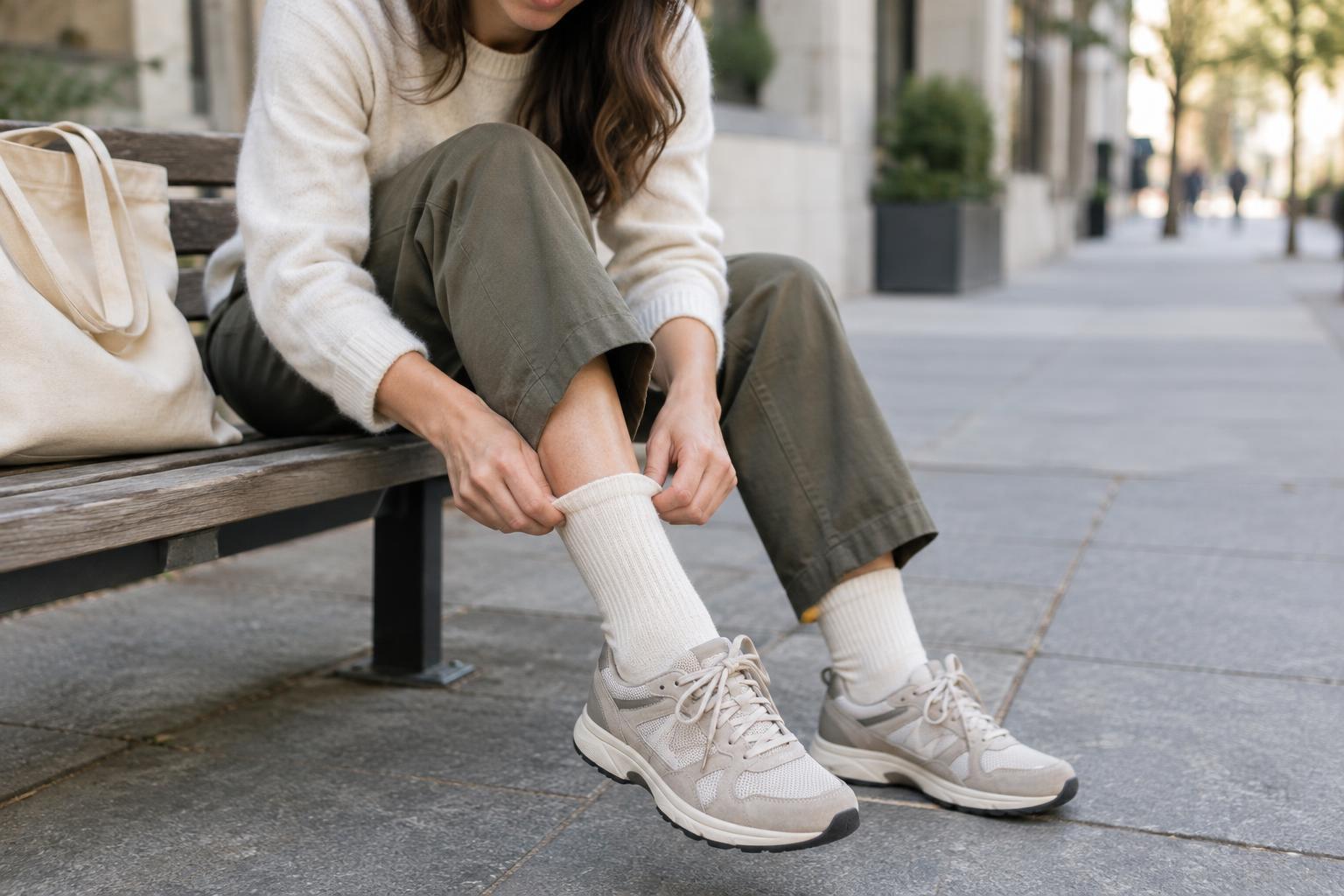
Start with the shoes and the day ahead
The best sock for a long city day depends partly on what you plan to wear over it. A sock that feels comfortable in roomy trainers may make a close-fitting loafer feel tight. Before choosing a fabric or colour, consider your shoes, how far you expect to walk and whether you will be indoors, outdoors or moving between the two. Socks should make your footwear feel more comfortable without changing its fit for the worse.
Think about the points where your shoes touch your feet. If a shoe rubs near the heel, a sock that rises above that edge offers more coverage than a low-cut pair. With boots, a taller sock can protect the ankle and lower leg from direct contact with the lining. For shoes that show more of the foot, a low-profile sock may suit the look, but check that it stays in place when you walk. A discreet sock is less useful if you have to keep stopping to adjust it.
Choose fabric for moisture and temperature
Feet can feel uncomfortable when socks stay damp, especially during a commute followed by hours indoors. Many walking socks use a blend of fibres to balance softness, moisture management, stretch and durability. Merino wool blends can be a useful option across changing temperatures, while synthetic blends often dry relatively quickly. Cotton can feel soft, but a thick cotton sock may stay damp longer after a warm walk or a rainy trip.
There is no single fabric that works for every person or season. If your feet tend to feel warm, try a lighter sock with a breathable knit. In cooler weather, a somewhat warmer pair may feel better, provided your shoes still have enough room. Read the fabric label and pay attention to how a pair feels after a full day, not just when you first put it on. That experience will tell you more about your preferences than a fabric name alone.
Get the fit right before adding cushioning
A walking sock should sit smoothly against your foot. A loose pair can bunch under the toes or slip at the heel; a pair that is too small may pull at the toes or feel restrictive around the leg. Use the maker’s size range as a starting point, then check the fit in your usual walking shoes. The heel-shaped section should land at your heel, and the toe area should lie flat without excess fabric.
Cushioning can make hard surfaces feel more pleasant, but more padding is not always better. Thick socks take up space inside a shoe and can create pressure if the fit is already snug. Light cushioning under the heel and ball of the foot may be a practical middle ground for everyday walking. If you prefer a thinner sock, look for one with a smooth toe seam and a secure fit rather than relying on thickness for comfort. No sock can fully compensate for a shoe that rubs or does not fit well.
Match the details to your routine
Small construction details matter when you are on your feet for hours. A gentle cuff should help the sock stay up without feeling uncomfortably tight. A smooth or flat-feeling toe seam may reduce irritation inside close-fitting shoes. If you choose no-show socks, look for a heel design that grips securely, and test it on a short walk before wearing it for a full day out.
You may find it useful to keep a few sock types rather than expecting one pair to do everything. Thin, neat pairs can work with office shoes; slightly cushioned crew socks can suit trainers on errand-heavy days; taller socks can offer coverage inside boots. Choose colours that fit your wardrobe if your socks will be visible. Comfort comes first, but a small set of reliable pairs can also make getting dressed easier.
Test, care for and replace what you wear
When trying a new style, wear it with the shoes you actually use for walking and notice what happens over several hours. Does the heel stay put? Do the toes have room? Do your feet feel too warm once you are indoors? If a pair fails one of these checks, it may still suit a different shoe or a shorter outing. Buying one pair to test before stocking up can help you avoid a drawer full of socks you rarely reach for.
Follow the care label to help socks keep their shape and stretch. Letting them dry fully before wearing them again can also make your rotation more pleasant. Over time, check for thinning fabric, worn heels and cuffs that no longer stay in place. Replacing a tired pair is a small wardrobe update, but it can make the shoes you already own more comfortable for a busy day in the city.


