Start with how you use your phone outside
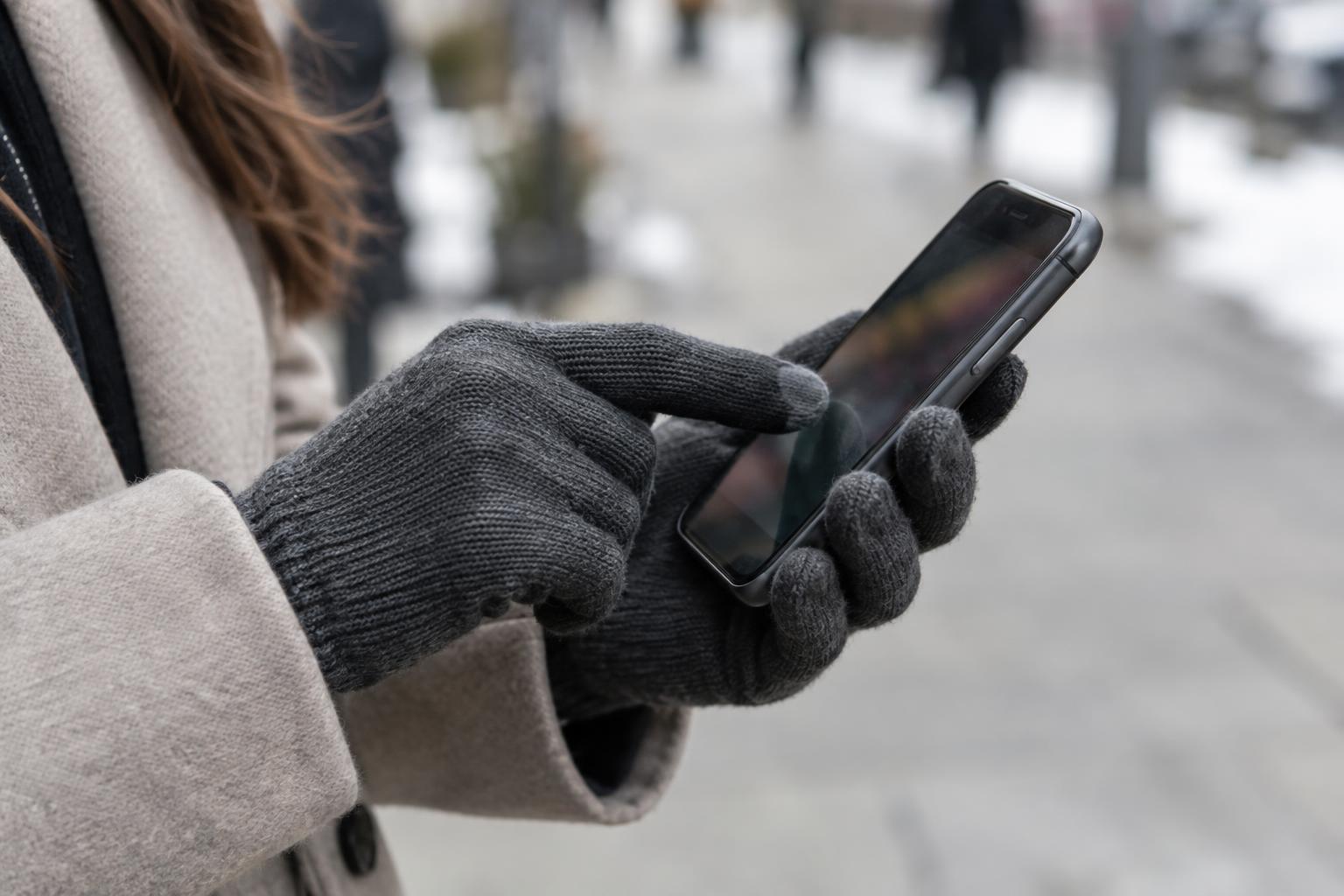
A quick glance at a transit update asks less of a glove than typing a message or adjusting a map. Before shopping, think about the tasks you regularly do outdoors. If you mostly tap notifications and unlock your phone, a glove with one responsive fingertip on each hand may be enough. If you type, zoom in on directions or use your phone with either hand, look for responsive material across more fingers or a larger area of each fingertip.
Your surroundings matter too. A short walk between buildings may call for a lighter pair that fits easily into a coat pocket. For a longer, colder commute, warmth and coverage become more important. The most useful gloves are not necessarily the ones that make typing fastest; they are the ones you will keep on when you need them.
Understand what makes a glove touchscreen-friendly
Most smartphones use capacitive touchscreens, which respond to changes in an electrical field. Ordinary insulating fabric can prevent the screen from detecting your finger. Touchscreen gloves use conductive yarn, a special fingertip material or another conductive area to help register a touch. A label saying “touchscreen compatible” is a starting point, not a guarantee that every gesture will feel precise.
Look closely at where the conductive areas sit. Small patches can miss the screen if they do not line up with the part of your finger you naturally use. Conductive material that extends around the fingertip may be more forgiving, particularly when you tap at an angle. Also check which fingers are compatible: thumb and index-finger coverage may suit basic use, while more coverage can help if you switch hands or use several gestures.
Treat fit and grip as part of phone performance
A glove can have responsive fingertips and still feel awkward if it is too loose. Extra fabric at the ends of your fingers makes accurate taps harder, while a tight glove can restrict movement and feel uncomfortable. Try making a fist, holding your phone and tapping near the edges of the screen. The glove should move with your fingers without pulling at the seams or bunching over your fingertips.
Grip deserves equal attention on a busy day. A smooth glove may make a phone feel less secure, especially when you are also carrying a bag or coffee. Textured palms or fingers can help you hold it more steadily, though the amount of grip varies by design. Keep phone use for moments when you can stop safely rather than trying to read a screen while crossing a street or navigating a crowd.
Balance warmth with dexterity
Thin knit gloves often let your fingers move freely and are easy to stow, but they may not provide enough warmth for a long wait outdoors. Heavier insulated gloves can be warmer yet make small on-screen controls harder to use. Consider the weather you commonly dress for and whether you need one versatile pair or separate options for milder and colder days.
The cuff matters as well. A snug cuff that meets your coat sleeve can help prevent a gap at the wrist, while a longer cuff may feel more comfortable when you reach for your phone. If you often encounter rain or damp conditions, check the glove’s material and care label rather than assuming a warm glove is water-resistant. Wet fabric can feel uncomfortable and may make touchscreen use less reliable.
Test the pair before making it your everyday accessory
If you can try gloves in a shop, ask whether you may test them with your own phone. Use the gestures you actually rely on: unlocking it, tapping a small button, typing a short phrase and zooming on a map. Your screen protector, case and usual way of holding the phone can all affect how the experience feels. If you shop online, check the size guide, fingertip placement and return policy so you can assess the fit at home.
Finally, consider how the gloves will fit into your routine. A pair that can be cleaned according to its care instructions, tucked into your regular bag and worn with your usual coat is easier to keep handy. Touchscreen performance may change as conductive areas wear, so avoid treating the feature as permanent regardless of use. A practical pair should let you handle essential phone tasks without turning every cold-weather errand into a search for somewhere to take your gloves off.