Start with the day, not a single outfit photo
Weekend plans can shift from a long walk to a train ride, a café table or an afternoon on the sofa. Clothes that feel fine while standing in front of a mirror may pull, bunch or slip once you start moving. Before choosing an outfit, think through the positions you are likely to spend time in: walking, sitting, reaching, bending and carrying a bag. You do not need special-purpose clothing for each activity. You need pieces that remain easy to wear across the day.
Choose one priority if your plans are uncertain. If you expect to walk a lot, start with shoes you already find comfortable and build around them. If you will spend hours seated, begin with bottoms that do not press into your waist or restrict your hips. This approach makes comfort part of the outfit from the start, rather than something to solve after you leave home.
Check fit while you move
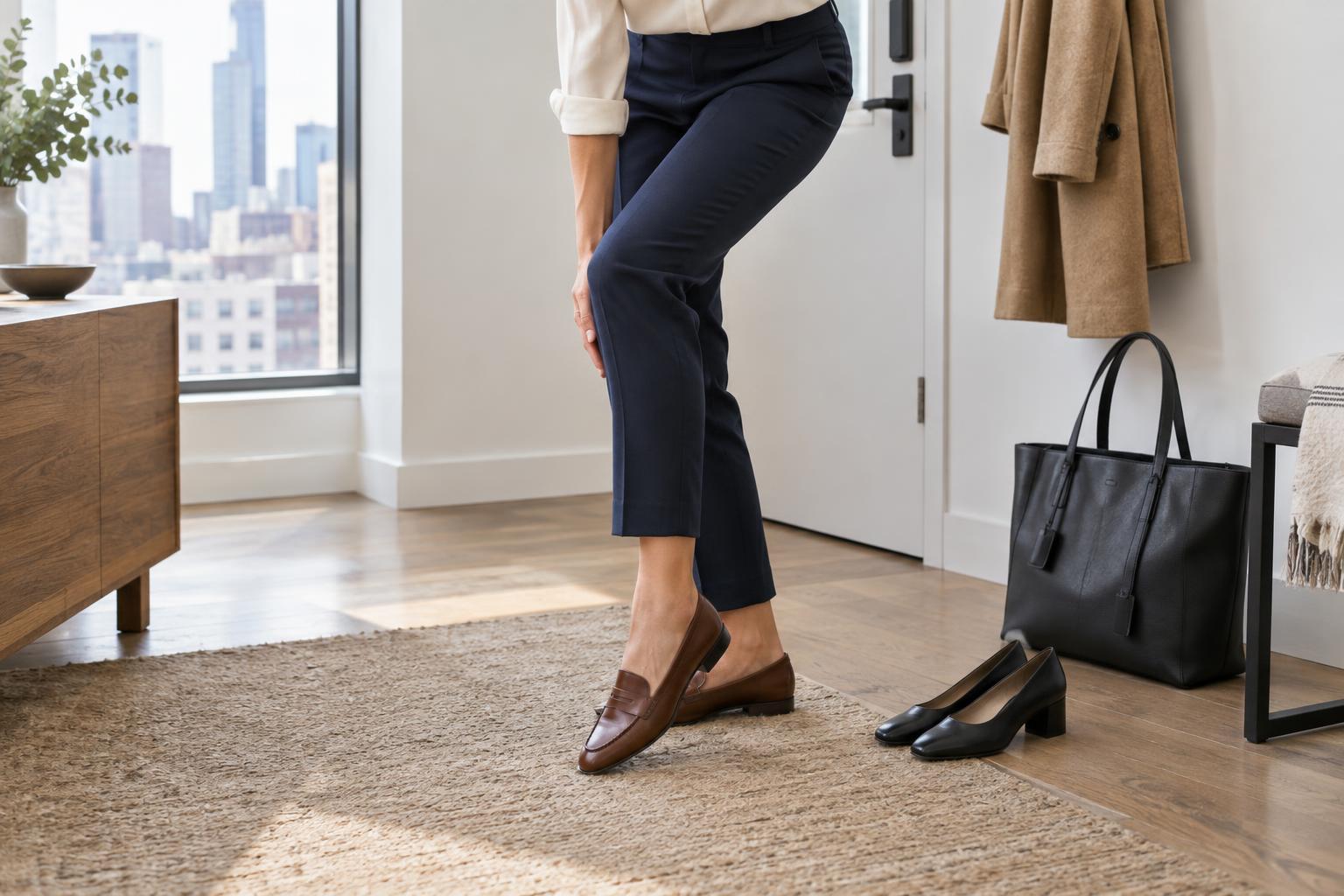
Fit is more useful to judge in motion than by the size on a label. When trying on trousers, jeans or a skirt, sit down and stand up a few times. Notice whether the waistband digs in, the fabric pulls across your thighs or the hem rides higher than you would like. Walk around and take a few longer steps. A piece does not have to be loose to be comfortable, but it should let you move without constant adjustment.
Give tops and outer layers the same test. Raise your arms, reach forward and sit with your shoulders relaxed. A shirt that stays in place and a jacket that closes comfortably when seated may be more useful than pieces that only look right when you stand still. Consider where straps, seams and fastenings land, especially if you will carry a shoulder bag or wear several layers. Small points of friction can become distracting over a full day.
Choose fabrics for the comfort you want
Fabric affects how an outfit behaves as much as its shape does. A little stretch may make fitted trousers easier to sit and stride in, while a roomier cut can give a less stretchy fabric space to move. Softness matters too: feel the inside of a garment and check whether seams or labels rub. For a long day out, a fabric that does not feel excessively heavy or stiff may be easier to live in.
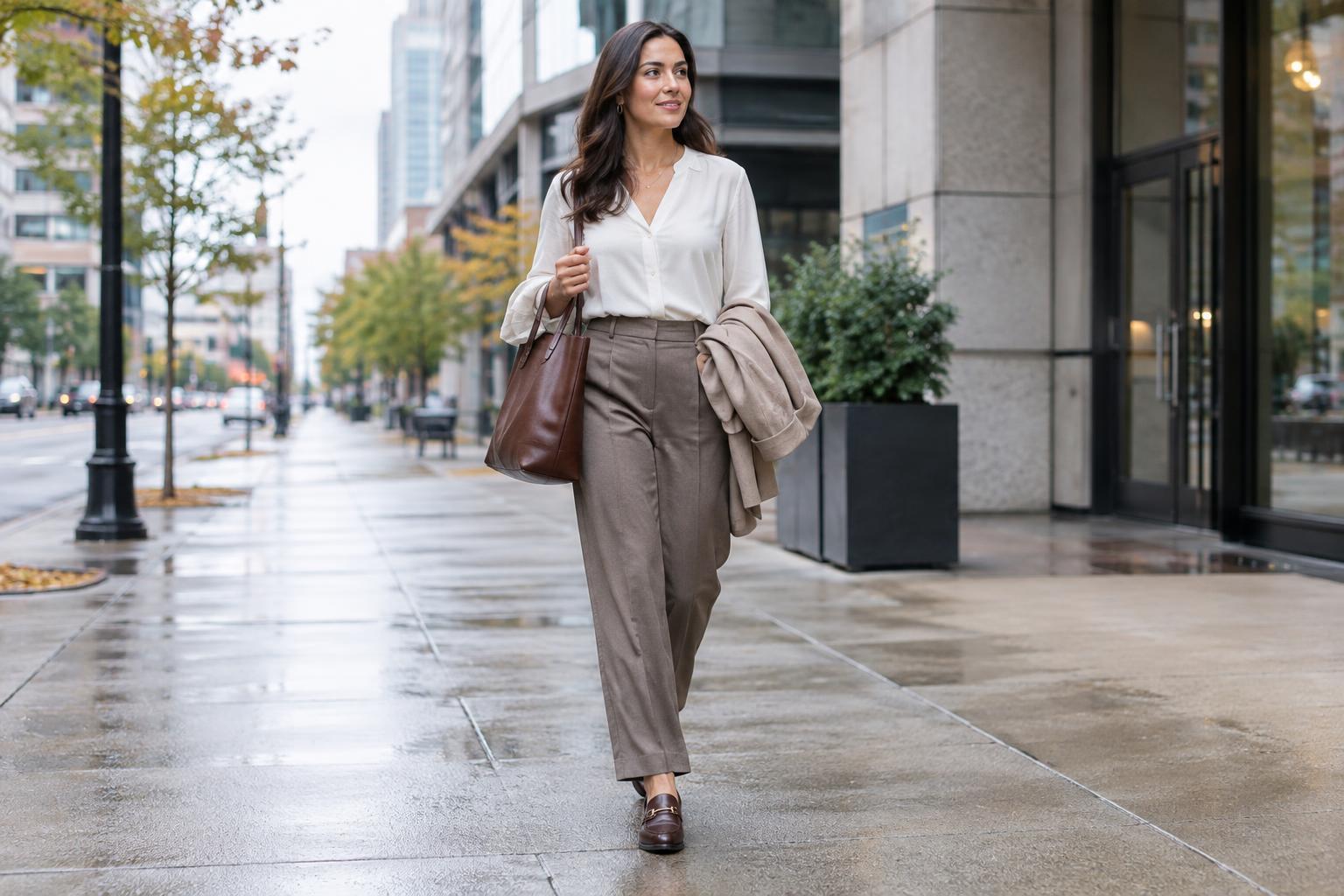
Think about temperature changes without assuming one fabric works for everyone. A light layer you can remove is often more adaptable than a single bulky piece when you move between indoors and outdoors. If you tend to feel warm while walking, allow room to take off a cardigan or overshirt and carry it. If you prefer more coverage, look for breathable layers that sit comfortably together rather than pulling at the shoulders or arms.
Let shoes and accessories support the outfit
For a walking-heavy weekend, shoes deserve an honest trial. Wear a pair around the house or on a short outing before relying on it for a longer day. Check that your toes have room, the heel stays reasonably secure and no edge rubs as you walk. Socks can change the fit, so try the combination you plan to wear. A shoe does not have to look athletic to be practical, but its comfort should not depend on you standing still.
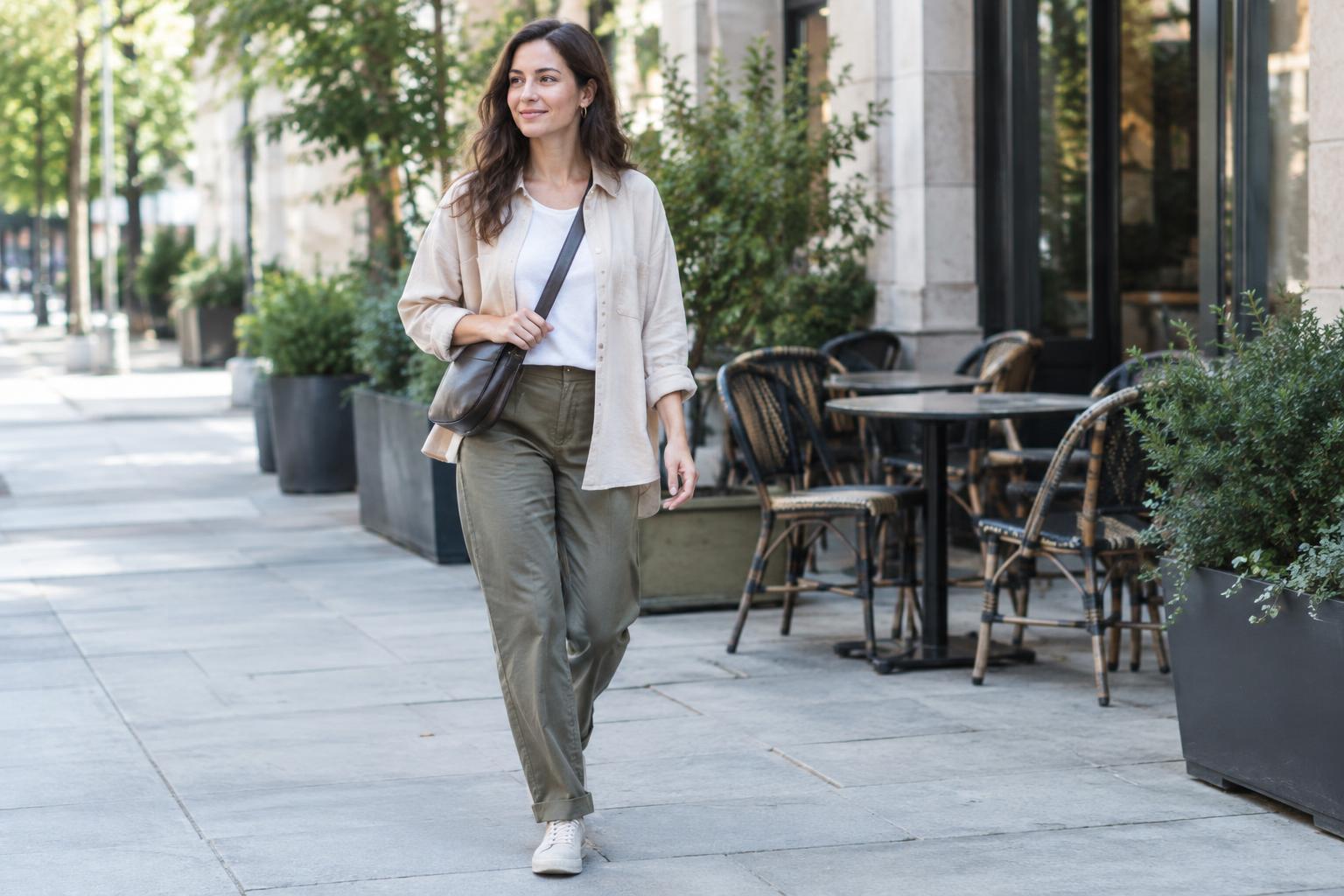
Accessories can make moving around easier or harder. A bag that holds your essentials without feeling overfilled may be simpler to carry than one that constantly slides off your shoulder. If you need your hands free, consider a crossbody or backpack with straps you can adjust. Keep the load realistic: even a comfortable bag can become awkward when packed with things you will not use. Choose accessories that serve the day rather than adding extra adjustments to it.
Build a repeatable weekend formula
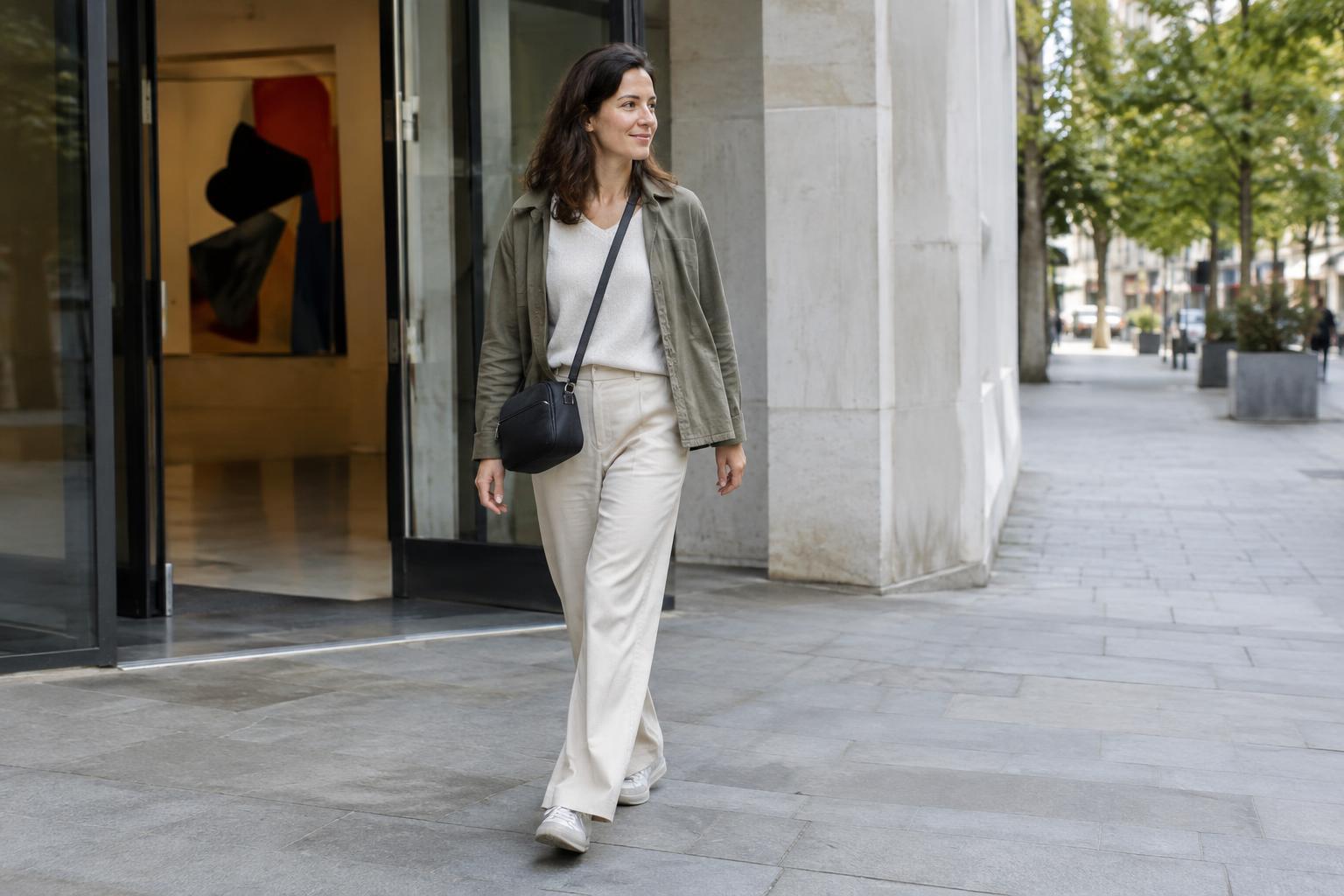
Once you know which pieces pass the movement test, turn them into a simple outfit formula. That might be relaxed trousers, a comfortable top, a removable layer and familiar walking shoes. On another day, it could be a skirt with enough room for your stride, a soft knit and a bag that leaves your hands free. Repeating a reliable combination is not a style compromise; changing the colours, textures or accessories can give it a different feel.
Before heading out, do one final check with the whole outfit on. Sit, walk, reach for your bag and put on your outer layer. If something needs frequent pulling, smoothing or readjusting, consider swapping it now. The best casual clothes are not necessarily the softest or loosest ones. They are the pieces that let you pay attention to your weekend instead of your outfit.