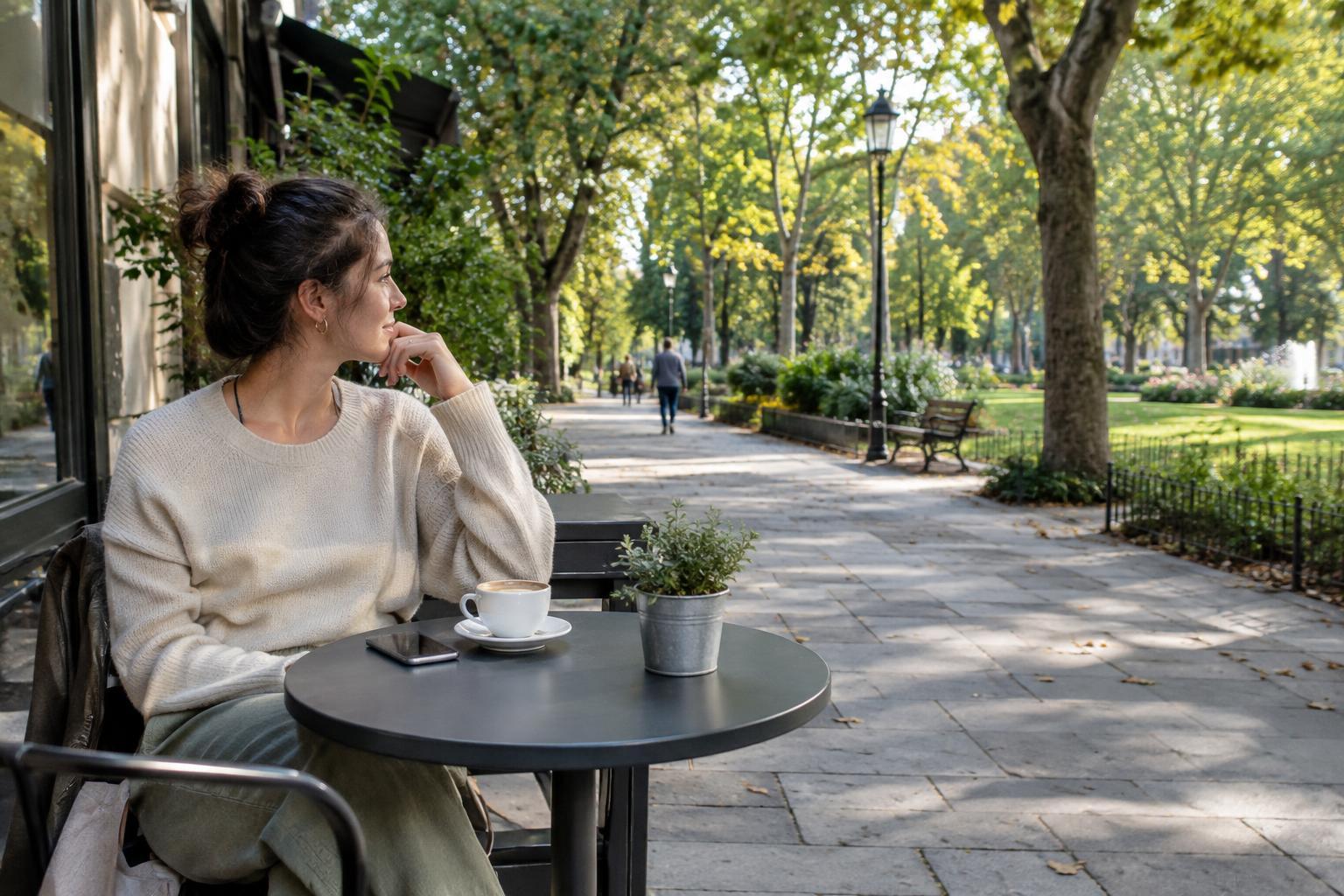
Start with the energy you have
A day off can feel like an invitation to do everything the city offers. But a good leisure plan is not necessarily the busiest one. Before choosing an activity, consider how much effort you want to spend getting ready, travelling, being around people and getting home. A nearby exhibition may sound restful, for example, but feel less appealing if it involves a long journey and a crowded entrance.
Try a simple check-in: would you rather sit, stroll or move with purpose? Do you want conversation, company without much talking, or time alone? There is no need to label an entire day as either productive or lazy. Your answer can help you choose a starting point, and you can change your mind later.
Keep low-energy plans genuinely easy
When you want a gentle outing, limit the number of decisions it requires. You might take a book to a familiar café, sit in a public garden, browse a small shop or walk one comfortable loop close to home. Pick a place where you can leave whenever you like, rather than an activity with a fixed start time or a long commitment.
Look beyond the activity itself. Check whether you will have somewhere to sit, how you will get there and whether you need to carry anything. Comfortable shoes and a light layer can make a short trip easier, especially if you expect to alternate between indoors and outdoors. If even a brief journey feels like too much, leisure at home still counts: listening to music, reading or making a favourite drink can provide a change of pace without adding another task.
Use moderate energy for a change of scene
On a day when you want to go out but not fill every hour, choose one main destination. A museum, market, library or neighbourhood you have not explored much can give the afternoon a shape. Pair it with an optional second stop, such as a snack or a short walk, rather than treating both as obligations. This leaves room to linger where you are enjoying yourself.
Consider the kind of stimulation you want. Browsing a lively market may be fun when you feel sociable, while a quiet gallery or waterside path may suit a more reflective mood. You can also set a loose time limit before leaving home. Knowing that you can head back after an hour often makes it easier to begin, and staying longer remains an option.
Make active days flexible, not overloaded
Higher energy may make a long walk, a dance class, a bike ride or a day exploring several areas sound appealing. Even then, build in breaks and choose a route with places to pause. An active outing is often more enjoyable when its purpose is clear: perhaps you want to see a different part of town, spend time with a friend or simply move outdoors.
Plan around the practical details that could interrupt your enjoyment. Check the journey and opening hours where relevant, bring water if you expect to be out for a while, and wear clothes that let you move comfortably. If you are meeting someone, agree on the main activity but keep any extra stops optional. More energy at the start of the day does not mean you have to use every bit of it.
Leave yourself an easy way to adjust
City days rarely unfold exactly as imagined. Weather, noise, queues or a delayed journey can make an appealing plan feel less worthwhile. Before you set out, think of a smaller version: a shorter route, one stop instead of three, or a quiet indoor alternative. That is not a failed outing. It is a plan that still works when your needs change.
A useful choice balances interest with ease. If an activity excites you but getting there feels daunting, save it for a day when the journey sounds manageable. If you have energy but no clear idea, start with a simple walk and decide what comes next once you are outside. Choosing leisure by energy level is less about following a strict system than giving yourself permission to enjoy the city at your own pace.