Start with what you carry
The right bag size depends less on how roomy it looks and more on what you take out each day. Gather your usual essentials: phone, keys, wallet, headphones, reusable shopping bag and any work items. Then add the things that vary, such as a water bottle, lunch, book, compact umbrella or extra layer. Looking at everything together helps you avoid choosing a bag that only works when it is nearly empty.
Think about your busiest ordinary day rather than a rare occasion when you need to carry everything. If you regularly take a laptop or papers, check their dimensions against the bag’s usable interior, not just its outer measurements. If those items travel with you only occasionally, a smaller daily bag plus a separate tote may be more comfortable than carrying an oversized bag all week.
Choose enough space, but leave room to move
A bag should hold your essentials without forcing you to stack them in a way that makes the bottom impossible to reach. A little spare space is useful for an unexpected purchase or a layer you take off indoors. Too much space, however, can let small items disappear and may tempt you to carry things you do not need.
Shape matters as much as capacity. A wide, shallow interior can make belongings easier to see, while a tall, narrow bag may require more rummaging. A structured base helps a bag stand upright when you set it down; a soft shape can be easier to tuck beside you. Consider where the bag will sit during your day, whether that is under a desk, on your lap or beside you on public transport.
Check the weight before you fill it
An empty bag can feel manageable in your hand and surprisingly heavy after a walk. Materials, lining, metal hardware and a rigid frame all add weight. If you shop in person, try the bag with items similar to your daily load and walk around with it for a few minutes. When shopping online, look for the listed empty weight and compare it with a bag you already own.
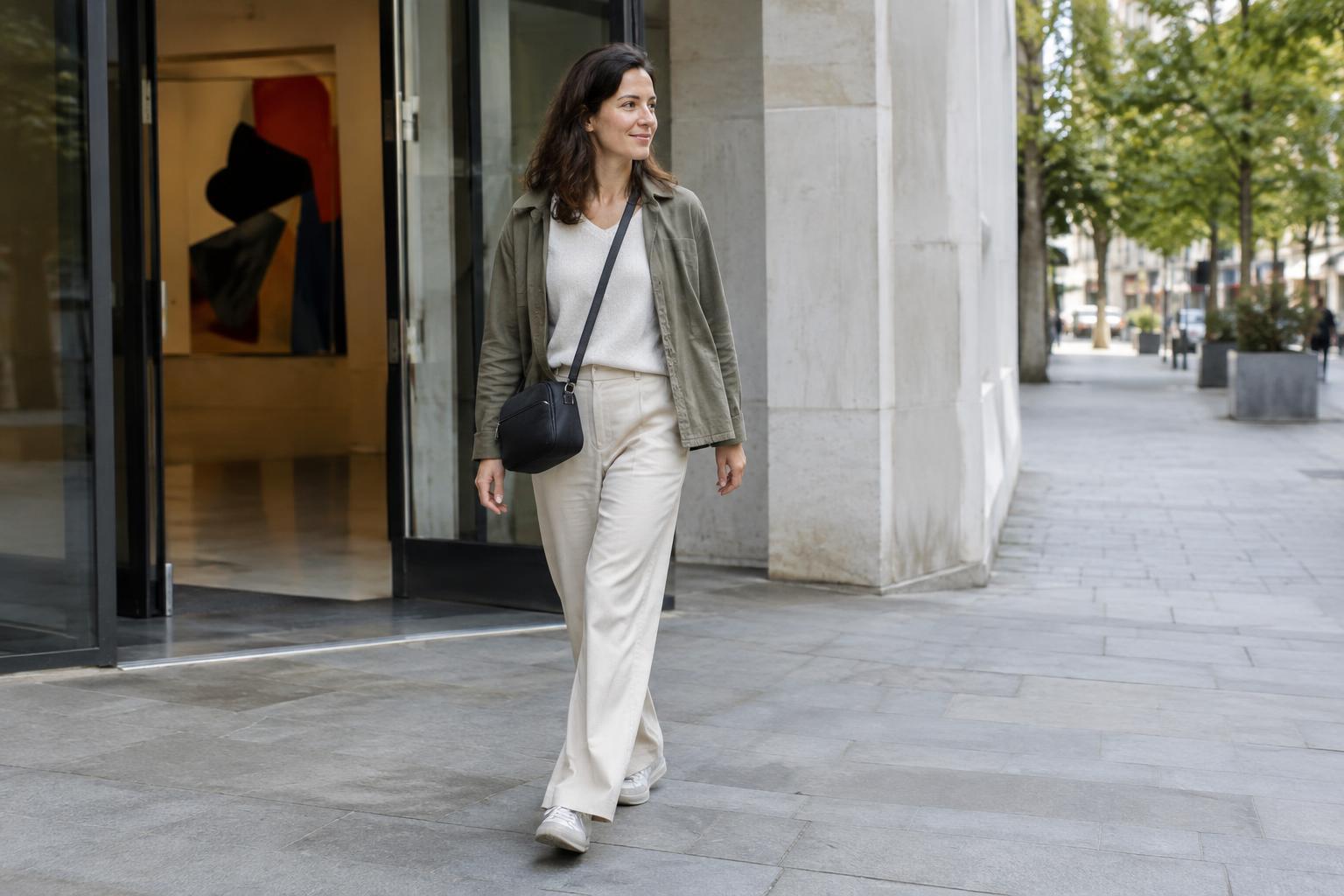
Pay attention to how that weight is carried. A narrow strap can dig into your shoulder, while a wider or adjustable strap may spread the load more comfortably. Crossbody bags keep your hands free, but the strap needs enough adjustment to sit where you can reach it without swinging as you walk. A backpack may suit heavier loads, though you may prefer to take it off before reaching for your wallet or phone. There is no universally best style; the most useful one fits your route and your body.
Make frequent items easy to reach
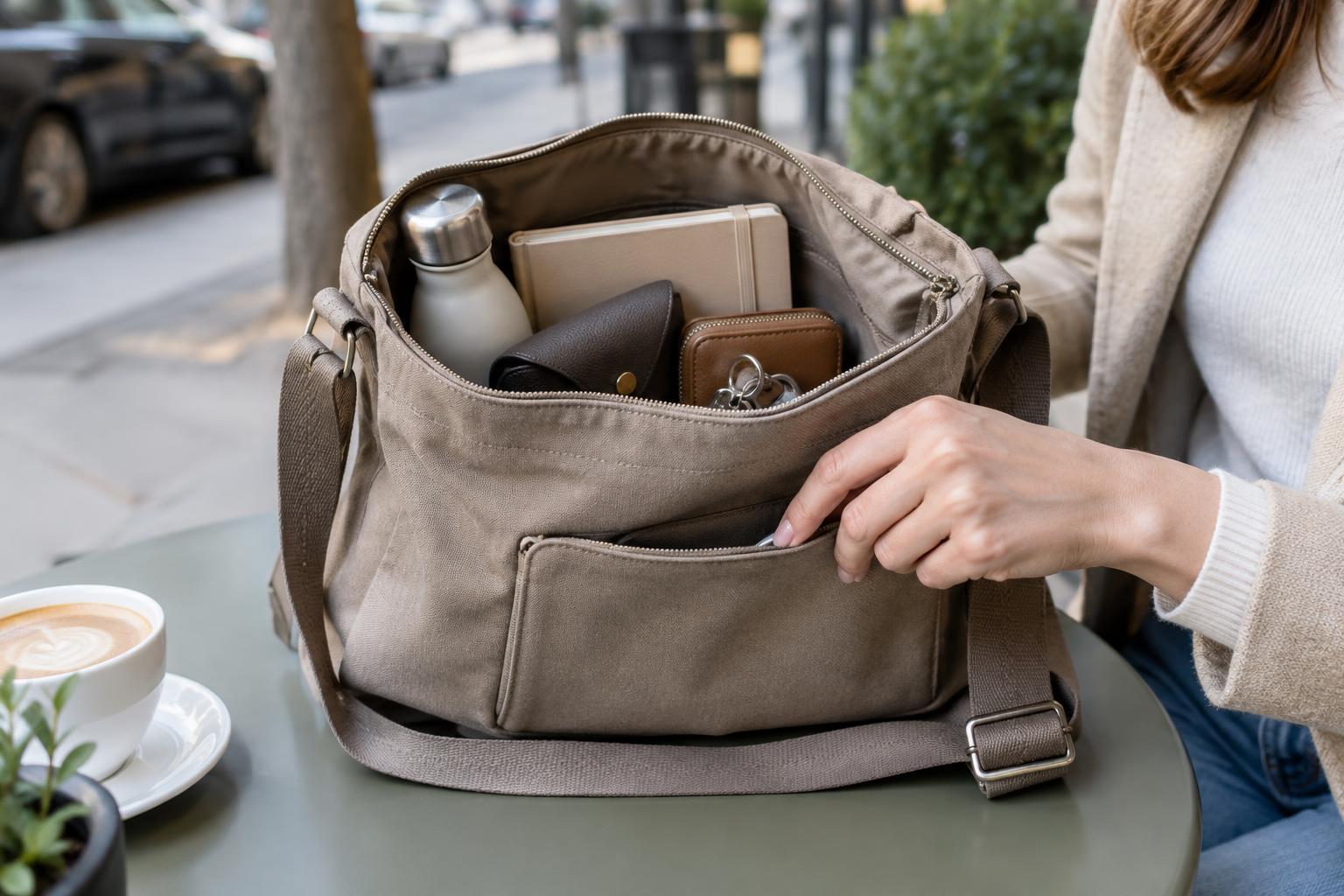
Easy access does not mean leaving everything exposed. Decide which items you reach for most often and give them predictable places. A reachable pocket for keys or a travel card can save time, while an interior zip pocket can keep smaller valuables from mixing with a charger and receipts. Check that openings are wide enough for your hand and that pockets still work when the bag is full.
Consider closures in the situations where you actually use the bag. A top zip may offer reassurance in a crowded carriage or when you set the bag down. A flap or magnetic fastening can be quicker to open, but it should stay closed as you move. If you carry a laptop, bottle or lunch, a separate compartment or sleeve can help keep items upright and reduce the need to unpack the whole bag to find one thing.
Test it against your everyday routine
Before committing, picture a full day: leaving home, commuting, working, picking something up and heading out again. Can you open the bag while standing? Does it sit comfortably over your usual coat? Can you find your keys without putting everything down? These small checks reveal more than a bag’s appearance alone.
Finally, consider how much upkeep you are willing to do. A material that wipes clean may be practical if your bag often rests on café floors or travels through changing weather. Examine stitching, strap attachments and the closure, especially if you carry heavier items. The goal is not a bag that does everything perfectly. It is one that makes your usual load feel manageable and your essentials straightforward to find.