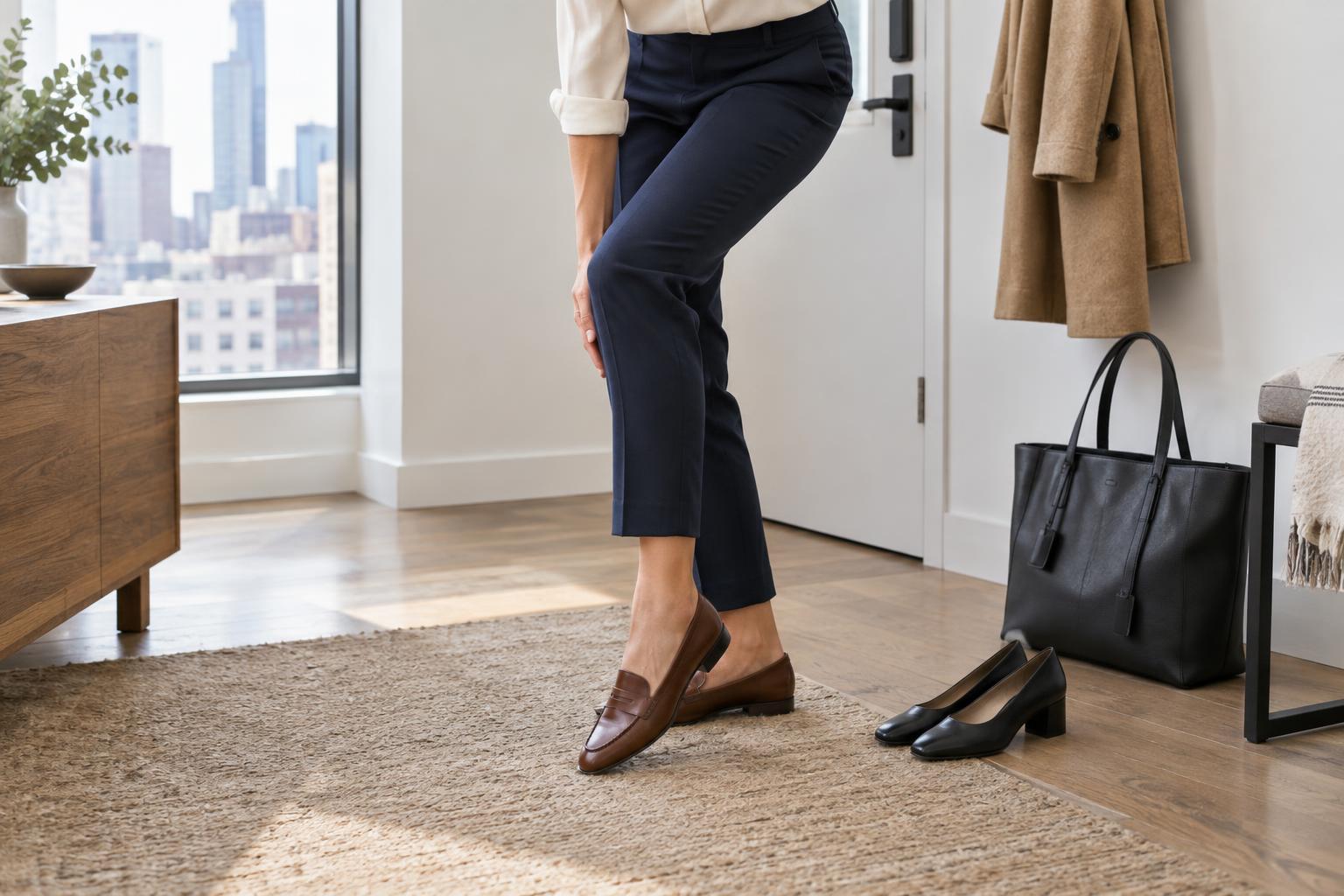
Start with the workday you actually have
Before choosing a button-down shirt, think about when and how you will wear it. A shirt that looks neat for a short meeting might feel restrictive after a walk to the station, several hours at a desk and a crowded commute home. Your usual trousers or skirt matter, too: a shirt intended for tucking needs enough length to stay in place, while one worn untucked should have a hem that looks intentional.
Decide which details are useful rather than simply decorative. A collar that sits comfortably under a jacket, sleeves that can be rolled neatly and buttons you can fasten without a struggle may make a shirt more practical. Check the care label before trying it on. If your routine rarely includes ironing or trips to a cleaner, a shirt that requires either may spend more time in the wardrobe than on you.
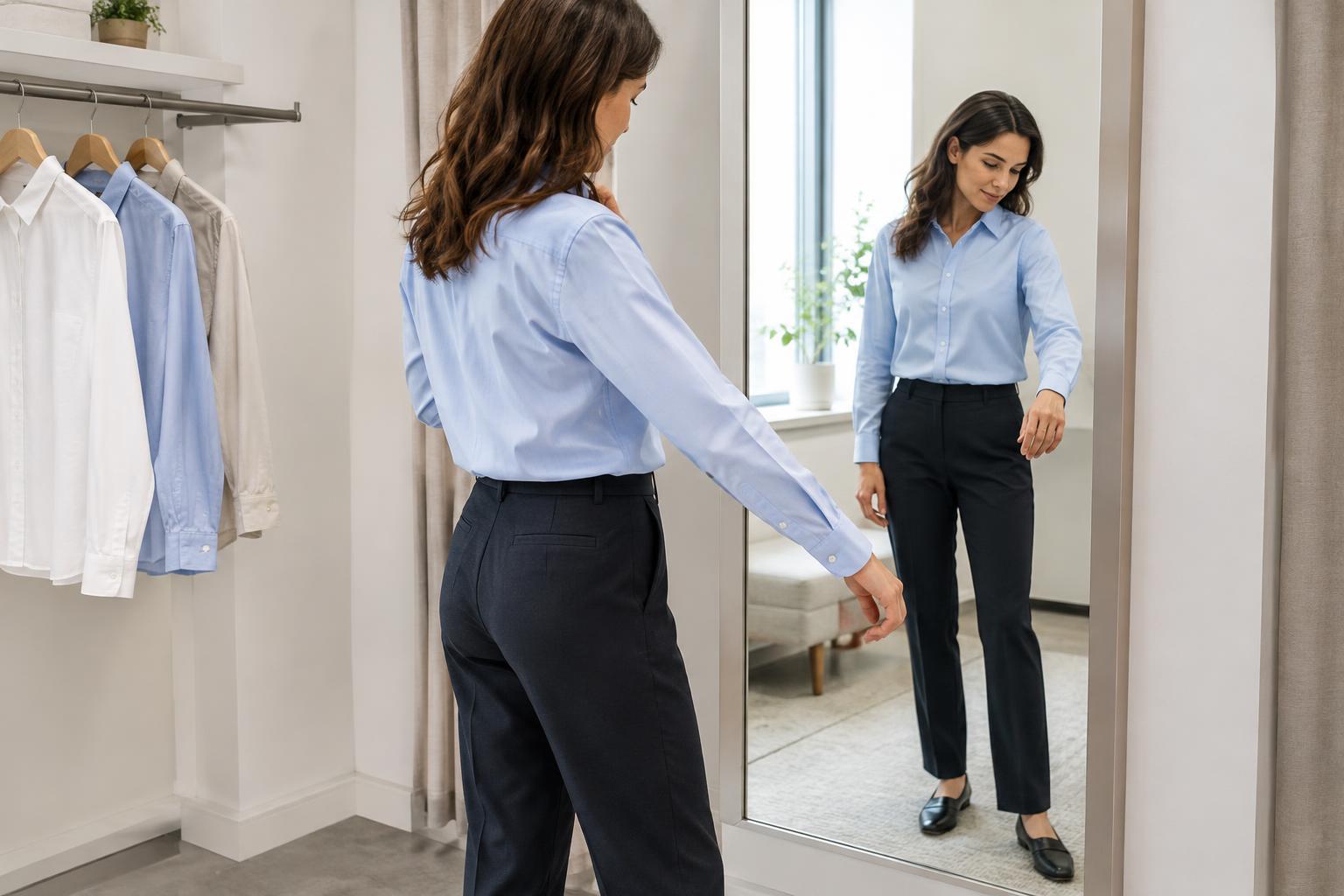
Check the fit while you move
Begin at the shoulders. The seams should sit comfortably near the edge of your shoulders without pulling across your upper back. Button the shirt fully, then sit down, reach forward and lift your arms as you would during a normal day. Look for strain across the bust or stomach, a hem that rides up, and cuffs that feel tight when your elbows bend. A good fit allows movement without leaving so much excess fabric that the shirt bunches awkwardly under a jacket.
Pay particular attention to the space between buttons. If the front pulls open, trying a different size, cut or button placement may help; going up a size is not always the best solution if the shoulders then become too wide. A shirt with a more relaxed cut may offer room where you need it. If most of the fit works, a small adjustment to the waist or sleeve length may be worth considering, but it helps to account for that extra effort before buying.
Choose fabric with care in mind
Fabric affects how a shirt feels, drapes and comes out of the wash. Crisp cotton poplin can give a clean, structured look, though it may crease noticeably. Oxford cloth generally has a more textured, casual appearance and may feel substantial. Softer fabrics can drape well but may show wrinkles or need gentler washing. Blends vary widely: some are designed to reduce creasing, while others may feel less breathable or require care to avoid static.
Read the fibre content and care instructions rather than relying on an “easy-care” label alone. If possible, gently scrunch a small area of the fabric in your hand and release it to see how readily creases appear; this is only a quick clue, not a guarantee of how it will look after washing. Consider how the material feels against your skin and whether it is opaque enough for the setting where you plan to wear it.
Look closely at the construction
Small details can make a shirt easier to live with. Check that the buttons are securely attached and that spare buttons are included if you value having a match for future repairs. Look along the seams for even stitching and inspect the buttonholes for loose threads. The placket should lie reasonably flat when fastened, especially across the areas where you noticed movement during your fit check.
Consider the collar and cuffs, too. Very stiff versions can look sharp but may feel uncomfortable if you spend the day moving around; very soft ones may not give you the shape you want under a blazer. Pockets, pleats and curved hems can be useful, but their placement should work with the way you style the shirt. Try it with a familiar layer if you can: the best standalone fit is not necessarily the most comfortable one beneath your everyday jacket.
Make regular care manageable
Once you find a shirt that fits, follow its care label and give it enough room in the wash. Fastening delicate buttons or using a laundry bag may help prevent snagging, depending on the garment. Remove the shirt promptly when the cycle ends, smooth the collar, placket and cuffs, and hang it to dry if the label allows. This can reduce the amount of pressing needed, although it will not make every fabric wrinkle-free.
If you do iron, use a temperature suitable for the fabric and tackle the collar, cuffs and button placket before the larger panels. Store the shirt on a hanger with room around it so it does not pick up fresh creases. A dependable workday option is not necessarily the most formal or the least expensive shirt: it is one that fits comfortably, works with several outfits and has care requirements you can realistically keep up with.