Start with a gentle end-of-day reset
An everyday bag moves between desks, public transport, cafés and the pavement, so a little routine care can prevent small marks from becoming stubborn ones. Empty loose receipts and crumbs, check pockets for leaking pens or cosmetics, and shake out the lining if its construction allows. Wipe hardware and handles with a dry, soft cloth, paying attention to the places you touch most often.
Before cleaning any bag, check its care label or the maker’s instructions. The outer material may be leather, canvas or nylon, but trims, coatings, adhesives and linings can need different treatment. Test any cleaning method on a discreet spot first. For ordinary dust, start with the least aggressive option: a clean, dry microfiber cloth or a soft brush. Use water or cleaner only when the material and its finish can tolerate it.
If your bag gets wet on the way home, take out damp contents and gently blot the outside rather than rubbing. Leave the bag open to dry at room temperature, away from radiators and direct sun. Stuffing it loosely with clean, unprinted paper or a dry cloth can help it hold its shape while it dries; replace the stuffing if it becomes damp.
Keep leather supple without overcleaning it
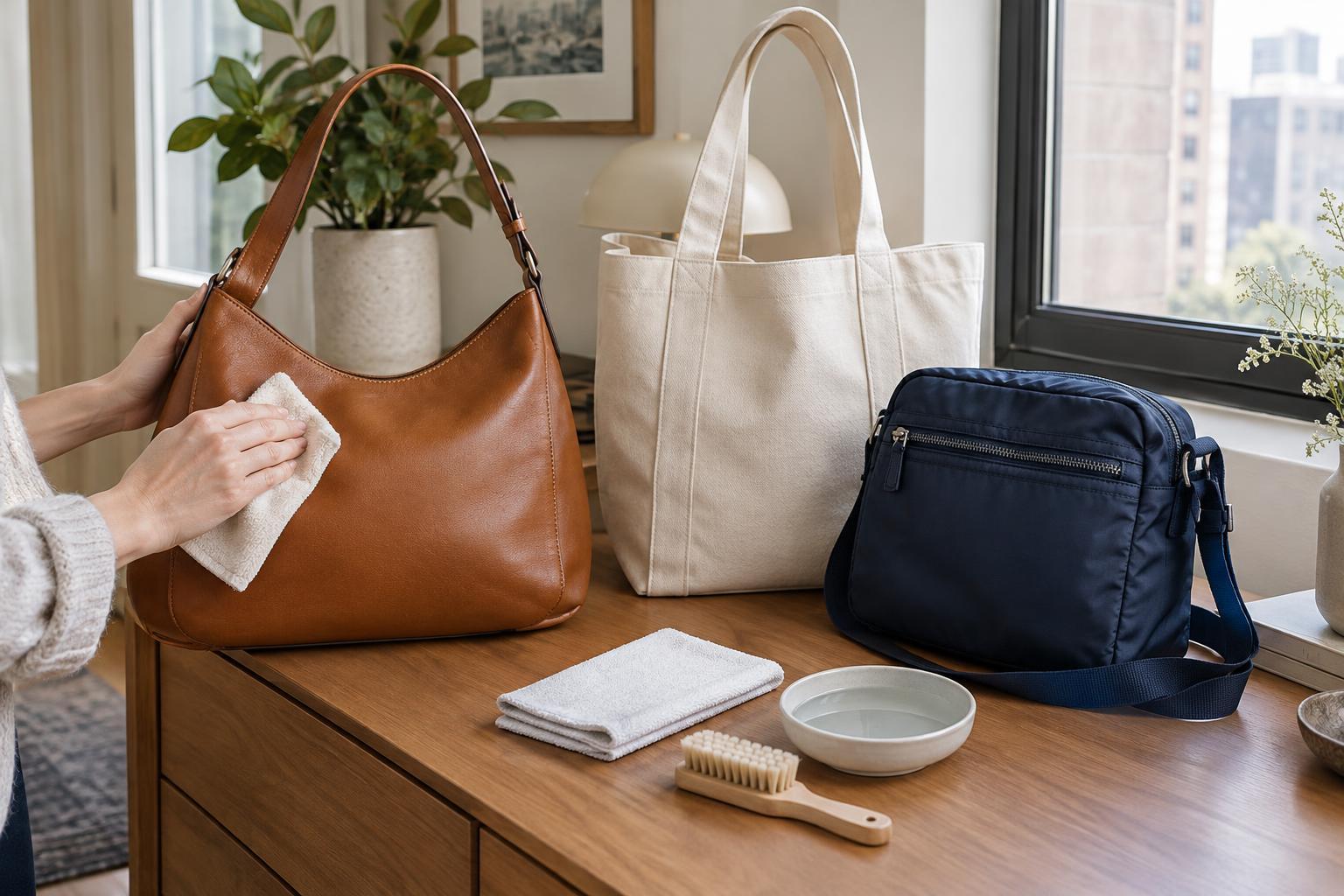
Smooth, finished leather often needs only a dry wipe after regular use. For a small surface mark, try a slightly damp, well-wrung cloth if the maker permits it, then let the bag dry naturally. Avoid soaking seams or scrubbing a stain: water and friction can leave marks or affect the finish. If you use a leather cleaner or conditioner, choose one suited to that specific finish, follow its directions and apply it sparingly after a patch test.
Not all leather should be treated alike. Suede and nubuck usually call for a dedicated soft brush and products designed for those textures, rather than a damp cloth or standard leather cream. Patent and coated leathers may also have different care requirements. When you are unsure what finish you have, pause before applying a product; an unsuitable treatment can be harder to remove than the original mark.
Give leather bags a break between heavy-use days when possible. Avoid hanging a loaded bag by its straps for long periods, which may strain the attachment points. Check corners and handles occasionally for wear so you can deal with a loose stitch or damaged edge before it worsens.
Lift dirt from canvas without spreading it
Canvas can pick up dust and street grime quickly, particularly in light colours. Begin by brushing off dry dirt with a soft brush, working gently around seams and printed details. For a small spot, dab with a cloth lightly dampened with water and a little mild soap, if the care instructions allow. Work from the edge of the mark inward, then lift away soap residue with a second, barely damp cloth.
Try not to saturate the fabric. Excess water may create a tide mark, affect colour or soak into a lining that dries slowly. Machine washing can distort a structured bag or damage leather trim and hardware, so do not assume a canvas exterior makes the whole bag machine-washable. After spot cleaning, let the bag air-dry fully before filling it again.
Clean nylon gently and mind its coatings
Many nylon bags are easy to wipe down, but their finishes vary. Brush away loose grit first, then use a soft cloth with a little water and mild soap for marks, provided the care label permits it. Wipe again with a clean, lightly damp cloth to remove residue. Pay attention to zippers and seams, where grime can collect, without forcing water into them.
Avoid harsh solvents, bleach and abrasive brushes. They may damage colour, protective coatings or nearby trim. If a nylon bag has a padded compartment, water-resistant finish or bonded details, use minimal moisture and allow extra drying time. A bag that feels dry outside may still hold dampness in a pocket or lining, so leave compartments open until they have aired out.
Store bags so they are ready for the next outing
Once clean and completely dry, store a bag with its pockets empty and zippers or fastenings relaxed rather than under strain. Add light stuffing to structured styles, tuck straps so they do not press into the surface, and keep bags in a breathable dust bag or another clean, dry space. Avoid cramped storage where hardware can scratch neighbouring bags or soft materials can be crushed.
You do not need to deep-clean a bag after every journey. A quick empty, a gentle wipe when needed and prompt attention to spills are usually more useful than frequent heavy treatment. For a persistent stain, damaged coating or significant repair, a specialist familiar with the bag’s materials may be the safer choice than repeated experiments at home.