Start with how your day actually moves
A hairstyle can feel fine in the mirror and bothersome by midafternoon. A crowded commute, time at a desk, a walk in the wind and a change of clothes can all affect how an accessory feels. Before choosing one, think about when you need your hair out of your face, whether you will lean against a seat or wear headphones, and how often you want to restyle it.
Comfort also depends on your hair. A small clip that holds fine hair securely may slide out of thick hair; a firm tie that controls a dense ponytail may feel too tight on a lighter one. Length, layers and texture matter too. Rather than looking for one accessory that promises to suit everyone, look for a hold that feels steady without pulling at your scalp or forcing strands into place.
Choose ties that hold without demanding a tighter ponytail
A soft fabric-covered tie is a useful starting point for ponytails and loose buns. Its covering puts a gentler surface against the hair than an exposed elastic, and a larger scrunchie can spread the hold across a wider area. The right size still matters: if you need to wrap it repeatedly until the style feels strained, try a smaller tie or a different style instead of pulling your hair tighter.
Low styles are worth considering on long days. A ponytail or bun at the nape can feel less intrusive under a hood or against a chair than one positioned higher up. If a tie shifts as you move, you do not have to solve it with more tension. A second small accessory, such as a pin for loose layers, may keep the style tidy while letting the main tie sit comfortably.
Use clips and pins where they make sense
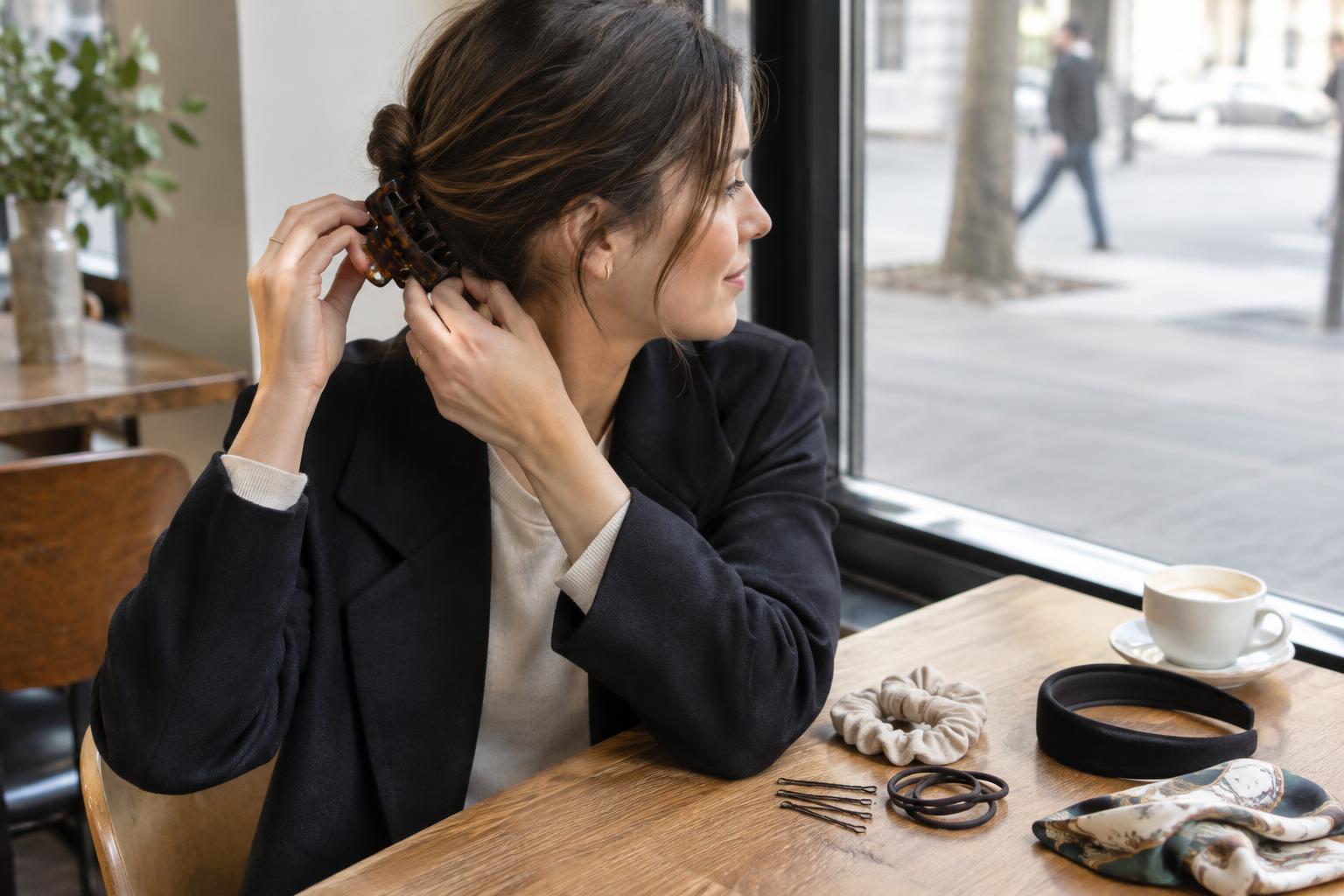
Claw clips can make it quick to put hair up and let it down again between appointments or after work. Look for a clip whose teeth can grip your hair without digging in, and choose a size that can hold the amount of hair you want to gather. A large clip is not automatically better: if it feels heavy or presses against a chair back, a smaller clip for a half-up style may be easier to wear.
For shorter hair or face-framing layers, a few well-placed pins may do more than one large clip. Slide them in where strands naturally separate, rather than dragging the hair back from the hairline. Flat clips can also be convenient when you expect to wear a hat. Test any clip with your usual headphones or seat position before relying on it for a full workday.
Give headbands and scarves a comfort check
A headband can keep front layers clear without requiring a ponytail. Its fit is the deciding detail: check for pressure behind the ears and along the sides of your head, not just whether it stays on. A wider band may distribute contact more comfortably, while a slim one may be easier to tuck into a bag. Either way, you should be able to forget you are wearing it for stretches of the day.
A light scarf offers another way to manage loose hair, especially when you want an accessory that can double as a bag detail later. Fold it to the width you prefer and tie it securely but loosely enough to adjust. Smooth fabrics can slip on some hair, so a scarf may work best as a finishing layer over a tie or bun rather than as the only thing holding the style together.
Keep a small, adaptable kit
You do not need a collection of every accessory type. One comfortable tie, a clip that suits your hair volume and a couple of pins can cover many changes of plan. Keep spares in a small pouch so they do not catch on keys or collect lint at the bottom of a bag. If an accessory repeatedly slips, snags or leaves you eager to remove it, it probably does not deserve a permanent place in your daily kit.
The most useful long-day style is easy to adjust. You might leave home with your hair down, clip it up for the commute and switch to a loose tie later. Make those changes according to what feels comfortable rather than trying to preserve one look from morning to night. An accessory earns its place when it helps you move through the day with less fuss.


