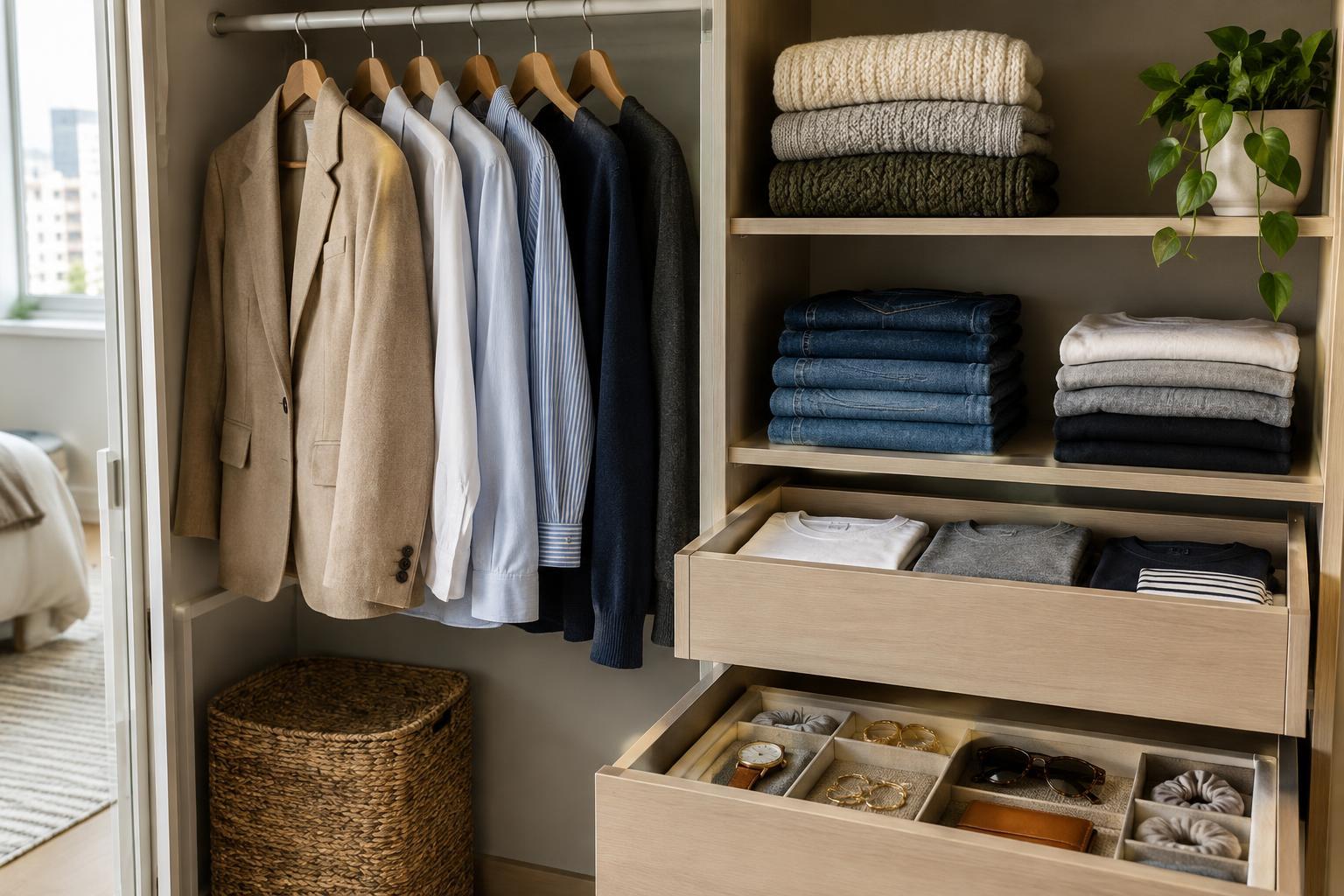
Start with the garment, not the available space
The best storage method depends on what a garment needs to keep its shape. Hanging helps pieces that crease easily or have a defined silhouette. Folding supports clothes that might stretch under their own weight. Before putting something away, consider its fabric, weight and construction: a crisp work shirt has different needs from a heavy sweater, even if both fit on the same hanger.
Space matters too, especially in a compact city wardrobe. You do not need to hang every item that could be hung. Reserve the rail for pieces that benefit most from it, then use drawers or shelves for the rest. If an item comes out of storage needing frequent reshaping or pressing, try a different method.
Hang pieces that need to hold their shape
Blazers, tailored coats, dresses and many skirts generally do best on hangers. Choose a hanger that supports the shoulders of a jacket without extending into its sleeves; a sturdier, shaped hanger is useful for heavier outerwear. Button or fasten garments loosely so they sit as intended, and leave enough room between them that they are not crushed.
Shirts and blouses are often easier to keep smooth on a rail, particularly if you wear them to work. Hang them once they are fully dry and fasten a top button if that helps the collar stay in place. A delicate blouse may need a smooth hanger that will not snag it. For skirts, use clips at the waistband, with a small piece of clean fabric under the clips if they leave marks.
Trousers offer a choice. You can hang tailored pairs from the waistband or fold them neatly over a trouser bar, aligning any existing crease. A soft, wide bar can help prevent a sharp line across the leg. If you rarely wear a pair and have more drawer space than rail space, folding it carefully may be the more practical option.
Fold clothes that may stretch or store easily flat
Sweaters and other knits are usually better folded. Hanging a heavy knit can pull at the shoulders and lengthen the body, leaving an awkward shape when you put it on. Fold it loosely rather than compressing it into a crowded pile. If you prefer to keep a frequently worn knit near your hanging outfits, you can fold it over a broad hanger bar instead of suspending it by the shoulders.
T-shirts, casual cotton tops, leggings, activewear and denim are also good candidates for drawers or shelves. These pieces generally do not need a hanger to preserve their shape. In a drawer, place folded items upright if they remain stable; this lets you see more of what you own without lifting a whole stack. On a shelf, keep piles short enough that taking the bottom item does not disturb everything above it.
Linen and lightweight cotton sit somewhere in between. Hanging may reduce deep fold lines, while folding can work if you have limited rail space and do not mind smoothing the garment before wear. Let your routine guide the choice: the right method is the one that protects the item and makes it easy to get dressed.
Give small and delicate items their own space
Underwear, socks and tights are easier to find when they have separate drawer compartments or small containers. Fold or roll them gently rather than forcing them into a tight space. Bras can be laid flat or nested without turning one cup inside out. Keeping similar items together also makes it easier to spot when a useful everyday basic needs washing.
For delicate occasionwear, pay attention to the garment’s weight and details. A light, structured piece may hang well, while a heavily embellished or stretchy piece may be safer folded so its weight does not pull on seams or straps. Check the care label when you are unsure. Whatever the method, put clothes away clean and completely dry, and avoid trapping delicate fabric against rough fasteners.
Make the system easy to keep up
Group hanging clothes by type or by the occasions you dress for: work layers together, for example, and relaxed weekend pieces nearby. Keep the items you reach for most at a comfortable height. Matching hangers can make a rail less crowded, but you do not need to replace everything at once; removing damaged or unsuitable hangers is a useful start.
Leave a little empty space in drawers and on the rail. Air and access matter more than squeezing in one extra stack. When seasons or routines change, take a few minutes to reassess what is folded and what is hung. A storage system should serve the clothes you actually wear, not require a perfect wardrobe to function.


