Mistake 1: Choosing every piece for maximum looseness
Relaxed clothes can be a pleasure on an unhurried day, but an oversized top, wide trousers and roomy coat may leave you feeling swamped rather than at ease. The issue is not that loose pieces cannot work together. It is that, without a clear shape, they can shift around as you walk, sit or carry a bag.
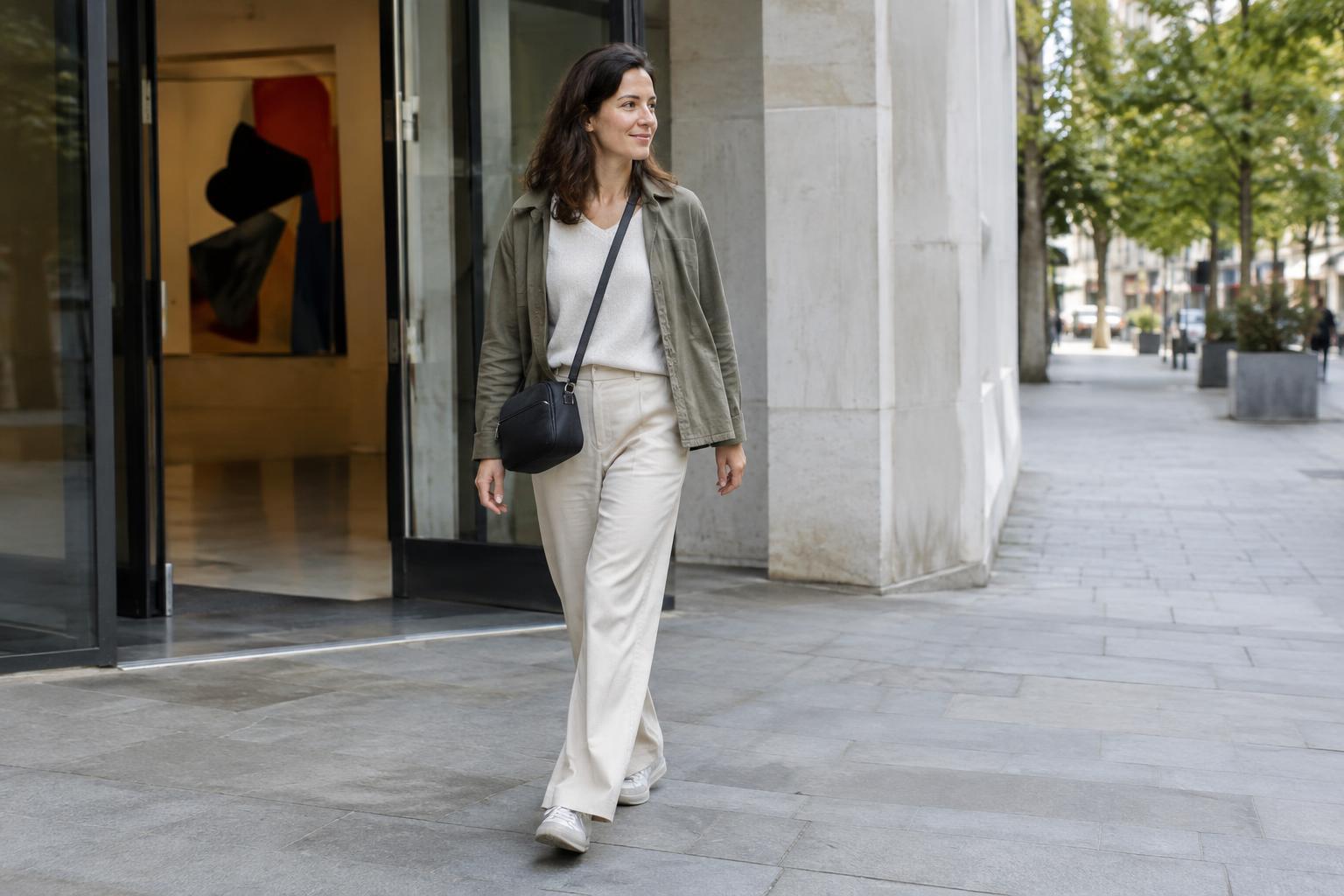
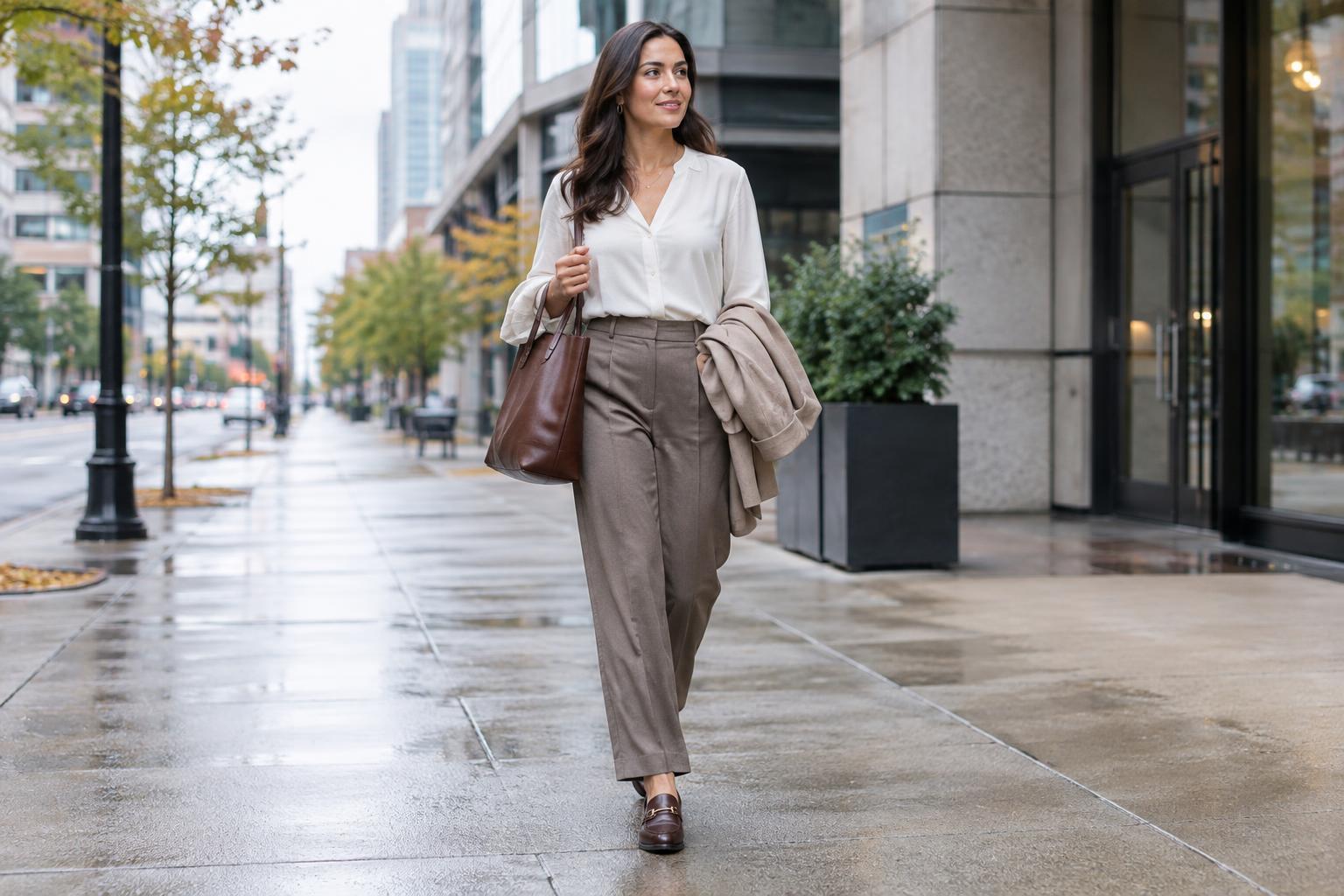
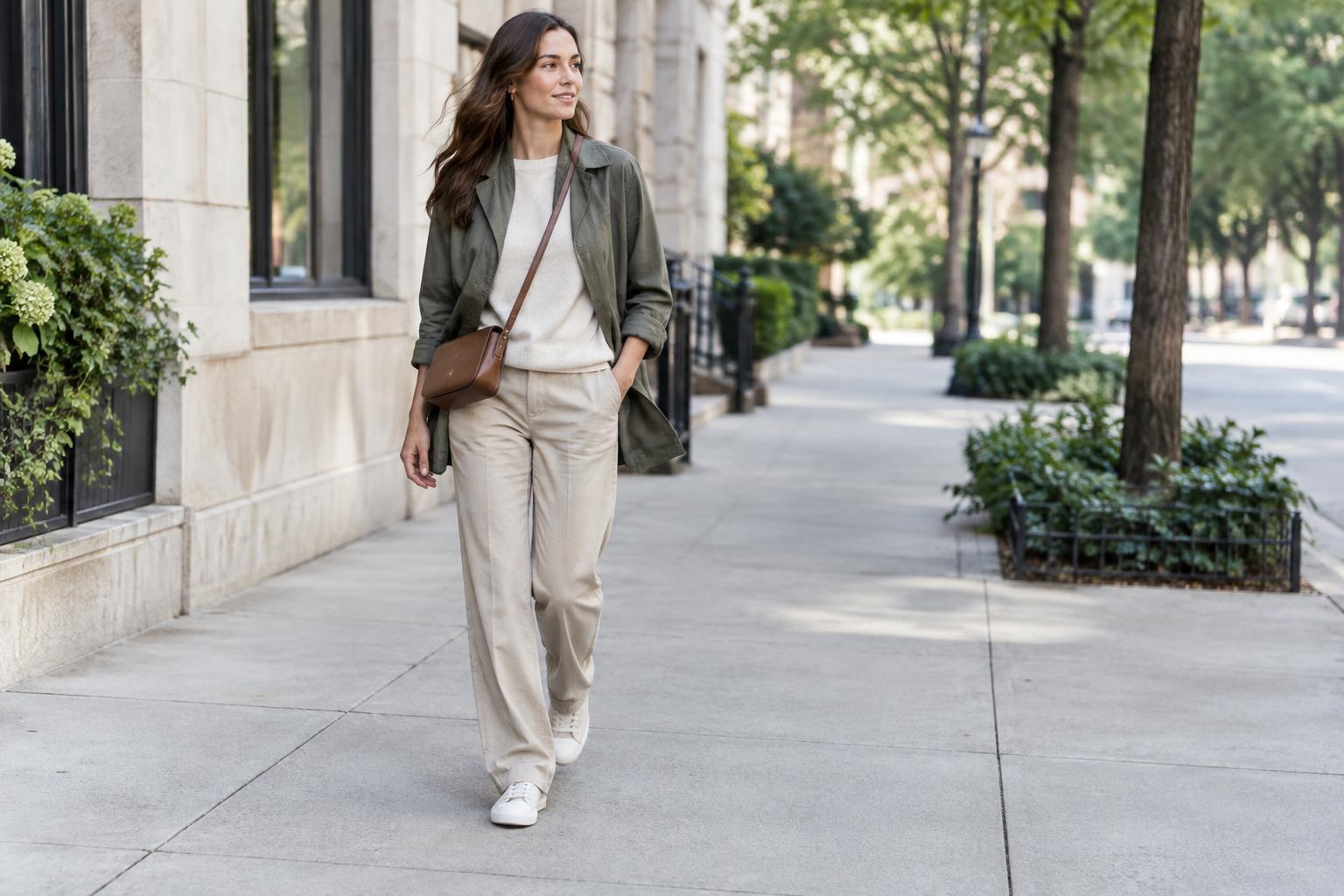
Try giving one piece room to be the focus. Wide-leg trousers can feel comfortable with a shorter knit or a soft top tucked loosely at the front. An oversized shirt can work with straight-leg jeans that hold their shape. If you like volume from head to toe, show a little definition at the wrist, ankle or waist. These small changes can make an outfit feel intentional without making it restrictive.
Mistake 2: Treating shoes as an afterthought
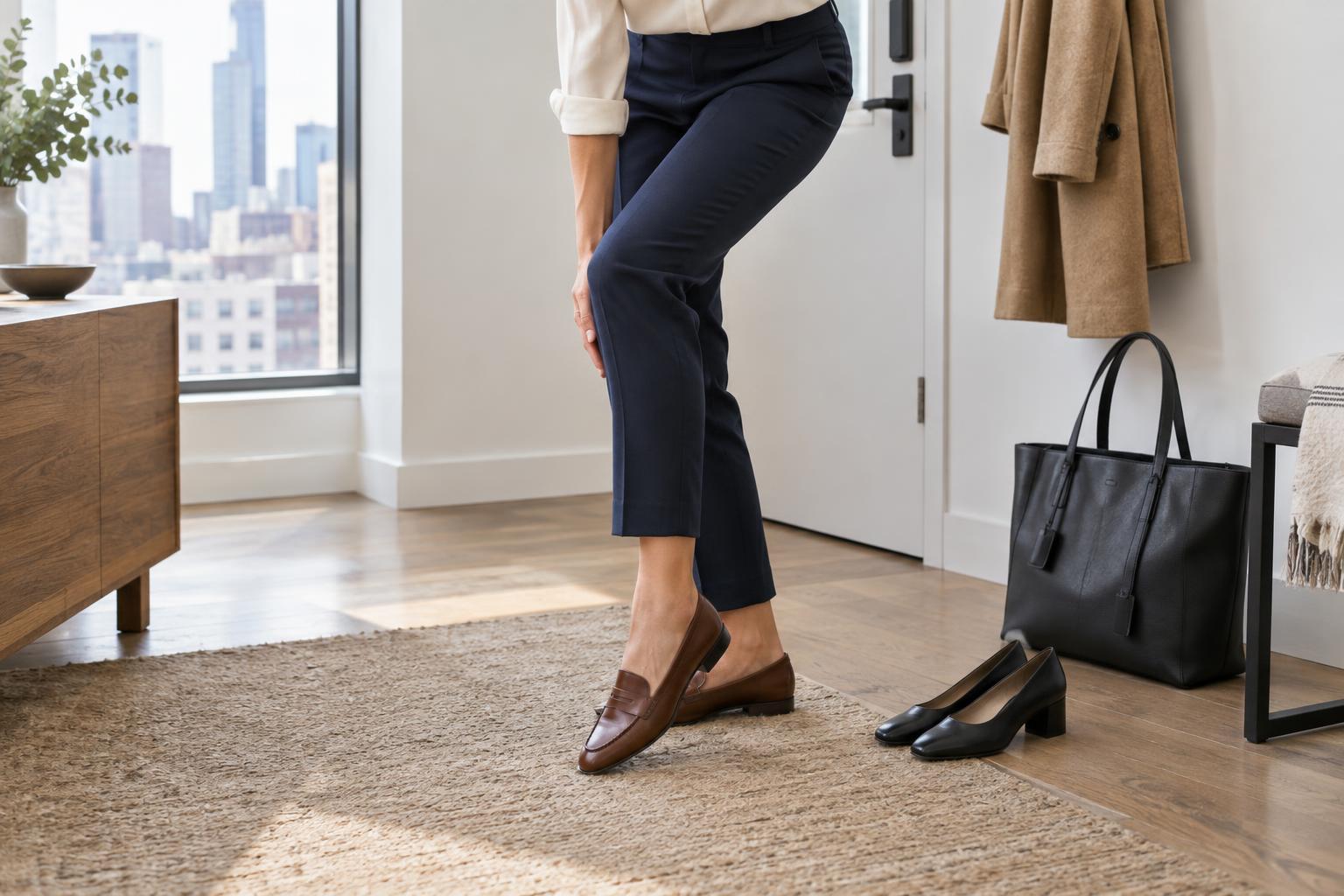
A weekend outfit can look right in the mirror and feel wrong after a few blocks. Shoes that slip, rub or need constant attention make even the softest clothes less comfortable. Their shape also affects the overall look: a very delicate shoe may feel disconnected from heavy trousers, while a bulky pair can overwhelm a lighter outfit.
Before leaving, think about the walking, standing and weather your plans might involve. Wear shoes you can move in for the whole outing, not just the first stop. A pair of clean, supportive trainers can sit well with relaxed tailoring, while sturdy flat boots can balance a loose dress or long skirt. If a trouser hem catches under your heel, adjust the length or change the shoe rather than spending the day managing it.
Mistake 3: Adding layers without checking how they move
Layers are useful for a day that moves between outdoor air, public transport and indoor spaces. Yet too many long or bulky pieces can bunch at the shoulders and waist. A cardigan that sticks out beneath a shorter jacket, or sleeves that cannot move comfortably inside a coat, may be the reason an otherwise good outfit feels awkward.
Build layers from the inside out. Start with a base that feels good on its own, then add a mid-layer and outer layer that leave room to move your arms. Check the outfit while sitting down and with your bag over your shoulder. You do not need every hem to line up, but a noticeable difference in length usually works best when it looks deliberate. A thin knit under a relaxed jacket, for example, may be easier to wear than two equally thick layers.
Mistake 4: Carrying accessories that fight the outfit
Accessories can make simple weekend clothes feel finished, but they also have a job to do. A bag that slides off your shoulder, a scarf that needs frequent rearranging or jewellery that catches on your knitwear can become distracting. Adding several statement pieces to a laid-back outfit may also make it feel less like your usual weekend style.
Start with what you need to carry and choose a bag that lets you move easily. A crossbody can free your hands for errands; a roomy tote may suit a day when you expect to pick things up. Then choose one detail you enjoy, such as a scarf, earrings or a belt. If the outfit feels busy, remove something before replacing the clothes. If it feels unfinished, one useful accessory may be enough.
Mistake 5: Dressing for only one part of the day
The most comfortable outfit at home is not always the easiest one for a full day out. Equally, dressing for a possible evening plan can make a casual morning feel overly formal. The mismatch often comes from planning around a single moment instead of the places you expect to go and the time you might spend getting between them.
Choose an outfit that works for your main activity, then make any likely transition simple. Dark straight-leg jeans, a comfortable top and an easy jacket can move from a daytime walk to a casual meal with a change of accessories, if you want one. For a slower day, soft trousers and a neat knit may offer the same flexibility. Before you head out, ask whether you can walk, sit and carry what you need without adjusting your clothes. If the answer is yes, the outfit is already doing its most important job.