Hanging everything, even when it stretches
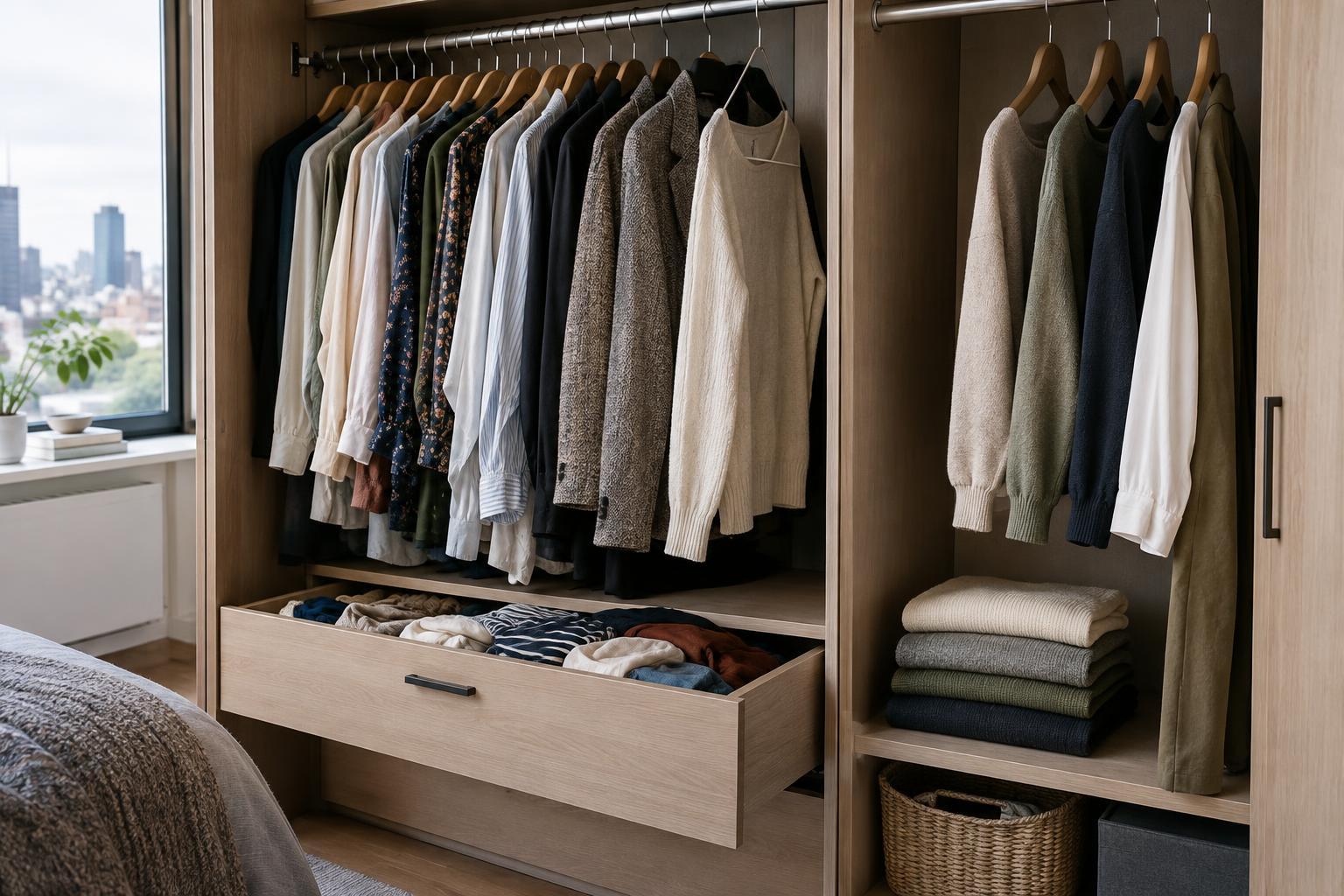
Hangers make clothes easy to see, but they are not the best choice for every garment. Heavy knits can pull downward over time, leaving stretched shoulders or a longer, uneven shape. Fold sweaters, substantial cardigans and other weighty knitwear instead. Place them in a drawer or on a shelf where the stack will not be compressed by everything above it.
Shirts, jackets, dresses and many trousers are often easier to keep neat on hangers. Match the hanger to the garment: a supportive shape works better for a jacket than a thin wire hanger, while a smooth hanger can help a delicate top avoid snags. Fasten a button or zip if it helps the garment sit in its intended shape, but do not force it onto a hanger that is too wide.
Packing rails and drawers too tightly
A full wardrobe is not always an organised one. When clothes are pressed together, sleeves get trapped, fabrics crease and it becomes difficult to remove one item without disturbing several others. Leave enough room on the rail to slide hangers apart and see what is there. If space is limited, keep the clothes you use most often within easy reach and move occasional pieces elsewhere.
Drawers need breathing room too. Overfilled drawers can catch fabric when they close and hide useful items at the bottom. Try arranging folded T-shirts, jeans or casual trousers so each piece is visible, rather than building one deep pile. Before buying extra organisers, check whether the drawer contains clothes that belong in another season, need repair or no longer serve your day-to-day wardrobe.
Putting clothes away before they are ready
A garment does not have to be freshly washed after every wear to go back into the wardrobe, but it should be clean enough to store and completely dry. Putting away a damp coat, gym layer or rain-soaked scarf can leave the surrounding space feeling musty. Give damp pieces time to air in a suitable spot before folding or hanging them among other clothes.
Check pockets before storage as well. Receipts can crumple and shed paper; pens, cosmetics or snacks can leave marks that are harder to deal with later. For pieces worn infrequently, follow the care label and deal with noticeable stains before storing them for longer. A quick check when you get home is usually simpler than discovering a problem when you need the outfit.
Using covers and containers without considering the fabric
Storage boxes and garment covers can protect clothes from dust, but they are not a substitute for a suitable storage space. Avoid sealing clothes away while they are damp. If you use a cover for a jacket or occasion dress, make sure it is clean, dry and able to hang without being folded awkwardly at the hem. For folded items, choose a container that does not require you to squeeze the contents in.
Pay attention to where the storage sits. Direct sunlight can fade some fabrics over time, while a damp corner is a poor place for clothes you want to keep in good condition. Keep delicate items away from rough basket edges or exposed fastenings that might catch them. These small choices matter particularly for pieces that spend months in storage between wears.
Making the system too complicated to maintain
Even a neatly arranged wardrobe can become cluttered if there is no obvious place for clothes between wears. Give everyday categories simple homes: work shirts together, weekend layers together and accessories where you can reach them on the way out. A small designated spot for items that can be worn again, but are not ready to return to a clean drawer, can keep them off chairs and away from fresh laundry.
Build in a short reset when putting laundry away. Return empty hangers to one place, refold anything that has slipped and move an item to a repair spot if it needs attention. The goal is not a perfectly styled wardrobe. It is a system that lets you find an outfit, put it away and keep clothes in wearable condition without turning either task into a project.