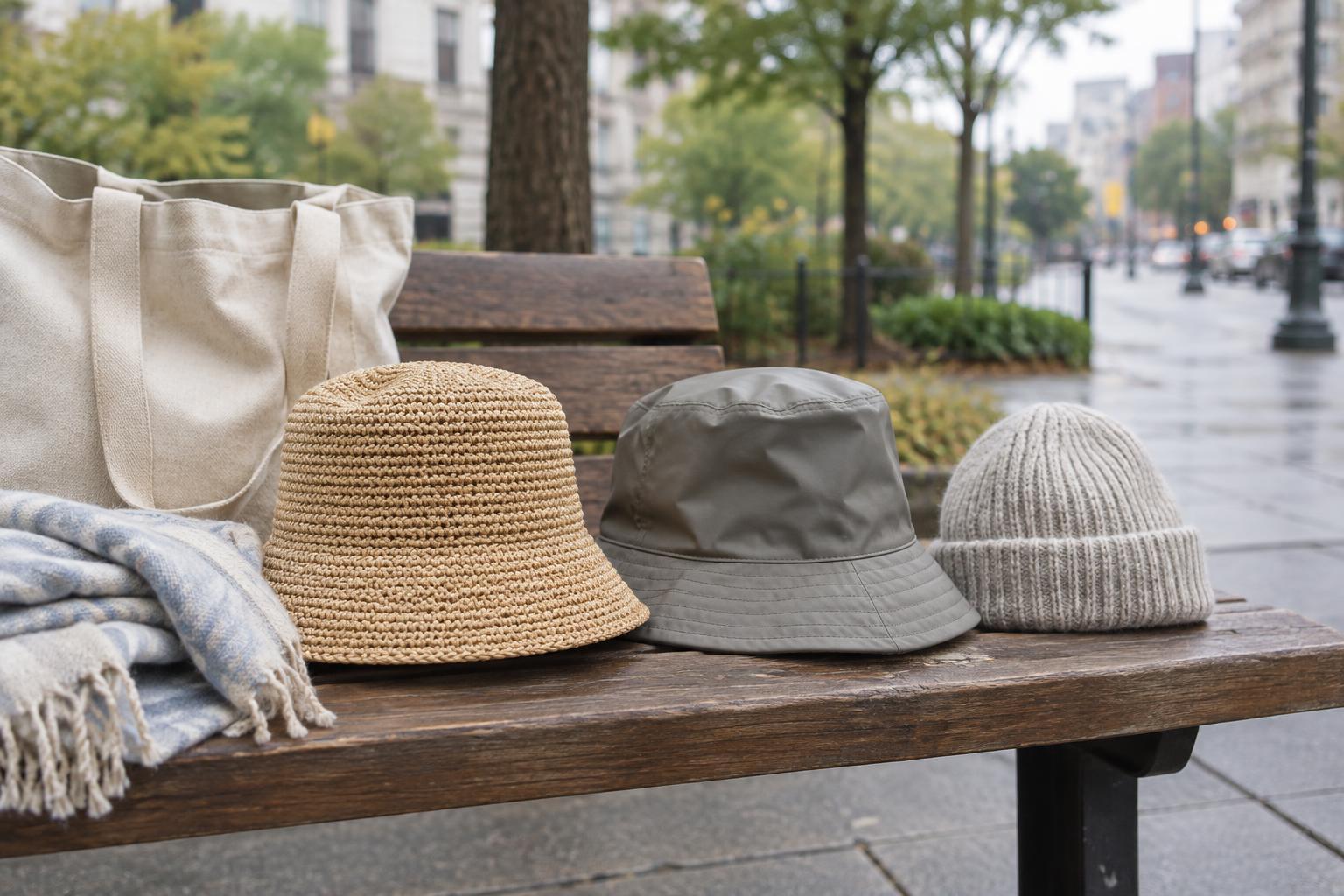
Start with your route, not just the forecast
A hat can make a city day more comfortable, but the best choice depends on more than the temperature. Think about how long you will be outdoors, whether you will be walking into the wind, and what happens when you reach your destination. A hat that feels right for a short trip to the station may be less useful for an afternoon spent walking between errands.
Consider the rest of your routine, too. Will the hat need to fit under a bicycle helmet? If so, wear the helmet as intended and save the hat for after the ride. Will you need to tuck it into a work bag or carry it through a café? These details help narrow the options. Rather than expecting one style to handle every season, you may find that a small selection of hats serves you better.
Choose sun coverage you will actually wear
For sunny walks, look for a brim that shades the areas you want covered without blocking your view of traffic or other pedestrians. A bucket hat offers coverage all around and is often easy to fold into a bag. A wider-brimmed hat may give more shade, but can be awkward in crowds or on a windy street. A cap is compact and familiar, though its brim leaves the ears and back of the neck exposed.
Try the hat while turning your head and looking up and down, as you would at a crossing. It should stay in place without needing constant adjustment. A darker underside to the brim may feel more comfortable in bright conditions, while a breathable fabric can be preferable on warm days. A hat is one part of sun protection, not a replacement for other measures such as sunscreen, shade and suitable clothing.
Understand what a rain hat can—and cannot—do
A rain hat is most useful when you want your hands free or an umbrella would be inconvenient. Look for a brim that directs water away from your face and a shape that does not shed it straight onto your collar. A shorter brim is easier to manage in close quarters; a longer one may offer more shelter when you are walking in open areas.
Check the material description carefully. Water-resistant fabric may cope with light showers, while a waterproof construction is a better choice if you expect to stay outside in sustained rain. Seams, lining and the way the brim holds its shape also affect how a hat performs. In windy weather, an adjustable fit or discreet chin strap can help keep it on your head, though either should be comfortable enough that you will use it. Let a wet hat dry fully before putting it away.
Prioritise fit and ear coverage in cold weather
A close-fitting beanie is an easy cold-weather option for a commute: it takes up little space and works with many coats. If your ears get cold, choose one deep enough to cover them without sliding over your eyes. A cuff can add an adjustable layer around the ears, while a looser knit may feel comfortable but let more wind through.
Check how the hat fits with your coat collar, scarf, glasses and headphones. A bulky hat can push against a high collar; a very tight one may become uncomfortable over a longer walk. Fibres and linings vary in feel, so judge a hat by comfort as well as its label. If rain is likely, remember that a warm knit hat may become damp: a coat hood or a separate weather-resistant option can be more practical.
Make the hat easy to carry and care for
The most versatile hat is one you can manage when you are not wearing it. If you carry a small bag, test whether the hat folds without losing its shape. If it cannot be folded, consider whether you are comfortable carrying it by hand during indoor stops. Neutral colours can work across several outfits, but a colour you enjoy wearing is just as useful if it suits your everyday coats and jackets.
Before buying, check the fit by walking a few steps, turning your head and bending slightly. The hat should feel secure without pressing hard against your forehead. Read its care instructions, especially if it has a structured brim or a coating intended to repel water. Keeping hats clean, dry and stored without crushing their shape will make it easier to reach for the right one when the weather changes.


