Start with fabric and fit
On a hot workday, coverage does not have to mean wearing heavy clothes. Start with pieces that allow some air to circulate: a shirt that does not cling across the back, trousers with room through the leg, or a dress that skims rather than hugs the body. A relaxed fit can make a long commute more comfortable while still looking neat at your desk. Check that shoulder seams, waistbands and cuffs feel easy when you sit and walk, not just when you stand in front of a mirror.
Fabric matters as much as shape. Linen and lightweight cotton are useful options for warm days, though both may crease. A fine, loosely woven fabric can feel pleasant, but hold it up to the light before deciding it offers the coverage you want. Some lightweight blends drape well and need less pressing; others may feel warm or clingy, so judge the garment by touch and wear rather than its label alone. If possible, try a new outfit at home for an hour before relying on it for a full workday.
Choose covered pieces that feel airy
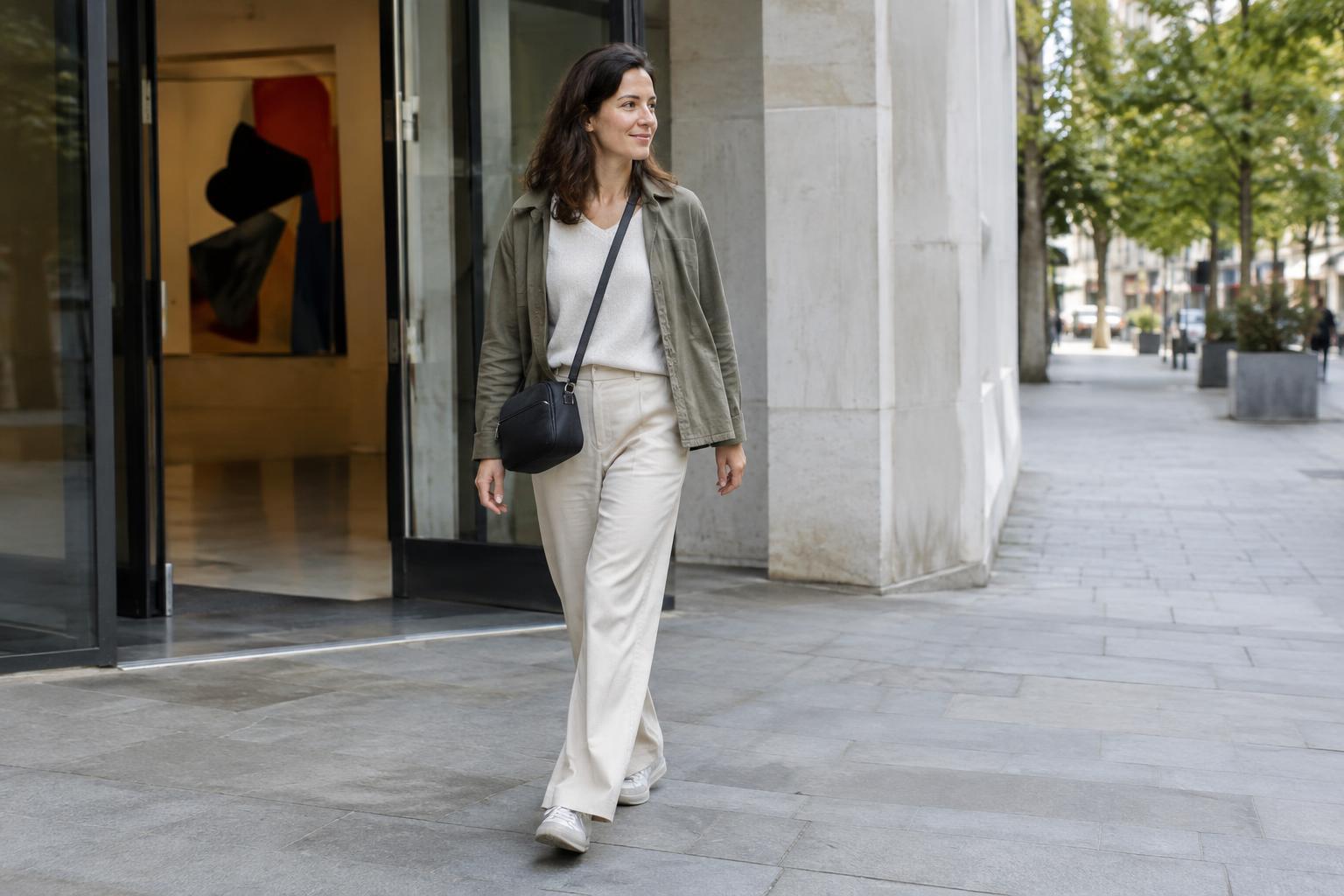
A loose, long-sleeved shirt is one of the most flexible pieces for a hot-day work outfit. Wear it untucked over straight trousers, loosely tuck the front, or pair it with a midi skirt. Sleeves that roll and stay in place give you another option during a warm journey. Look for a collar that sits comfortably when open and a placket that does not gape when you move. A simple camisole underneath can help if the shirt is slightly sheer, though an extra layer will add warmth.
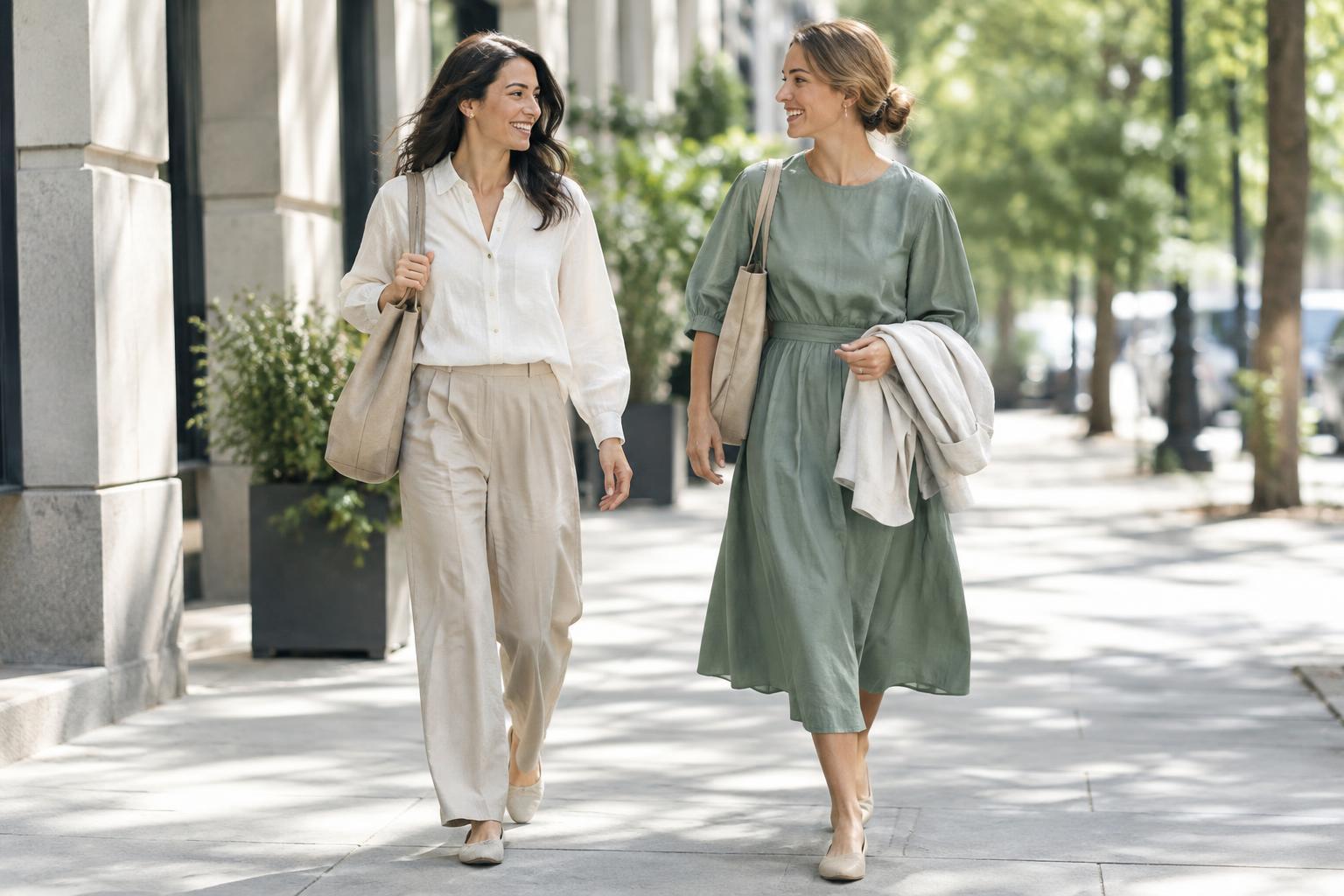
For a one-piece outfit, consider a relaxed midi dress with enough room at the waist and a neckline you do not need to adjust throughout the day. A short sleeve, elbow-length sleeve or light overshirt can provide arm coverage without requiring a thick jacket. If you prefer separates, wide-leg trousers and a boxy top create space around the body while keeping a clear, work-ready outline. The aim is not to hide in oversized clothing; it is to find proportions that let you move freely.
Build around your workplace, not a fixed formula
Workplace expectations vary, so use your usual dress code as a guide. In a more formal setting, a lightweight matching trouser set, a breathable button-up shirt or a simple dress with a structured bag may feel appropriate. In a casual office, relaxed trousers and an untucked shirt might be enough. If you are unsure about a new silhouette, keep one familiar element, such as your usual shoe style or a neatly pressed top. That can make a cooler outfit feel intentional rather than underdressed.
Coverage is personal, too. A higher neckline, longer hem or full-length trouser may be important to you, but you do not need all three in the heaviest versions available. Try balancing one loose, covered piece with another that has a clean shape: a flowing skirt with a crisp shirt, for example, or broad trousers with a simple top. Test the outfit while seated and reaching for a bag. A hem or neckline that stays put can be more useful than one that looks perfect only when you are still.
Plan for the commute and the office
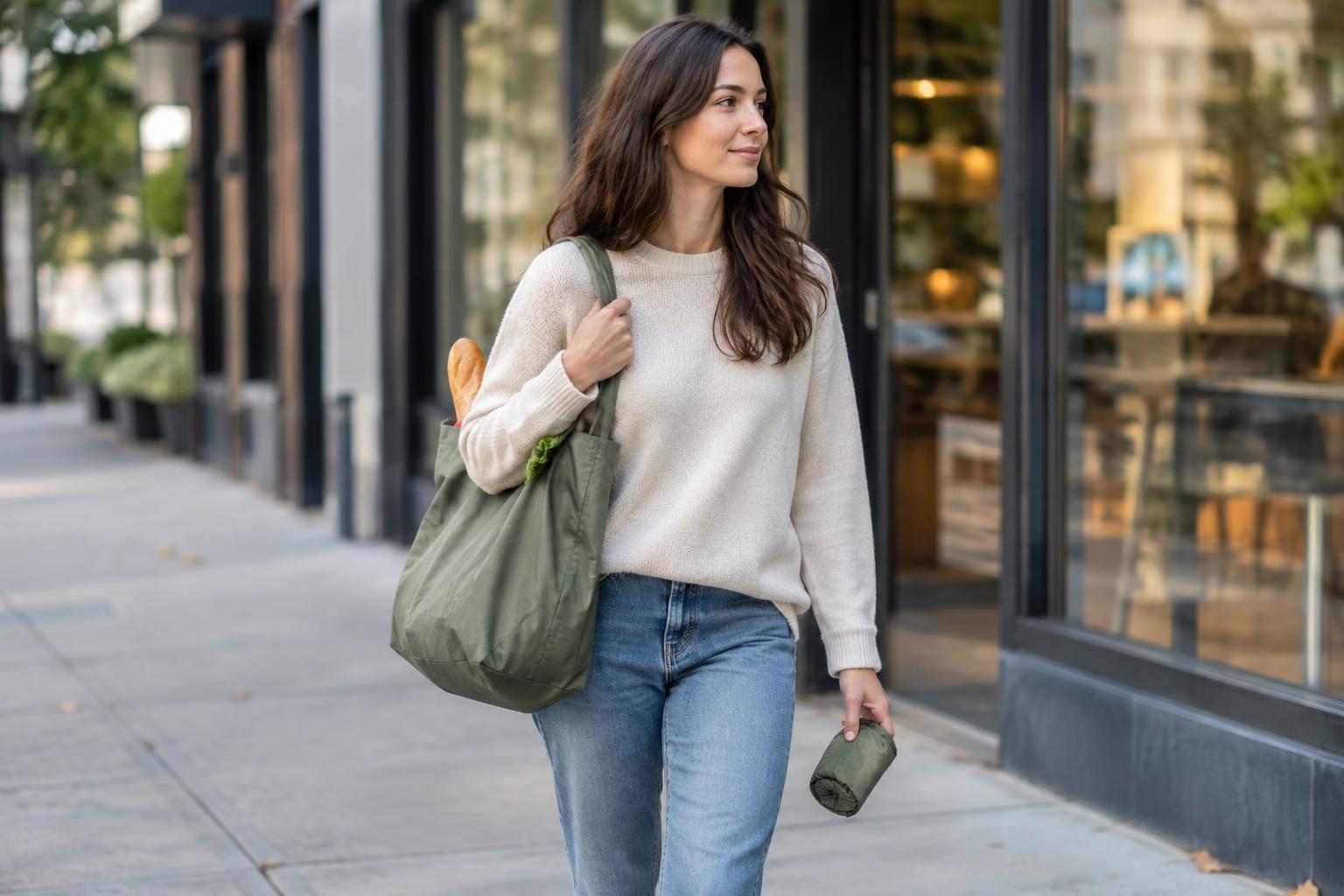
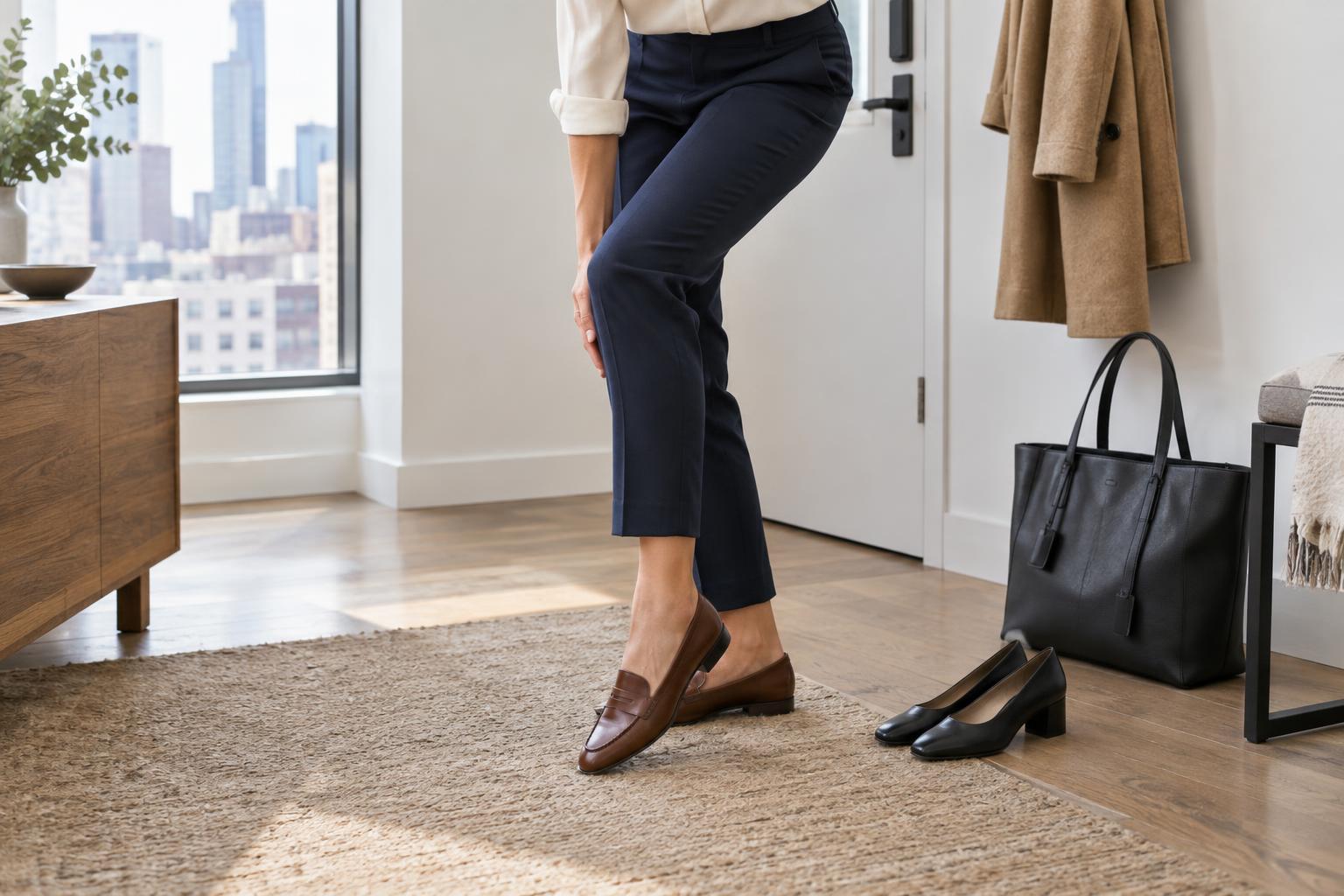
A hot street and a cool office can call for different layers. Rather than wearing a blazer throughout your journey, carry a light jacket, cardigan or overshirt that you can put on when you arrive. Choose a layer that folds into your bag without taking up all the space, and make sure it works over more than one outfit. If your commute involves a lot of walking, consider comfortable shoes for the journey and change into office shoes at your desk if that suits your routine.
Small choices can make the day easier. A bag that leaves your hands free may feel better on a crowded commute than one you must keep adjusting. Shoes with a secure fit are often more practical than pairs that slip as you walk, regardless of whether they are flats or low heels. If you bring a spare top, choose one that works with the trousers or skirt you are already wearing. A compact backup is most useful when it does not require an entirely new outfit.
Make a few reliable combinations
You do not need a separate wardrobe for every warm spell. Begin with two or three combinations that meet your coverage preferences and workplace needs. For example, pair a loose cotton shirt with wide-leg trousers, a relaxed midi dress with a light overshirt, or a neat short-sleeved top with a flowing skirt. Repeating the same shoes, bag and office layer across those outfits reduces decisions in the morning. Lighter colours may appeal in summer, but choose shades you can wear confidently without worrying about transparency.
Before hanging an outfit ready for the next day, check it in natural light and move around in it. Notice whether the fabric shows underlayers, the waistband presses when seated, or the outer layer feels too bulky to carry. Those small checks help you refine what works for your route, your office and your preferred level of coverage. The most useful hot-weather work outfit is one you can put on, travel in and wear through the day without constantly thinking about it.