Start with where the bag sits
Strap length changes more than a bag’s appearance. It affects how easily you can reach your things, whether the bag bumps against your leg, and how its weight feels as you walk. Before adjusting anything, put the items you normally carry inside. An empty bag may hang neatly, then sit much lower once it holds a water bottle, keys and other essentials.
Stand naturally in front of a mirror, then walk around the room. Notice where the bag rests and whether you keep lifting your shoulder, holding the bag in place or shifting it out of your way. There is no single correct height: the useful position is one that lets you move freely and reach what you need without repeatedly adjusting it.
Find a practical length for each way of carrying
For a shoulder bag, try a length that allows it to rest close to your side without getting trapped under your arm. If it hangs too low, it may swing as you walk or knock against furniture. If it sits too high, reaching inside can feel cramped. Check that you can slip it off your shoulder without tugging at your coat or sleeve.
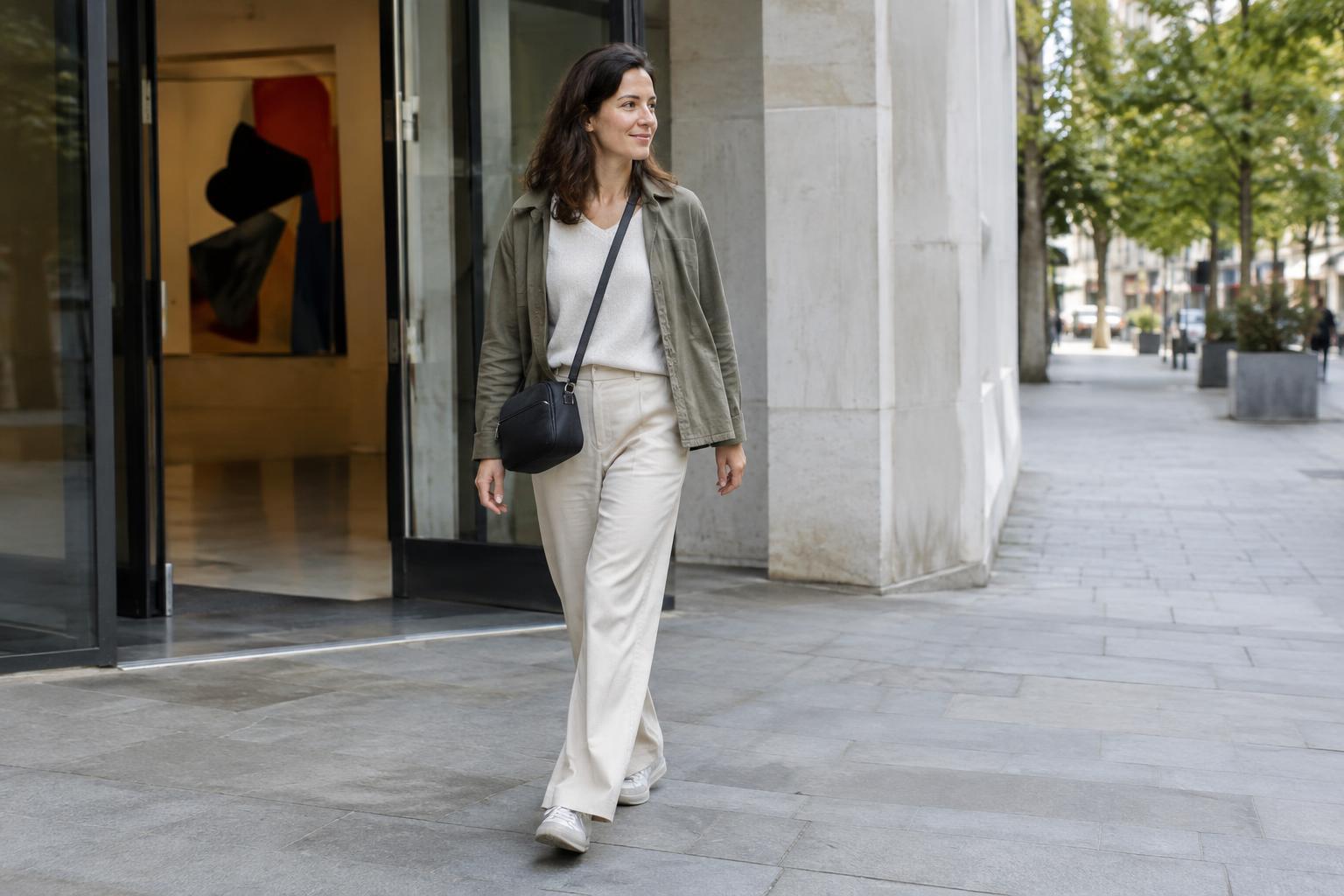
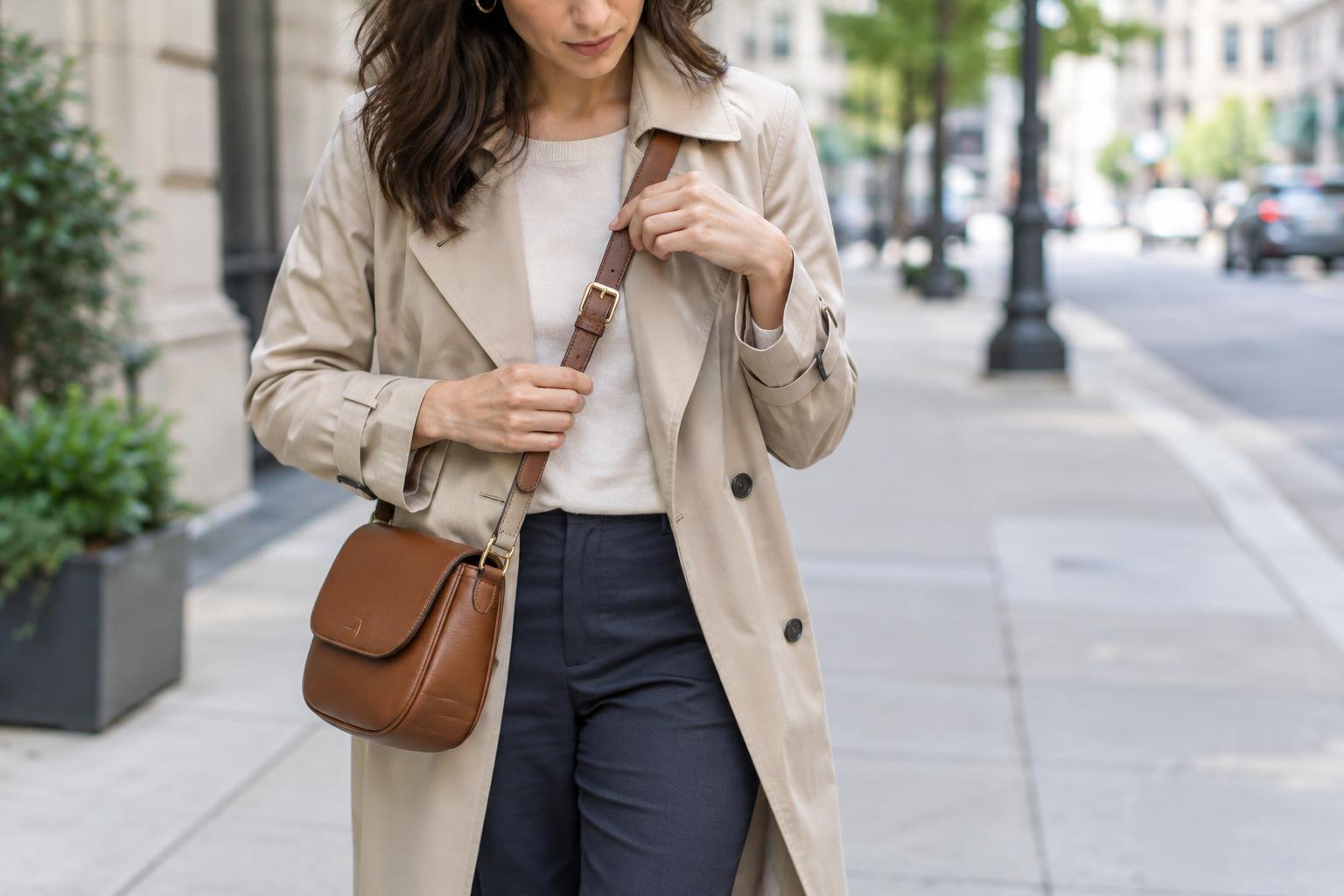
For a crossbody bag, start with the bag resting around your hip, then move it slightly higher or lower according to its size and shape. A compact bag may feel secure closer to your waist; a larger one may need more room to sit flat. Walk, sit and bend to check that the bag does not pull across your chest or press uncomfortably against your side.
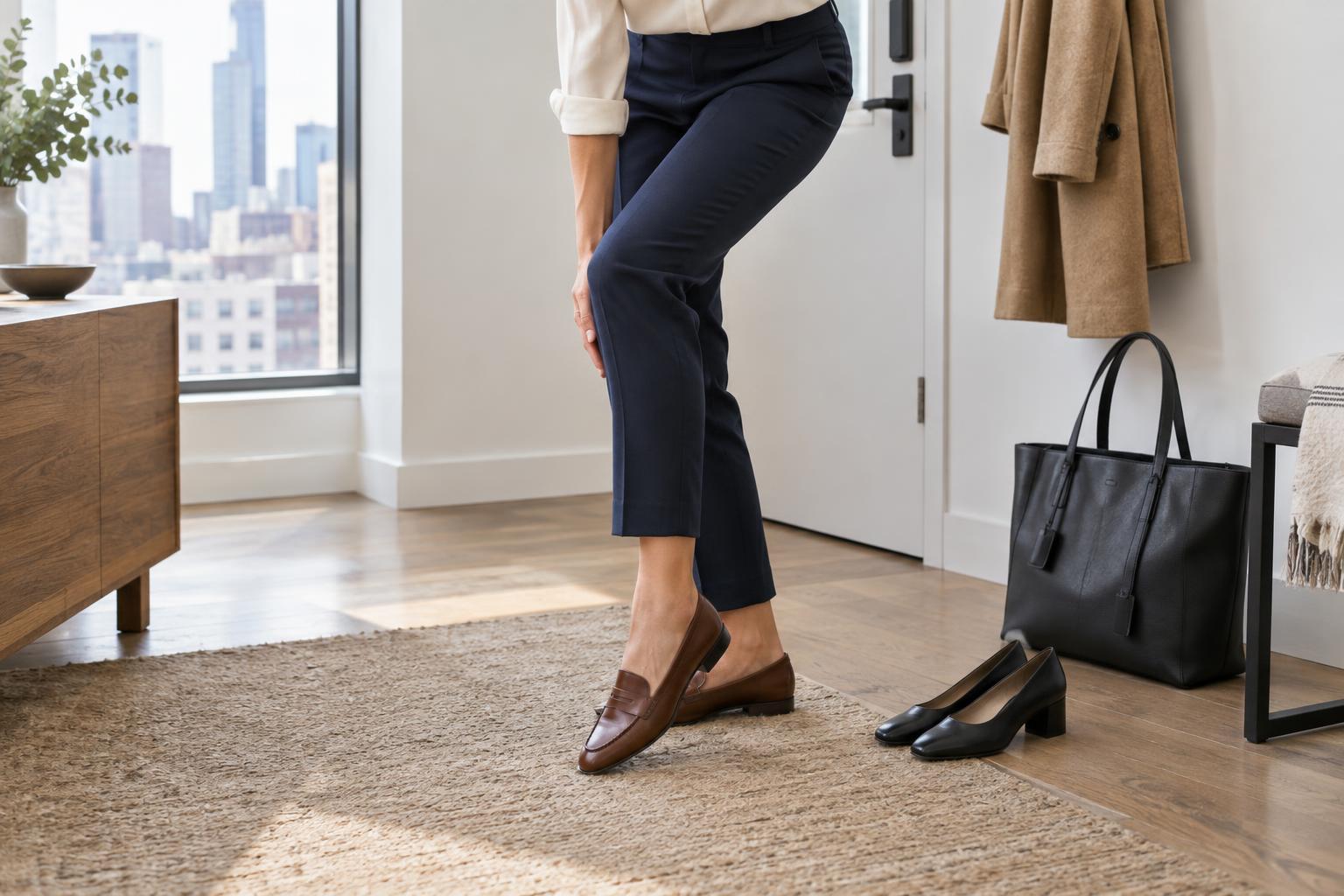
Totes with fixed handles offer fewer adjustments, but handle drop still matters. Make sure the handles fit over the outer layer you wear most often and that the tote clears your arm as you walk. If you carry a tote by hand because its handles are too short for a coat, consider whether that is convenient for the length of your usual journey.
Adjust for balance, not just appearance
A well-positioned bag can still feel uncomfortable when its contents are unevenly packed. Put heavier items near the center of the bag and close to your body where possible. Use interior pockets for smaller objects rather than letting everything collect in one corner. If a bag regularly pulls hard on one shoulder, reducing what you carry may help more than changing the strap length.
Strap width and texture also influence comfort. A narrow strap can feel more noticeable with a heavy load, while a wider one spreads contact over more of your shoulder. A slippery strap may slide off a smooth jacket even when the length seems right. When shopping or switching straps, test the bag with a realistic load and the kind of outerwear you usually wear.
If you often carry a bag on one side, switch sides occasionally when it is practical to do so. Crossbody bags should also be comfortable in both directions if you plan to alternate. You do not have to keep changing sides throughout the day; the aim is simply to notice habits that make a bag feel less balanced.
Fine-tune the fit for layers and busy days
A strap adjusted over a light shirt may feel short over a thick sweater or winter coat. Recheck the fit when your layers change, especially if the bag crosses your torso. You should be able to move your arms and open the bag without the strap pulling tightly. For days with several stops, a position that gives you easy access may be more useful than one chosen only for how it looks in the mirror.
Make small adjustments rather than moving an adjustable strap from one extreme to the other. If it has holes, try one setting at a time. With a sliding buckle, mark your preferred position mentally or with a discreet reference point on the strap. Check both sides after adjusting so the strap lies flat instead of twisting or digging in.
Keep the adjustment secure
Once you find a comfortable length, inspect the hardware. Buckles, clips and attachment points should close properly and stay in place when the bag is loaded. If a sliding strap gradually lengthens during the day, check whether it has been threaded through the adjuster correctly. A strap that continues to slip may need repair or replacement.
The best setting can vary with your outfit, what you carry and how long you will be on your feet. Treat strap length as a quick fit check rather than a permanent rule. A few moments of adjustment before you leave can make a familiar bag easier to wear throughout an ordinary city day.