Give your walk a loose shape
Exploring on foot can make an unfamiliar neighbourhood feel more approachable. You can notice the scale of a street, the character of its shopfronts and the quieter routes between busier corners. The aim does not have to be seeing everything. A satisfying walk might simply help you find a pleasant place to pause and a route you would take again.
Before you set out, choose a starting point you can reach easily and an endpoint with a straightforward journey home. Pick one or two possible stops between them, such as a park, a public square, a library or a café. This gives the outing direction without turning it into a timetable. If you have limited time, a smaller area with room for detours is often more enjoyable than a long route you feel obliged to finish.
Check a map for major roads, crossings and public transport options. Save the address of your endpoint or note a nearby stop in case your phone battery runs low. You can still change course whenever a side street catches your interest.
Dress for the pace you actually want
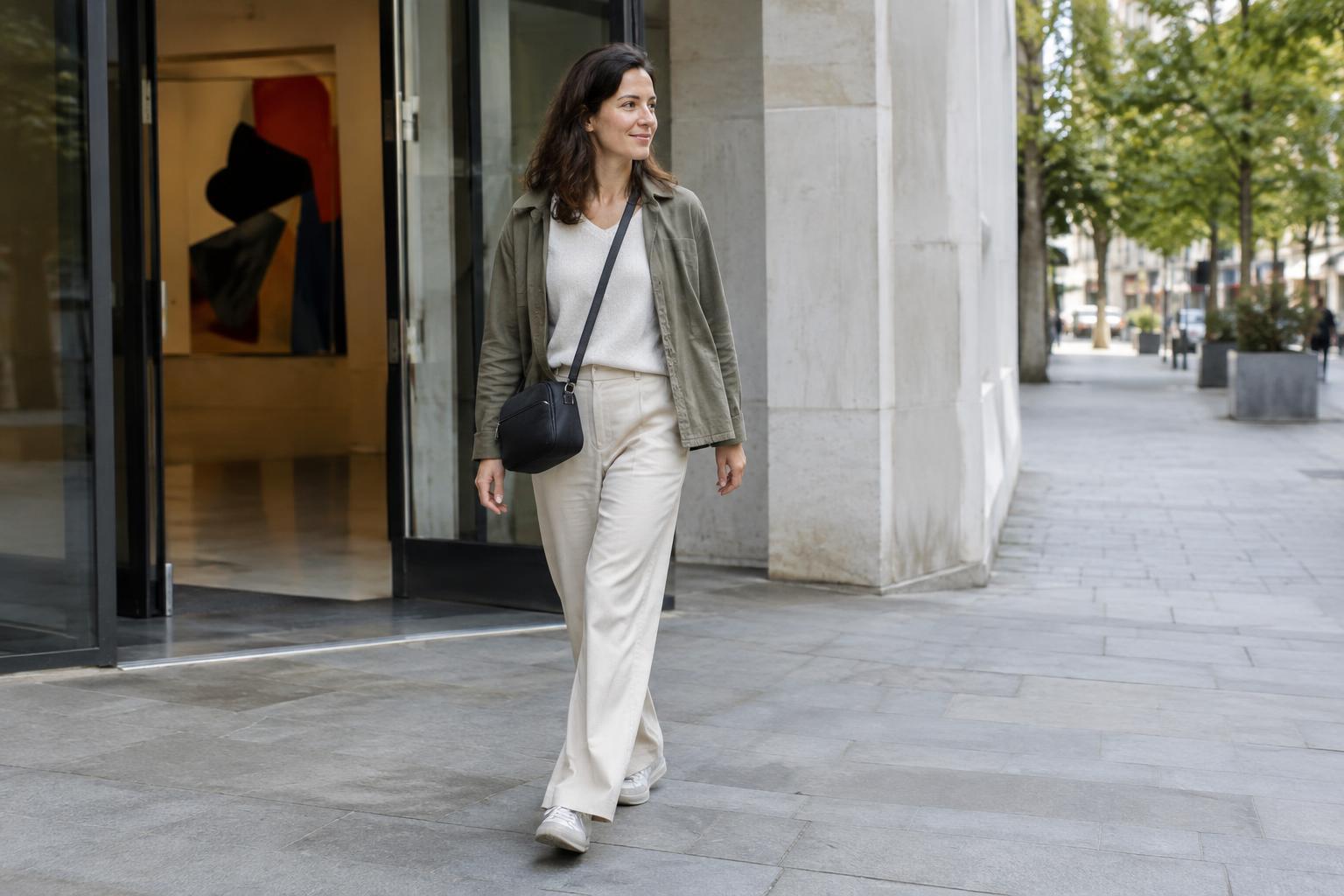
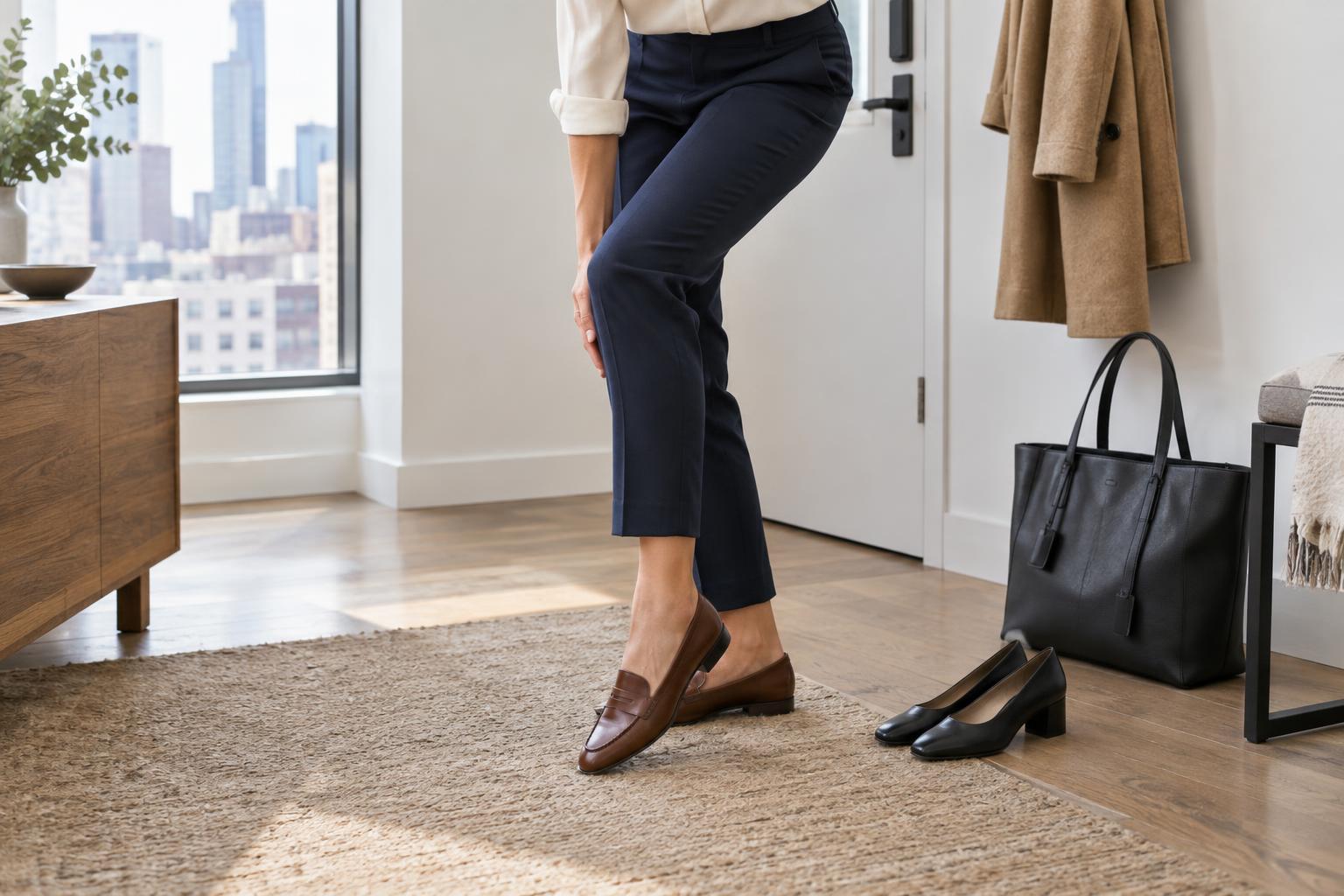
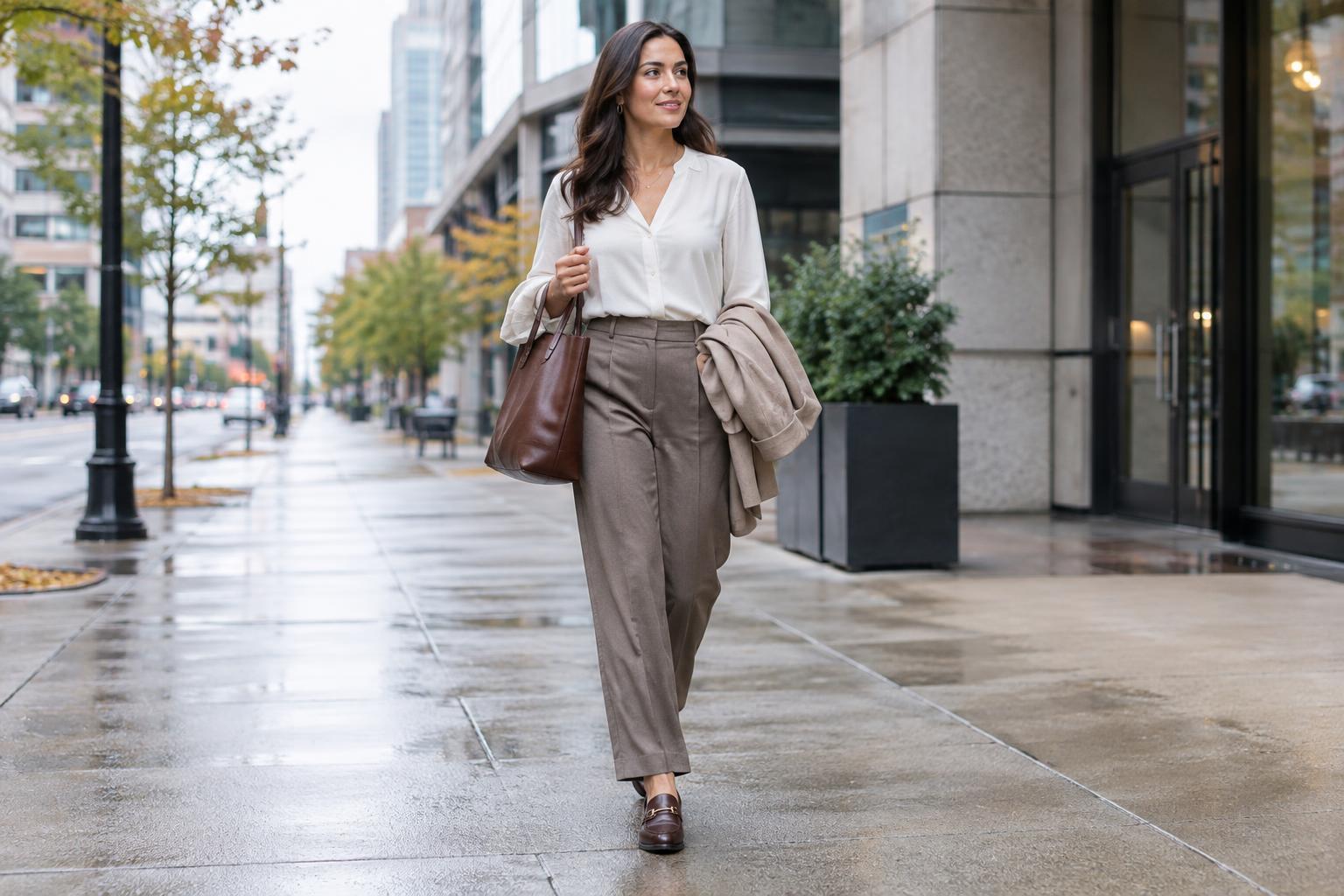
A neighbourhood walk calls for clothes you can move and sit in comfortably. Start with shoes you already trust for a reasonable amount of walking; an outing in a new area is rarely the best time to test a stiff pair. Choose layers you can adjust if you move between open streets, shaded corners and indoor stops. A light outer layer can be useful when the weather looks changeable, provided you will not mind carrying it.
An outfit can be practical without feeling overly functional. Relaxed trousers or a comfortable skirt, a breathable top and an easy layer can take you from a long stroll to an unplanned lunch. If you might visit a gallery or meet someone later, choose pieces that feel right for both parts of the day rather than packing a complete change of clothes.
Keep your bag light enough that it does not become the focus of the walk. A secure crossbody bag or small backpack can hold your essentials while leaving your hands free. Bring water, payment and any personal items you routinely need; add a compact umbrella or sunglasses when conditions suggest it.
Look beyond the obvious stops
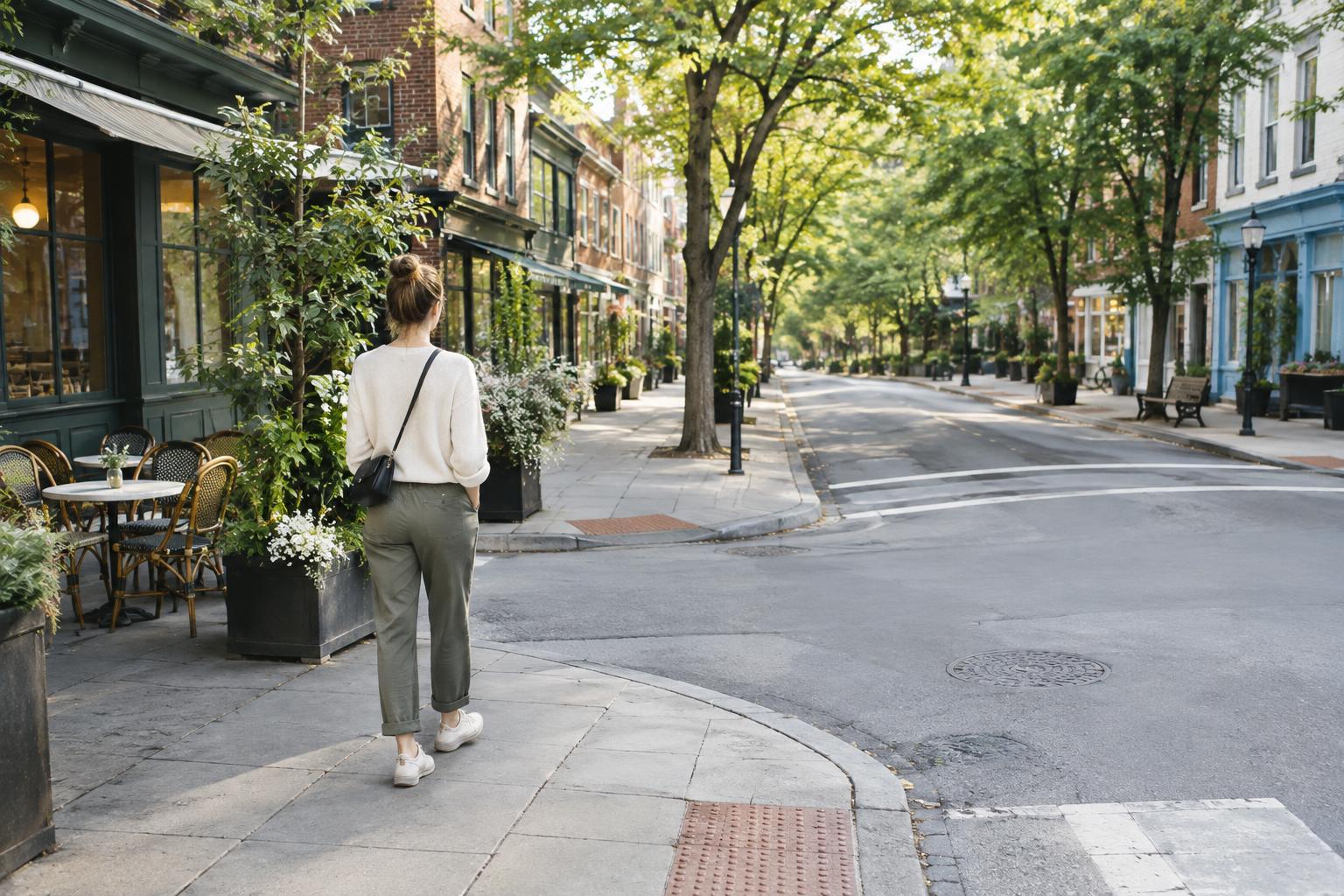
Once you arrive, walk a little before deciding where to linger. Notice how people use the space: whether there are benches, sheltered spots, pedestrian crossings or streets that feel pleasant to walk along. Window displays, building details and small green spaces can make the journey interesting even when you do not go inside anywhere.
Try alternating between a main street and a quieter parallel route. The contrast can tell you more about an area than following a single stretch from start to finish. If a market or shop looks inviting, browse with curiosity rather than treating every stop as a purchase opportunity. Spending money is optional; looking around, taking a break and discovering a useful route are worthwhile parts of the outing too.
Be considerate as you explore. Keep doorways and pavements clear when you stop to check directions, and respect signs about private spaces or photography. If you want to take a picture that includes someone prominently, ask first or frame the scene differently.
Make room for breaks and changes of plan
Walking becomes less enjoyable when every pause feels like a delay. Build in time to sit, have a drink or simply decide what you want to do next. A park bench or public space may be enough; an indoor stop can be welcome if you need a longer rest. Check opening hours before relying on a particular place, since plans can change and not every facility will be available when you need it.
Pay attention to your energy as well as the route. If your feet are tired, the weather turns or a street does not feel comfortable, take another path or head home. There is no reward for completing an arbitrary loop. If you are walking alone, it can help to choose well-used routes, stay aware at crossings and know how you will get back. Share your plans with someone if that would make you feel more at ease.
A flexible walk also leaves space for surprises. You might find an appealing street that leads away from your original plan, or discover that your planned stop is less interesting than the journey there. Let the outing follow what you genuinely enjoy.
Leave with something useful
Before you go home, take a moment to remember what made the neighbourhood work for you. Was there a comfortable route from the station, a good place to sit or a stretch you would like to explore more slowly? A short note on your phone can be more useful than a long list of places you may never revisit.
Think of each walk as a first introduction, not a final verdict. A neighbourhood can feel different when you approach it from another direction or visit for another purpose. Next time, you might return for a relaxed weekend stroll, combine the route with an errand or invite a friend to explore a street you missed. The best outcome is not a completed checklist. It is knowing a little more about how to make the area part of your city life.