Start with the day, not the forecast
A weekend can take you through several temperatures without taking you far: a cool walk to a café, a warm shop, a breezy stretch outside and a chilly journey home. Layering helps because you can change one part of your outfit instead of wishing you had worn something entirely different. The goal is not to carry as many clothes as possible. It is to choose a few pieces that work together and are easy to remove.
Before getting dressed, think about what you will actually do. Will you spend most of the day walking, sitting outdoors or moving between heated spaces? A long walk may call for lighter layers that are comfortable while you move, while an outdoor lunch may make an extra warm layer worthwhile. Consider how much you want to carry, too. If a jacket will spend hours over your arm, a lighter one or a bag that can hold it may be the better choice.
Build a comfortable base
Your base layer is the piece you will still feel comfortable wearing when everything else comes off. A simple T-shirt, long-sleeved top or lightweight shirt can all work. Choose one that feels good on its own, fits comfortably beneath your other layers and suits the places you plan to visit. If you expect to be active, a fabric that feels comfortable when you warm up may matter more than extra thickness.
Keep the neckline and sleeves in mind when combining pieces. A close-fitting long-sleeved top slides easily under a cardigan, while a loose shirt may sit better beneath a roomy jacket. Neither approach is a rule; the useful test is whether you can move your arms freely and whether the layers settle back into place after you take off your coat. If a combination bunches up while you are getting dressed, it is unlikely to become more comfortable later.
Add warmth you can adjust
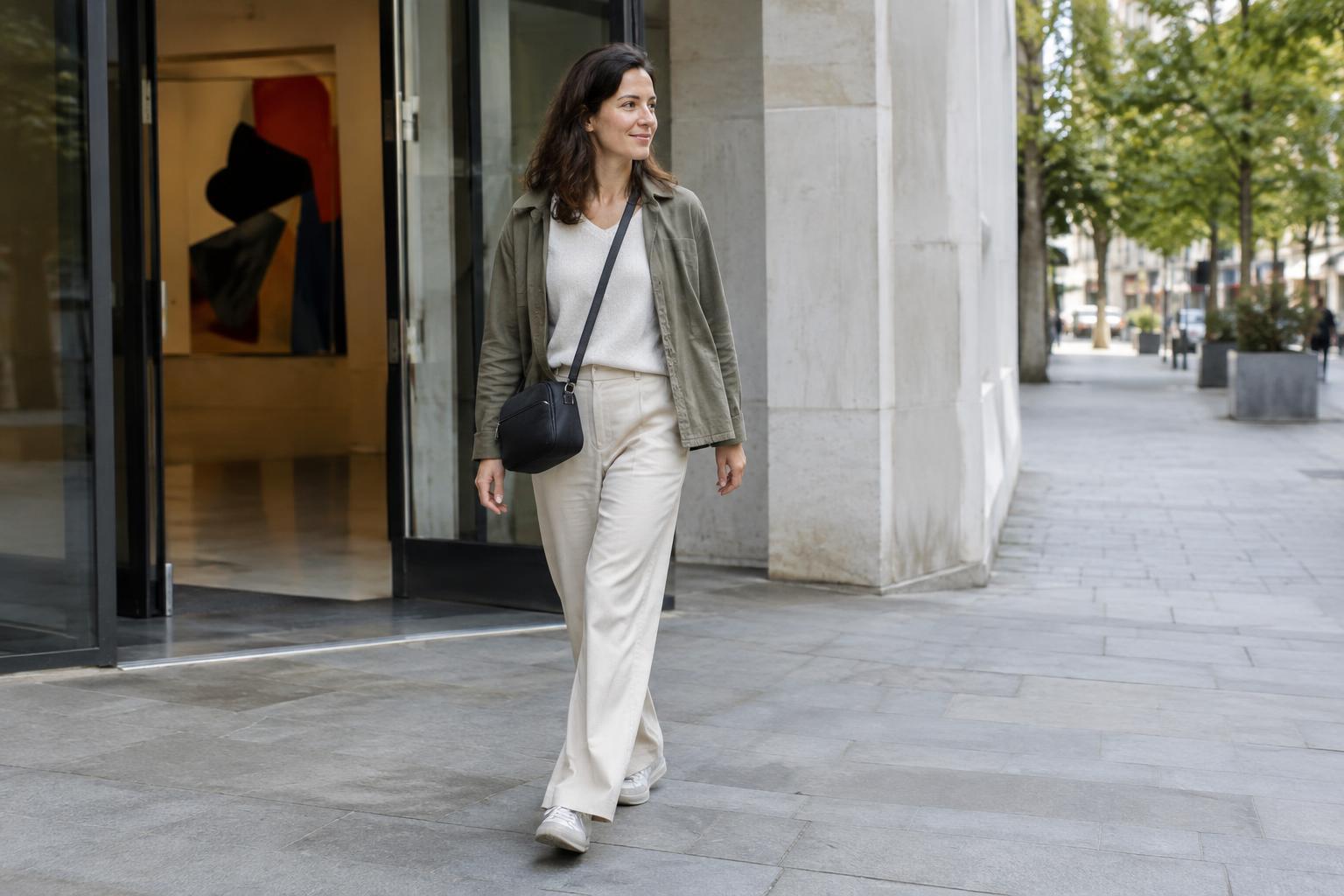
The middle layer gives you flexibility. A cardigan, light knit, overshirt or zip-up layer can add warmth without committing you to a heavy coat all day. Pieces that open at the front are especially convenient when you need a small adjustment but do not want to change your whole outfit. For example, an open cardigan over a T-shirt may be enough on a mild afternoon, while fastening it adds warmth when you stop walking.
Avoid adding several bulky pieces simply because each one looks comfortable on its own. Together, they can make a jacket tight and awkward to carry. Instead, try your full outfit before leaving: sit down, reach for your bag and put your hands in your pockets. If the combination feels restrictive, swap one thick layer for a lighter one. A useful weekend wardrobe does not require a special item for every possible temperature; it benefits from familiar pieces you can combine in different ways.
Choose an outer layer for the conditions
An outer layer has a different job from a cardigan or knit. It is the first thing you can remove indoors and the piece that helps you handle wind or light rain outside. A roomy jacket can fit over a mid-layer; a lighter coat may work best with thinner pieces underneath. Check the fit with your actual outfit rather than assuming a jacket that fits over a T-shirt will also feel good over a sweater.
Weather protection is worth thinking about separately from warmth. A warm knit can still leave you uncomfortable on a windy day, while a light protective jacket over a modest mid-layer may feel more adaptable. If rain is possible, consider whether your outer layer is suitable for it or whether you would rather carry an umbrella. You do not have to prepare for every scenario, but you should know which layer you are relying on for which purpose.
Make removing layers part of the plan
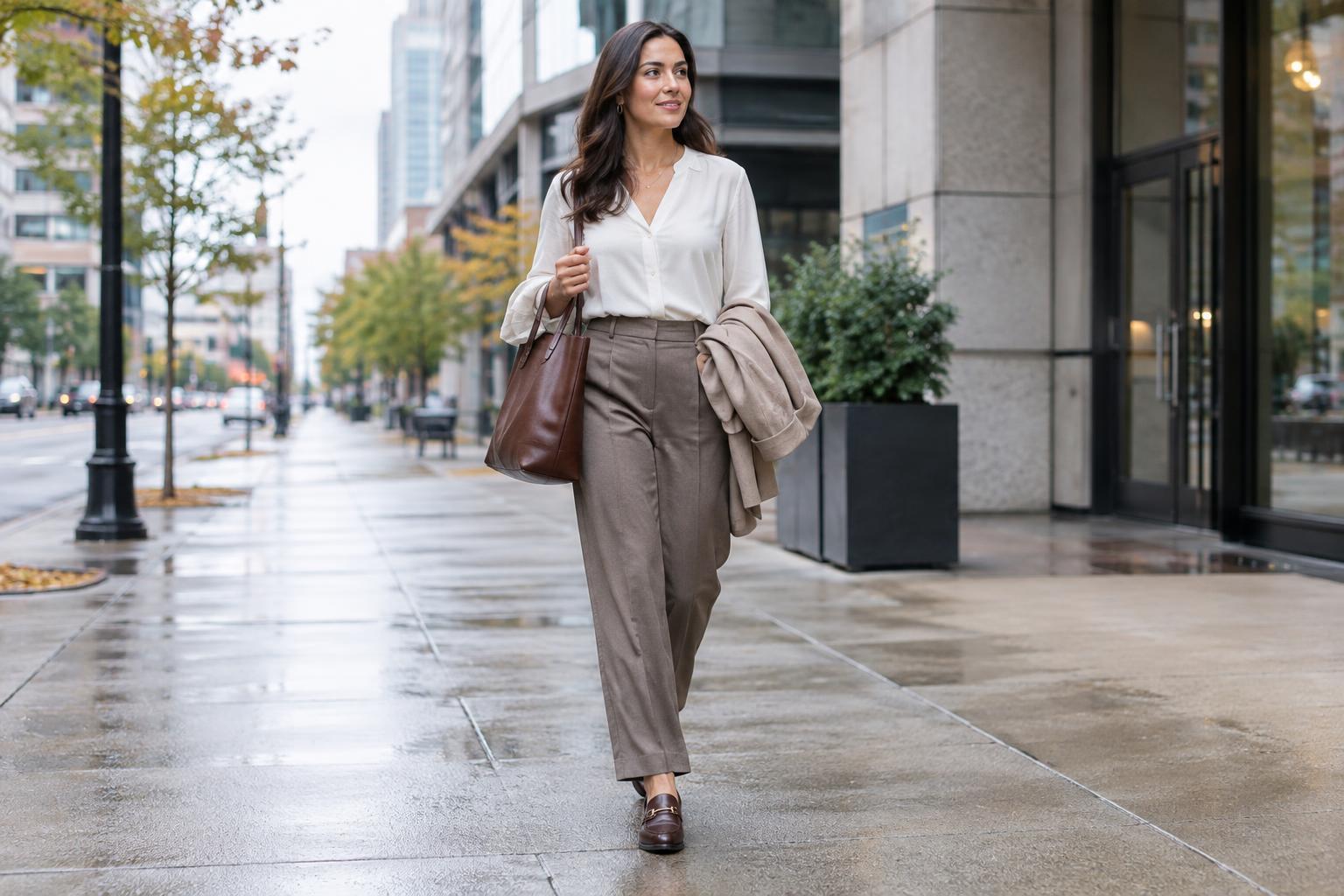
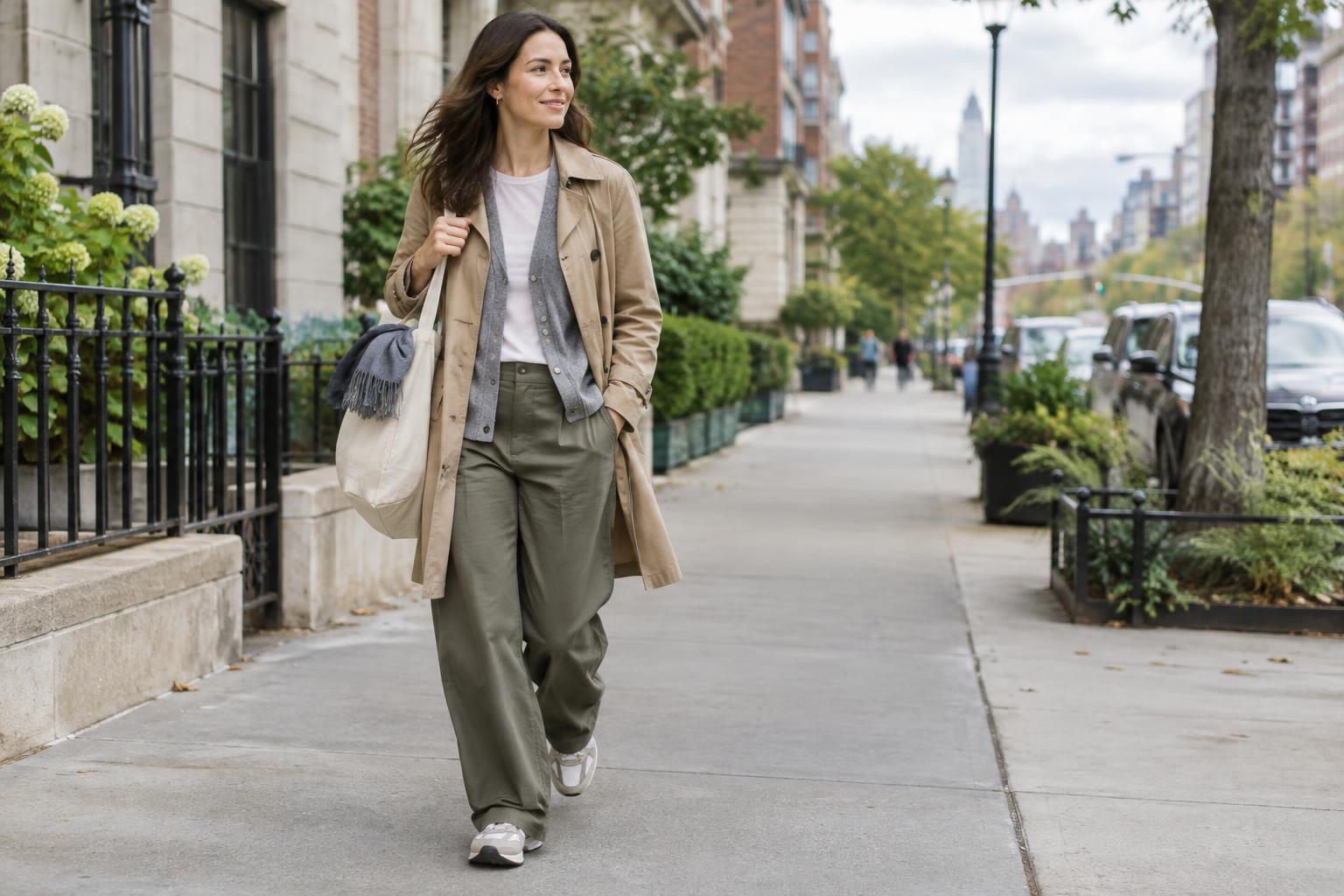
The most practical layered outfit is one you can manage once you leave home. If you expect to take off a cardigan, check whether it folds into your tote or other day bag. If you plan to carry a jacket, consider whether it is light enough to hold comfortably during errands. A scarf can offer an easy adjustment around the neck, but only if you have somewhere to put it when you no longer need it.
For an uncomplicated starting outfit, try a comfortable top, one removable mid-layer and an outer layer suited to the conditions. Pair them with trousers, jeans or a skirt you can move in and shoes appropriate for the amount of walking ahead. Keep the colours or shapes easy to mix if that helps you feel put together, but let comfort guide the final choice. After a few weekends, you will have a better sense of which layers you reach for and which ones stay in your bag.