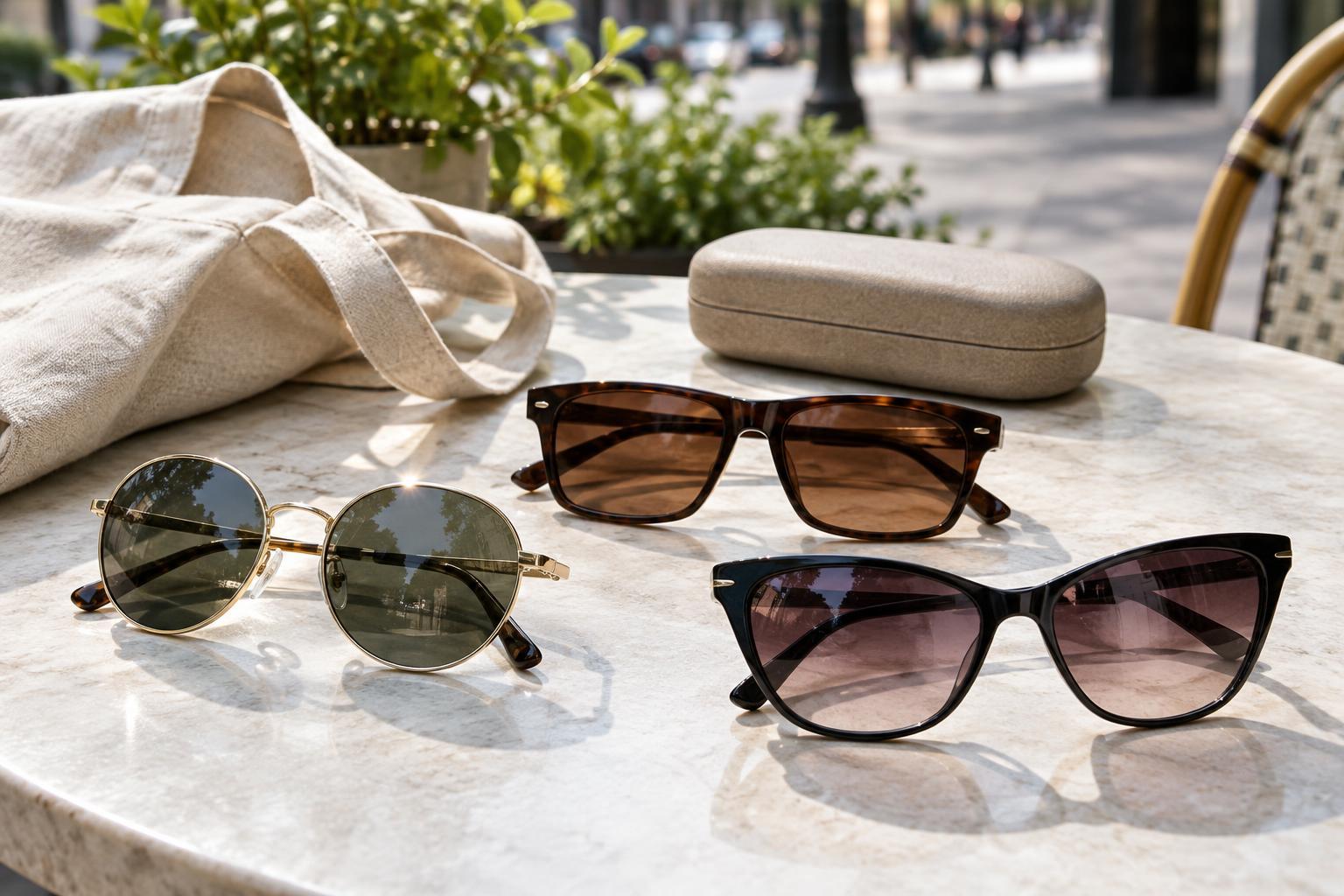
Start with the job your sunglasses need to do
Sunglasses can finish an outfit, but their first job is to make bright days more comfortable while protecting your eyes from ultraviolet (UV) light. Before choosing a shape, think about where you will wear them. A pair for walking to work may need to stay put as you move between streets, shops and public transport. A pair for long afternoons outdoors may benefit from more coverage at the sides.
You do not need a separate pair for every city activity. A comfortable, versatile frame that works with your usual clothes is a sensible starting point. Try it with your everyday hairstyle and, if possible, with the coat or jacket you wear most often. That gives you a better sense of how it will look and feel outside a fitting-room mirror.
Explore shapes without following rigid face-shape rules
Round frames have a soft outline that can add contrast to structured jackets and crisp shirts. Rectangular frames tend to look streamlined and can work well with both workday outfits and casual layers. Cat-eye frames draw attention upward at the outer corners, while aviator-style frames offer a lighter, often more open look. Oversized frames make more of a statement and may provide useful coverage, provided they sit securely.
Face-shape guides can offer ideas, but they are not rules. Two frames with the same label can look very different because of their width, lens size and bridge. If you are new to sunglasses, try several versions of a shape you like rather than deciding it does not suit you after one pair. The best choice is one you enjoy wearing and will actually reach for.
Check the fit from every angle
A good fit feels secure without pinching. The bridge should rest comfortably on your nose, and the arms should hold the frame in place without pressing hard at your temples or behind your ears. Look down and turn your head gently: the sunglasses should not slide forward. Your cheeks should not push the lenses upward when you smile, and your eyelashes should not brush the lenses.
Check coverage as well as comfort. Large gaps above, below or beside the lenses let more light reach your eyes, even if the lenses themselves offer UV protection. You do not need the biggest frame in the shop, but one that sits reasonably close to your face and covers your eyes well is worth considering. If a frame is almost right, ask whether its fit can be adjusted; not every frame or bridge design allows the same changes.
If you wear prescription glasses, consider prescription sunglasses or a compatible over-glasses option rather than settling for a pair that blurs your vision. An optician can help you assess what works with your prescription and preferred frame.
Read the UV label before judging the tint
Look for sunglasses labelled as blocking 99 to 100 percent of both UVA and UVB rays, or as providing UV400 protection. Darkness alone does not tell you how much UV a lens blocks: a pale lens may offer strong protection, while a dark lens should not be assumed to do so without a clear specification. Frame shape, mirrored finishes and price are not substitutes for checking the stated UV protection.
Lens tint is more about how the world looks and feels through the glasses. Grey tends to keep colours looking relatively neutral; brown or amber can make some contrasts appear more pronounced. Try looking through a pair in natural light when you can. The view should feel comfortable and clear, without obvious distortion. Sunglasses are most useful outdoors in suitable light; a very dark tint may be less practical when you move into dim spaces or travel home later in the day.
Decide whether extra features suit your routine
Polarized lenses reduce certain kinds of reflected glare, which can be pleasant around bright windows, water or wet pavement. Polarization is a separate feature from UV protection, so check for both if you want both. It can also make some phone, dashboard or ticket-machine screens harder to read from particular angles. If screens are part of your journey, test them while trying on the glasses.
For a practical first pair, prioritise a clear UV label, comfortable fit and a shape you like. A protective case helps keep lenses from being scratched in a crowded bag, and a soft lens cloth makes quick cleaning easier. Once those basics are covered, details such as colour and finish can be a pleasure to choose: sunglasses should work with your city routine, not complicate it.


